Types of Pallet Film Explained: A Quick Buyer's Guide
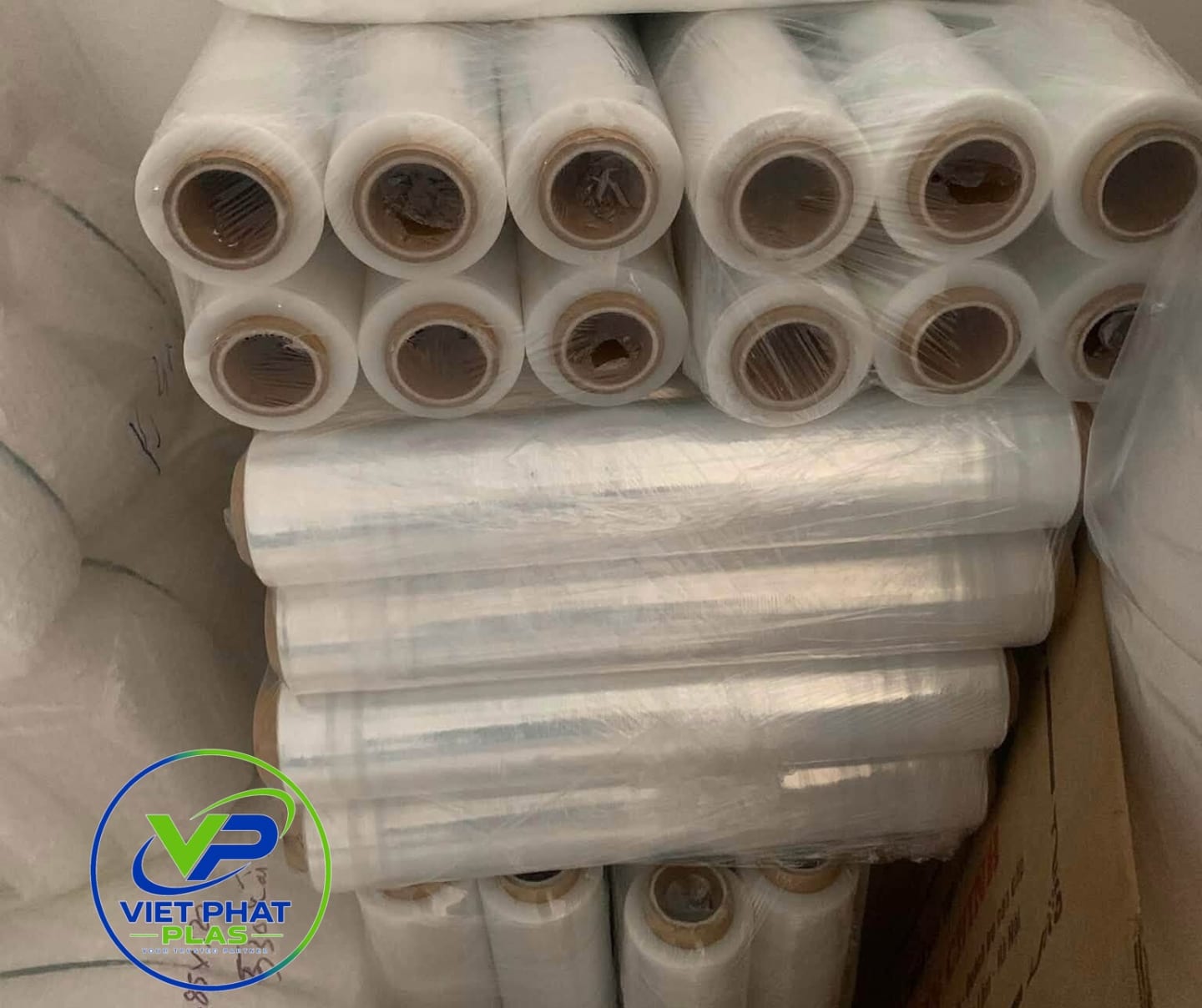
Pallet film — also called stretch film or stretch wrap — splits into distinct categories by manufacturing method, application method, surface behavior, food-safety requirement, and spec measurement, and each dimension matters differently depending on your load type, wrapping equipment, and handling conditions. This guide gives a fast overview of each category, clears up a common mix-up with a different product entirely (shrink film), and links to a full buying guide for the ones that need more depth.
"Types of pallet film" turns out to mean several different things depending on who's asking. A warehouse manager comparing hand-wrap to a wrapping machine is asking a different question than a food distributor comparing cling film to stretch wrap, or a buyer trying to figure out why two rolls quoted at the "same gauge" perform differently. Rather than cram every angle into one long article, this guide breaks pallet film down by the factors that actually drive a sourcing decision — manufacturing method, application method, surface behavior, food safety, and spec measurement — and points to a full buying guide for each one where the details matter.
What Pallet Film Actually Is (and Isn't)
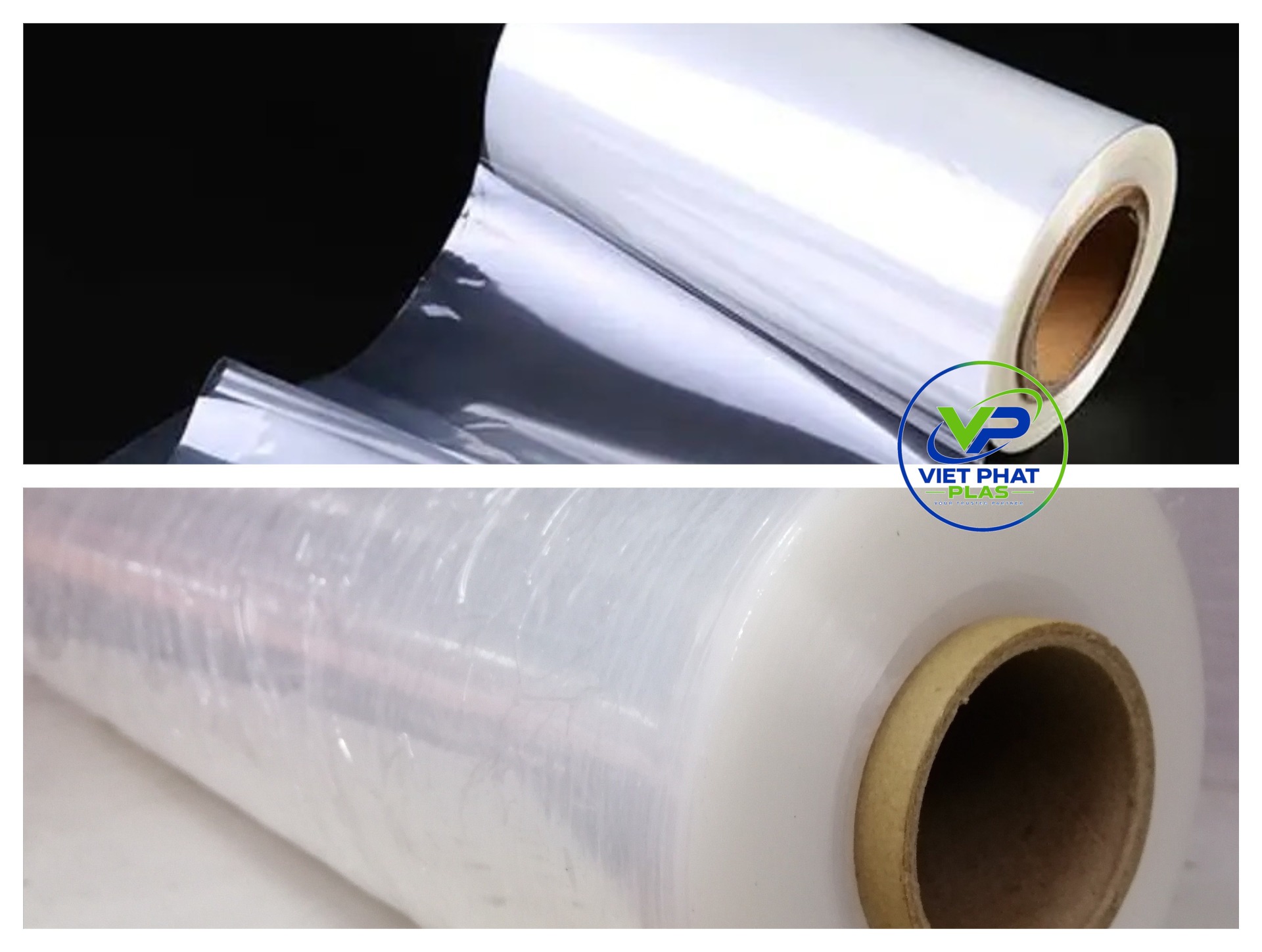
Pallet stretch film roll next to a heat-shrink film roll
Pallet film — also sold as stretch film or stretch wrap — is a stretchable plastic film that secures a load by being pulled tight around it; the film's own elasticity, not heat, is what creates the grip. This is a common point of confusion worth clearing up directly: pallet film is not the same product as shrink film. Shrink film is loosely wrapped around a load and then run through a heat tunnel or hit with a heat gun, and it's the heat that shrinks the material tight — applying heat to stretch film instead of a heat tunnel isn't just the wrong technique, it can damage the film and is a safety risk. If a supplier or a spec sheet uses the two terms interchangeably, it's worth double-checking exactly which product is being quoted.
Within pallet film itself, buyers typically need to choose along five practical axes — how the film is manufactured, how it's applied, how it behaves against other loads, whether it needs food-safety properties, and how its thickness is actually specified. Each is covered in a dedicated guide below.
By Manufacturing Method: Cast vs. Blown Film
Cast film is extruded through a flat die and cooled rapidly on a chilled roller, which gives it high clarity and strong cling at a lower production cost. Blown film is extruded upward through a circular die and inflated into a bubble before cooling, which orients the polymer in multiple directions and gives it better puncture and tear resistance. Neither is universally "better" — cast film covers most everyday palletized loads, while blown film earns its higher cost on loads with sharp edges or rough handling. Full comparison: Cast vs. Blown Pallet Film: Technical Differences B2B Buyers Should Know.
By Application Method: Hand vs. Machine Stretch Film
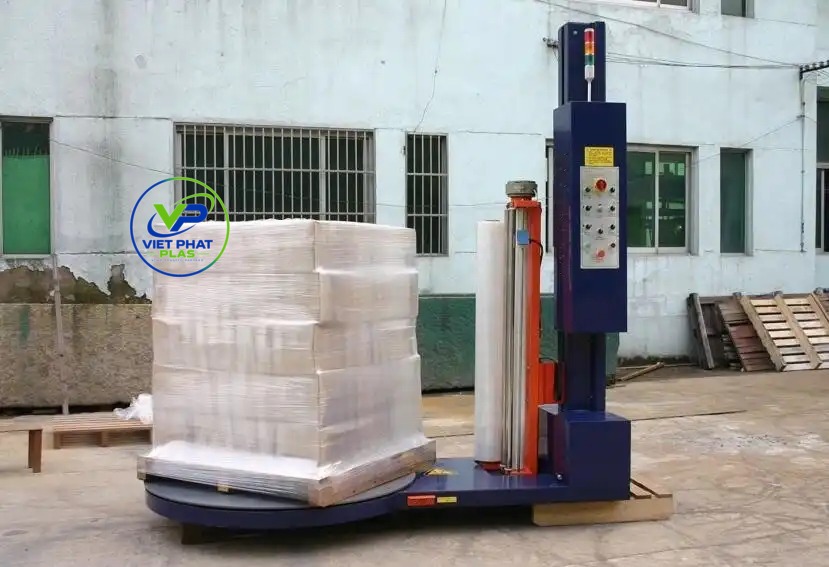
An automatic pallet wrapping machine
Hand film comes on narrower rolls with built-in cling to compensate for the inconsistency of manual tension, while machine film runs on wider rolls through a pre-stretch carriage that applies a consistent 150%-300%+ stretch, using less material per pallet. Facilities wrapping a low volume of pallets per day often find hand-wrap still more cost-effective once equipment and maintenance are factored in; higher-volume operations typically recover the cost of a wrapping machine within one to two years. Full comparison, including how to spec an order correctly: Machine Stretch Film vs. Hand Stretch Film: Choosing the Right Pallet Wrap for Your Warehouse.
By Surface Behavior: High-Slip vs. Cling Film
Standard cling film and high-slip film can look identical, but they behave oppositely once pallets are packed tightly together — standard cling grips neighboring loads during transit, which becomes a problem in rail cars, ocean containers, or automated conveyor systems, while high-slip film uses a surface additive that lets pallets glide past each other while still clinging to the load underneath. The premium for high-slip film is worth it for dense, automated handling and unnecessary for loosely spaced storage. Full comparison: High-Slip Film vs. Cling Stretch Film: Choosing the Right Pallet Wrap for Automated Handling.
By Food-Safety Requirement: Food-Grade Stretch Wrap vs. Cling Film
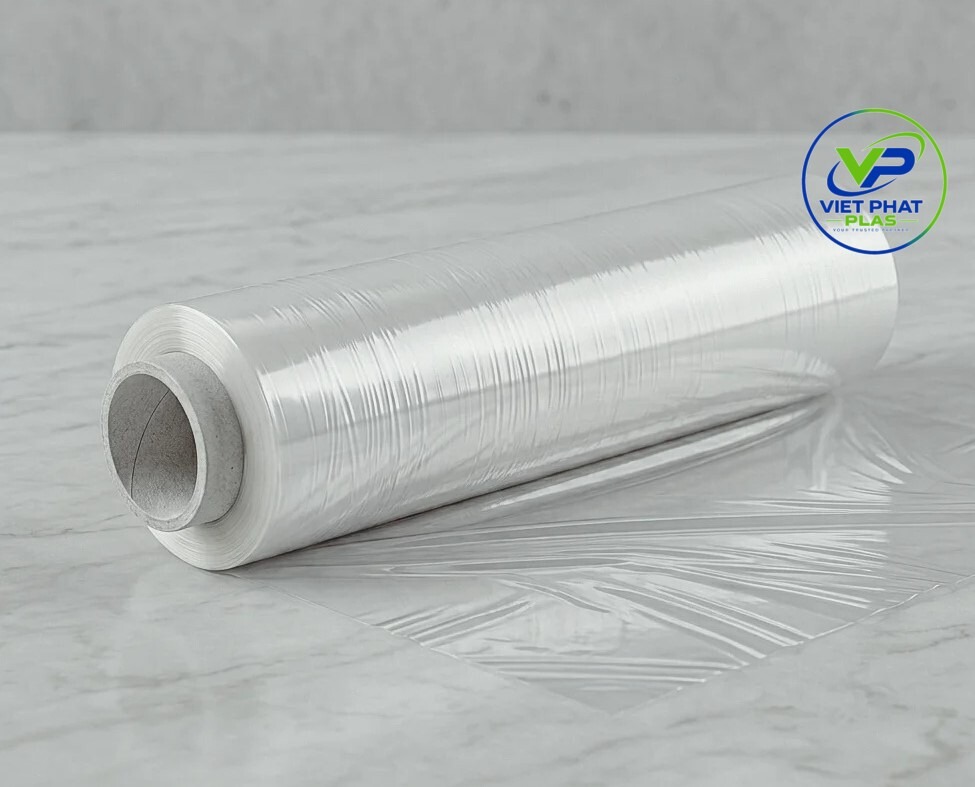
PVC food cling film
Food businesses have a separate decision to make between PVC cling film, which excels at individual retail wrapping thanks to its clarity and surface cling, and LLDPE stretch wrap, which suits larger catering and bulk repack work thanks to its elasticity and puncture resistance. Comparing the two by price per roll alone is a common mistake — the guide below breaks the comparison down by cost per wrapped unit instead. Full comparison: Food-Grade Stretch Wrap vs. Cling Film: Which Is Right for Your Food Business.
By Spec and Measurement: Pre-Stretch Percentage and Gauge vs. Micron
Two specs decide what a buyer is actually paying for. Pre-stretch percentage measures how much the film is elongated before it hits the pallet — a higher pre-stretch rating usually means better material yield per roll, not a weaker film, because stretching aligns the polymer chains within engineered limits: Pre-Stretch Percentage: How to Cut Pallet Film Costs Without Losing Load Containment. Separately, gauge and micron claims aren't always apples-to-apples — some suppliers quote "equivalent gauge" (a thinner, high-performance film marketed to match a thicker conventional film's rated performance) instead of "true gauge" (actual measured thickness), so two rolls quoted at the same number can differ in real material: Pallet Film Gauge vs. Micron: A Buyer's Conversion and Specification Guide.
Full Definition and Properties
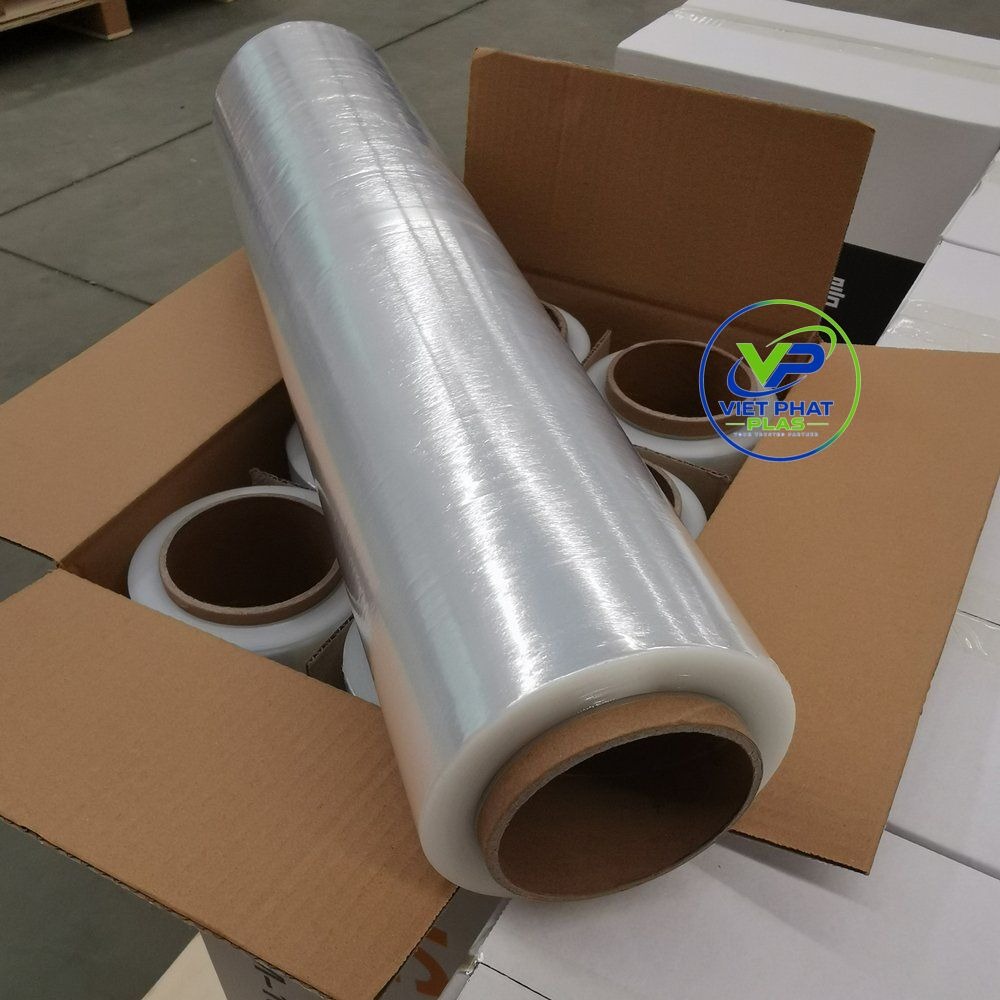
Roll of pallet stretch film
For a broader look at how pallet film is made from PE resin, its physical and chemical properties, and where it's used beyond warehousing (retail, food, agriculture, electronics), see the full overview: What Is Stretch Film? Features and Practical Applications.
At a Glance
|
Dimension |
Main choices |
Full guide |
|
Manufacturing method |
Cast vs. blown |
Cast vs. blown guide (above) |
|
Application method |
Hand vs. machine |
Hand vs. machine guide (above) |
|
Surface behavior |
Standard cling vs. high-slip |
High-slip vs. cling guide (above) |
|
Food safety |
PVC cling film vs. LLDPE stretch wrap |
Food-grade guide (above) |
|
Spec / measurement |
Pre-stretch %, true gauge vs. equivalent gauge |
Pre-stretch and gauge guides (above) |
|
Not pallet film at all |
Shrink film (heat-activated) |
See "What Pallet Film Actually Is" above |
FAQ
What are the main types of pallet film?
The main ways to classify pallet film are by manufacturing method (cast vs. blown), application method (hand vs. machine), surface behavior (standard cling vs. high-slip), food-safety requirement (PVC cling film vs. LLDPE stretch wrap for food use), and spec (pre-stretch percentage, true gauge vs. equivalent gauge).
Is shrink film a type of pallet film?
No. Shrink film is a different product that requires heat to shrink tight around a load, while pallet (stretch) film uses its own elasticity and needs no heat. Treating them as interchangeable in a spec or quote is a common sourcing mistake.
Do I need machine-grade or hand-grade stretch film?
It depends mainly on daily pallet volume. Lower daily volumes are often still cheaper to wrap by hand once equipment and maintenance costs are included; higher volumes typically justify a wrapping machine within one to two years.
Why do two rolls quoted at the same gauge perform differently?
Some suppliers quote "equivalent gauge" — a thinner, engineered film marketed to match a thicker film's performance — instead of "true gauge," the actual measured thickness. Ask explicitly which one is being quoted, or request the roll weight to compare accurately.
Conclusion
Types of pallet film break down along a handful of practical dimensions — manufacturing method, application method, surface behavior, food safety, and spec measurement — and the right combination depends on your load type and handling equipment, not on picking the most familiar option. Use the guides linked above to go deep on whichever dimension matters most for your sourcing decision.
VietPhatPlas manufactures pallet and stretch film in Vietnam from an 8,000 m² factory, with an export capacity of up to 500 tons per month, 10+ years of experience, and shipments to 20+ countries; quality is verified through independent third-party SGS batch test reports. Contact VietPhatPlas to discuss specs for your specific load type.
Author Bio: Written by the VietPhatPlas content team, based on VietPhatPlas's own published production data and the company's existing in-depth pallet film buying guides.
Sources