High Slip Film vs Cling Stretch Film: Choosing the Right Pallet Wrap for Automated Handling

Standard stretch film and high-slip film look identical on the roll but behave almost oppositely once pallets are stacked side by side — one clings to adjacent loads during transit, the other lets them glide apart cleanly. This guide breaks down what a slip additive actually does, why one-side versus two-side cling changes how a wrap performs on automated lines, and when the extra cost of high-slip film is actually worth paying.
High slip film vs cling stretch film is a comparison most buyers never think to make, because "stretch film" gets treated as a single product category with one job: hold the load together. In reality, standard cling stretch film and high-slip stretch film are engineered to behave almost opposite ways on their outer surface, and picking the wrong one shows up as pallets that stick together on a truck, or film that tears apart during automated unwrapping. This guide covers what separates the two, and when the extra cost of high-slip film is actually worth paying.
Cling vs Slip: Two Different Jobs on the Same Roll
Most stretch film is formulated to cling — to itself and to the load — so that the wrap stays tight and secure once applied. That cling property is exactly what a buyer wants during the wrapping process, and it's the default most facilities run without ever needing an alternative.
The problem shows up after wrapping, not during it. Pallets loaded side by side in a truck, a rail car, or a warehouse aisle press their wrapped surfaces against each other, and standard cling film's whole design purpose — sticking to surfaces — makes adjacent pallets bond together during transit. Separating them at the destination can tear the film, shift the load, or require extra labor to pry pallets apart before they can be moved individually.
High-slip film exists specifically to solve that problem. It's engineered with a slip additive on the outer surface that lets wrapped pallets glide past each other with minimal resistance, while the inner surface retains enough cling to hold the load securely against the pallet itself. Cling and slip aren't opposite ends of one spec — they're two separate properties that a single roll of film can be engineered to deliver on two different sides.
How High-Slip Film Prevents Load-to-Load Sticking
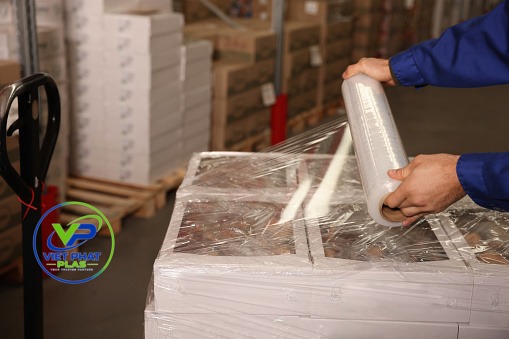
Pallets wrapped in high-slip stretch film stacked side by side without sticking
High-slip stretch film typically uses a nano-layer additive built into the film's outer surface during manufacturing, rather than a coating applied afterward. That additive reduces the coefficient of friction on the outward-facing side of the film, so two wrapped pallets pressed together can be separated by hand or by machine without the tearing or peeling that standard cling film causes.
This matters most in specific handling conditions: automated conveyor and shuttle systems that push pallets against each other during transport, rail and ocean freight where pallets are packed tightly with no room to avoid contact, and warehouse operations using automated storage and retrieval systems (AS/RS) where a pallet has to slide past neighboring loads without catching. In any of these settings, standard cling film's stickiness becomes a liability rather than an asset — the same property that holds a load together on the pallet works against smooth handling once pallets are grouped.
One-Side Cling vs Two-Side Cling: Which Direction Matters
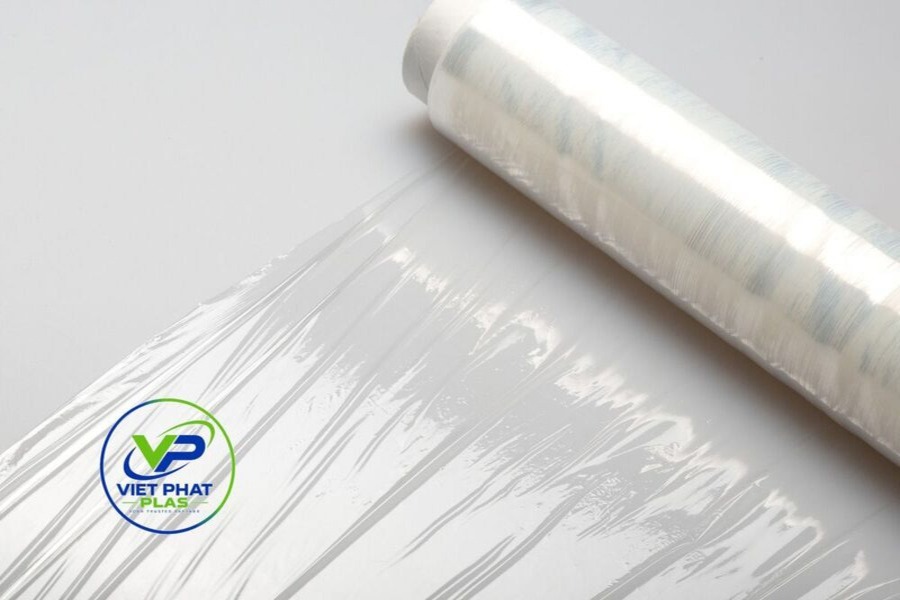
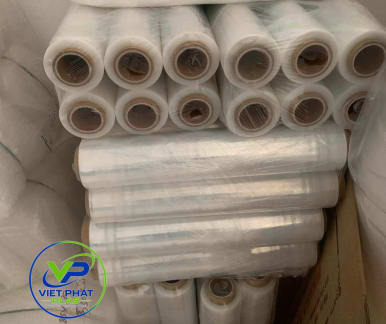
Close-up of the side of the Cling Stretch Film roll
Standard stretch film is often manufactured with cling on both sides — sometimes described as two-side cling — which maximizes grip everywhere the film touches, including the outward-facing wraps that end up pressed against a neighboring pallet.
High-slip and one-side cling films are built so the cling additive concentrates on one surface only, typically the side facing the load and the pallet, while the opposite (outward) surface carries the slip additive instead. This directional design is what actually solves the load-to-load contact problem: the film still grips tightly enough to hold the wrapped load secure, but the outermost layer — the one that touches the next pallet over — resists sticking.
A detail that trips up buyers ordering film for the first time: which side faces out is a function of how the film is wound onto the roll and how the wrapping machine or operator applies it. Ordering "one-side cling film" without confirming which face is meant to be outward, and without checking that your wrapping process actually applies it in that orientation, can produce a roll that clings on the wrong side and solves nothing.
When High-Slip Film Is Worth the Extra Cost
High-slip film generally costs more per roll than standard cling film, since it requires a more complex multilayer formulation to deliver directional friction properties rather than uniform cling. That extra cost is easy to justify in some operations and hard to justify in others.
It's worth the premium when pallets are routinely packed tightly against each other for transport — ocean containers, rail cars, or dense warehouse storage — where load-to-load sticking causes real labor cost from prying pallets apart, or damage from film tearing during separation. It's also worth it for facilities running automated handling systems where a pallet has to slide past a neighboring load without catching, since a jam on an AS/RS line costs far more in downtime than the film premium.
It's usually not worth it for facilities that wrap pallets with generous spacing between them in storage and during transport — standard cling film performs perfectly well when pallets never actually press against each other, and paying for slip-side engineering that's never tested is money spent on a problem you don't have.
Comparison Table: Cling vs High-Slip Film Specs
Comparison chart of standard cling stretch film versus high-slip stretch film specifications
|
Factor |
Standard Cling Film |
High-Slip Film |
|
Surface behavior |
Cling on both sides (typical) |
Cling on load-facing side, slip on outward side |
|
Load-to-load sticking |
High — pallets can bond in transit |
Minimal — designed to glide past neighboring loads |
|
Best fit |
Loosely spaced storage/transport |
Tightly packed transport, AS/RS, dense warehouse storage |
|
Cost |
Lower |
Higher — multilayer slip-additive formulation |
|
Application requirement |
Straightforward |
Must confirm cling-side orientation during wrapping |
|
Typical use case |
General palletizing |
Rail/ocean freight, automated handling systems |
Actual friction performance varies by manufacturer formulation — request a sample and test it under your specific packing density and handling conditions before a bulk order.
How to Spec the Right Film for Your Handling System
Getting this right comes down to describing your actual handling conditions to a supplier rather than ordering "stretch film" generically.
Describe pallet spacing during transport and storage. If pallets are ever packed tightly enough to touch, that's the single fact that should drive the cling-vs-slip decision, more than gauge or roll width.
Confirm cling-side orientation. If you order one-side cling or high-slip film, verify which face carries the cling additive and make sure your wrapping process — hand, semi-automatic, or fully automatic — applies the film with that side facing the load rather than outward.
Flag automated handling systems specifically. AS/RS, conveyor, and shuttle systems that physically push or slide pallets past each other are the strongest case for high-slip film — mention this explicitly in your RFQ rather than assuming a supplier will infer it from your industry.
Test before committing to volume. A small trial order, stacked and handled the way your actual operation will handle it, catches sticking or slip-side mismatches before they show up in a full container of stretch film.
VietPhatPlas supplies pallet film and broader stretch film product lines, including cling and slip-formulated options, so buyers can match film surface behavior to their actual handling and transport conditions. For background on production method differences, see the cast vs blown pallet film guide, and for hand versus machine application, see machine vs hand stretch film.
FAQ
When should I choose high-slip film instead of standard cling film? High-slip film is worth the extra cost when pallets are packed tightly during transport (ocean, rail) or handled by automated systems (AS/RS, conveyors) where load-to-load contact is routine. For loosely spaced storage and transport, standard cling film performs fine at lower cost.
What's the difference between one-side and two-side cling film? Two-side cling film grips on both surfaces, maximizing hold everywhere the film touches, including the outward-facing wraps. One-side cling film concentrates cling on the load-facing surface only, leaving the outward side low-friction to prevent sticking to neighboring pallets.
Is high-slip film much more expensive? It typically costs more per roll than standard cling film due to its more complex multilayer formulation, but the premium is generally justified by reduced labor and damage costs in tightly packed or automated handling environments — request pricing comparison at your actual volume to evaluate the trade-off.
Why do pallets stick together during shipping? Standard cling stretch film is designed to grip surfaces, including the surface of a neighboring wrapped pallet when they're pressed together in transit. This is the same property that holds the load securely on its own pallet, which is why it becomes a liability once pallets are packed tightly against each other.
Conclusion
High slip film and standard cling stretch film aren't different grades of the same product — they're engineered for opposite outer-surface behavior, and choosing between them depends entirely on whether your pallets actually touch each other during handling and transport. Buyers who confirm packing density, cling-side orientation, and automated handling requirements before ordering avoid both the sticking problems standard film causes in tight conditions and the wasted cost of high-slip film where it was never needed.
If you're sourcing pallet wrap for a warehouse, distribution center, or export operation, VietPhatPlas supplies both standard cling and high-slip stretch film formulations. Contact VietPhatPlas to discuss your handling conditions and get a spec-matched quote.
Sources:
-
Stretch and Shrink Film Market — Grand View Research