Food Grade Stretch Wrap vs Cling Film: Which Is Right for Your Food Business?

A caterer reordering "cling film" can end up receiving LLDPE stretch wrap instead — both look nearly identical on a roll but perform, and cost, very differently at volume. This guide compares PVC cling film against LLDPE stretch wrap by material, cling performance, and true cost per wrapped unit, so restaurant, retail, and food processing buyers order the right product the first time instead of guessing from a generic catalog listing.
Food grade stretch wrap vs cling film is a comparison that trips up a lot of first-time bulk buyers, because both products look nearly identical on a roll — thin, clear, clingy plastic film — but they're formulated for different jobs and priced very differently at volume. A caterer reordering "cling film" from a supplier catalog might actually receive an LLDPE stretch wrap product, or vice versa, and only notice the mismatch once it doesn't perform the way the previous roll did on the line.
This guide compares PVC cling film and LLDPE stretch wrap directly — material differences, cling performance, cost per roll, and where each one actually fits in a foodservice or retail operation. It's written for restaurant and catering buyers, retail deli and produce departments, and food processors sourcing wrap film at volume who want to order the right product the first time rather than guessing from a supplier's generic listing.
Cling Film and Stretch Wrap: Same Family, Different Jobs
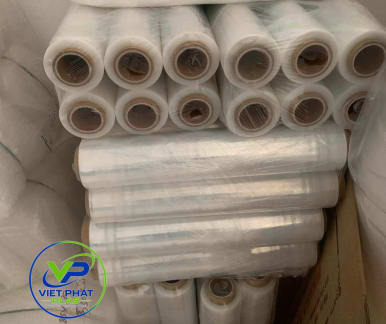
PVC Cling film rolls
Cling film and stretch wrap both belong to the broader family of food wrap film, and both work by clinging to themselves and to a container's surface to create a seal. Where they diverge is in resin and intended use. Cling film, most commonly made from PVC, is engineered for light, close-contact wrapping — sealing a plate, a produce tray, or a small retail package where high transparency and strong self-cling matter more than raw stretch capacity.
Stretch wrap, typically LLDPE, is engineered to stretch significantly beyond its original length while maintaining tension — a property that makes it suited to wrapping larger, bulkier, or irregularly shaped items where the film needs to compress and hold a load rather than just seal a surface. In a food business, that might mean wrapping a full catering tray, bundling multiple retail packages together, or securing product during bulk repacking before it reaches a display case.
The confusion for buyers comes from the fact that both products get marketed loosely as "food wrap," and a supplier's default SKU isn't always the right fit for the specific job a kitchen or retail counter actually needs.
Material Comparison: PVC vs LLDPE for Food Contact
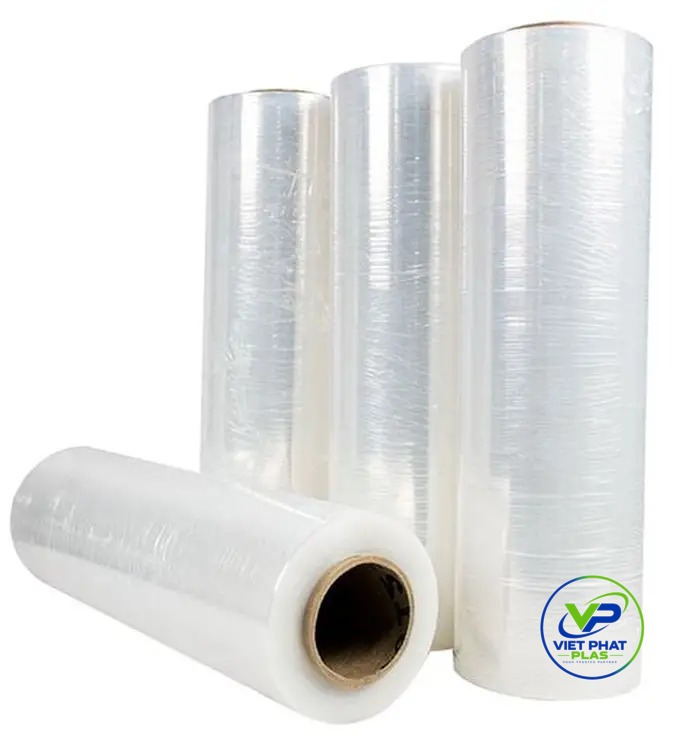
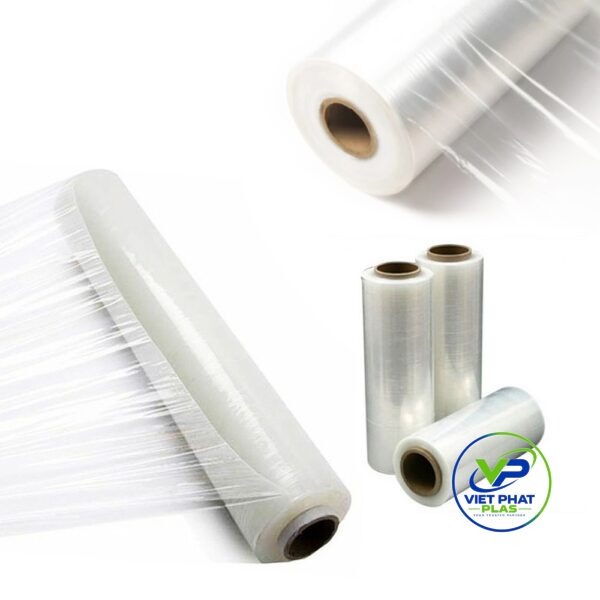
LLDPE stretch wrap
PVC cling film is valued in foodservice and retail settings mainly for its clarity and strong cling — it clings tightly to itself and to smooth surfaces like glass or ceramic plates, which is why it remains the default choice for wrapping individual plates, produce trays, and small retail packs where visual presentation matters.
LLDPE stretch wrap trades some of that surface cling for elasticity and puncture resistance. It's less prone to tearing when stretched around an uneven or heavier load, and it performs better than PVC cling film on rough or irregular surfaces — a catering tray with protruding food items, for instance, or a stack of retail packages being bundled for transport.
Neither material should be marketed or represented as FDA-certified or EU-certified food contact material unless a supplier holds that specific certification. VietPhatPlas describes its food wrap products as food-grade suitable, meeting general food-contact material practices for direct or indirect food contact — buyers requiring formal regulatory certification for their own compliance needs should confirm certification requirements directly with their supplier before ordering.
Cling Performance vs Cost — Where Buyers Get It Wrong
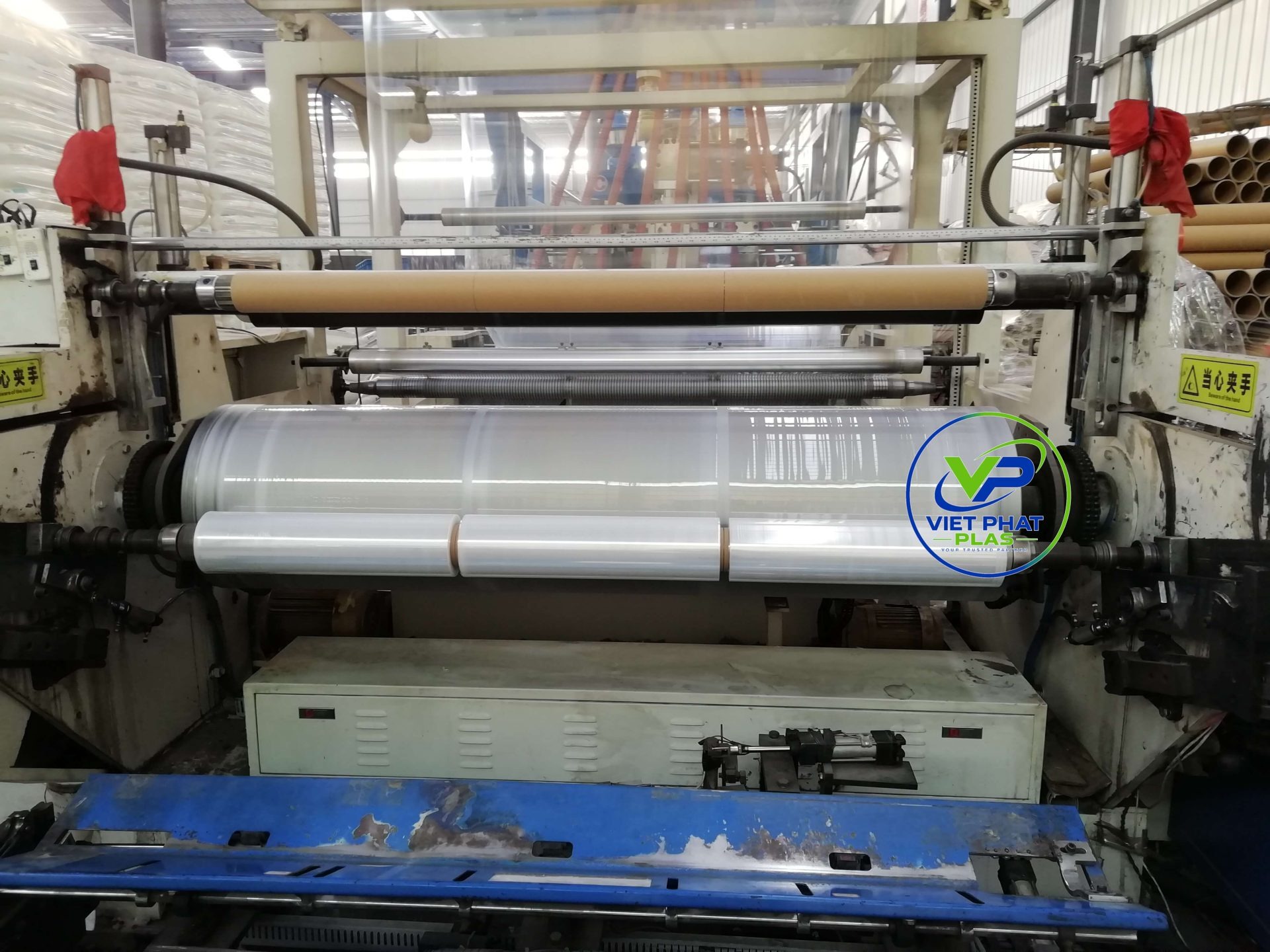
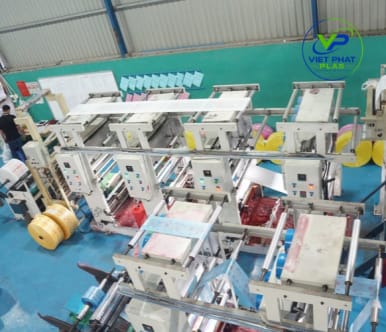
Cling film cutting and packing machine on a production line
A common mistake among first-time bulk buyers is assuming the cheaper roll, by price per unit, is automatically the better deal — without accounting for cling performance and how much film is actually needed per wrap.
PVC cling film generally costs more per unit of film area than LLDPE stretch wrap, largely because of resin cost and the higher cling formulation required for tight surface adhesion. But because PVC cling film seals effectively with less material per item — a thin single layer around a plate or tray is often sufficient — the cost-per-use for small, individual wrapping tasks can still come out favorably.
LLDPE stretch wrap is typically cheaper per unit of film area, but because it's designed for wrapping larger or bulkier items, buyers often use more total film per wrap than they would with a cling film application. This is where a buyer comparing "price per roll" without normalizing for actual usage per item can end up choosing the more expensive option in practice, despite the sticker price looking cheaper.
The practical fix is to calculate cost per wrapped unit, not cost per roll — accounting for how much film a typical application actually consumes with each material, rather than comparing raw roll prices side by side.
Application Fit: Retail Display vs Catering vs Bulk Repack
Choosing between the two often comes down to matching the film to the specific application rather than picking one material as a blanket default across an entire operation.
Retail display — wrapping individual produce trays, deli portions, or bakery items where visual clarity and a tight, wrinkle-free seal matter for presentation — is generally best served by PVC cling film. Catering and foodservice — wrapping larger trays, chafing dishes, or bulk-prepared items destined for transport or short-term storage — often performs better with LLDPE stretch wrap, since it holds up better against uneven surfaces and heavier loads without tearing. Bulk repack — bundling multiple smaller retail packages together before they reach a display case or shipping container — is almost always a stretch wrap application, since the elasticity and load-holding properties of LLDPE are specifically suited to securing bundled items rather than sealing a single surface.
A foodservice wrap film supplier serving both retail and catering customers should be able to recommend the right material per application rather than defaulting a buyer to whichever product happens to be in stock.
Comparison Table
Comparison chart of PVC cling film versus LLDPE stretch wrap for food use
|
Factor |
PVC Cling Film |
LLDPE Stretch Wrap |
|
Clarity |
Very high |
Moderate to high |
|
Self-cling |
Strong, ideal for smooth surfaces |
Moderate, relies more on stretch tension |
|
Elasticity |
Low |
High |
|
Puncture/tear resistance |
Lower |
Higher |
|
Typical cost per unit area |
Higher |
Lower |
|
Best fit |
Individual plates, produce trays, retail display |
Catering trays, bulk repack, bundling |
|
Typical thickness |
8–12 micron for retail use |
12–23 micron depending on application |
This table is a general reference — actual formulations and pricing vary by supplier, so confirm thickness, cling level, and sample performance directly before placing a bulk order.
Sourcing Considerations for Food Businesses
Buyers evaluating a catering wrap film supplier or a source for cling wrap for retail should confirm a few specifics before placing a bulk order, rather than ordering from a generic catalog listing.
Material and intended application. State clearly whether the film is for direct food contact wrapping (plates, trays) or bulk repacking, since this determines whether PVC cling film or LLDPE stretch wrap is the better fit.
Thickness range. Retail display film generally runs thinner than catering or bulk-repack film — confirm the micron range matches your actual use case rather than accepting a supplier's default.
Roll width and dispenser compatibility. Retail and catering operations often use dispenser boxes or cutter units sized for specific roll widths — confirm compatibility before ordering at volume.
Sample testing. Request a small trial roll before committing to bulk quantities, especially when switching between PVC and LLDPE for an application where the previous film's performance is the baseline you're comparing against.
VietPhatPlas supplies both food-grade wrap film and broader stretch film product lines, so retail, catering, and bulk-repack buyers can source the right material from a single supplier. For background on food wrap film types and thickness options, see the food wrap film buyer's guide.
FAQ
Is PVC cling film safe for food contact? PVC cling film is widely used for food-contact wrapping in retail and foodservice settings and can be described as food-grade suitable, meeting general food-contact material practices. Buyers with specific regulatory requirements (such as formal FDA or EU certification) should confirm certification status directly with their supplier, since not all manufacturers hold formal certification.
Can LLDPE stretch wrap be used for large catering trays? Yes — LLDPE stretch wrap's elasticity and tear resistance make it well suited to wrapping larger or uneven catering trays, chafing dishes, and bulk-prepared items, often performing better than cling film on non-smooth surfaces.
Which option is more cost-effective for a restaurant? It depends on the application rather than the raw roll price. PVC cling film often costs less per use for small individual wraps despite a higher price per unit area, while LLDPE stretch wrap tends to be more economical for bulk repacking and bundling tasks. Calculate cost per wrapped unit rather than comparing roll prices directly.
What thickness is appropriate for hand-wrapping versus machine application? Hand-wrapped retail and catering applications typically use thinner film in the 8–12 micron range, while machine-applied or heavier bulk-repack applications may call for thicker film in the 12–23 micron range, depending on load size and required durability.
Conclusion
Choosing between food grade stretch wrap and cling film comes down to matching material properties — clarity and cling for PVC, elasticity and tear resistance for LLDPE — to the actual application, rather than defaulting to whichever product a supplier lists first. Buyers who calculate cost per wrapped unit, confirm thickness and roll compatibility, and test samples before bulk ordering tend to avoid mismatched film that underperforms or costs more than expected once it's in daily use.
If you're sourcing food wrap film for a restaurant, catering operation, retail counter, or food processing facility, VietPhatPlas supplies both PVC cling film and LLDPE stretch wrap across the thickness ranges covered in this guide. Contact VietPhatPlas to discuss your application and get a spec-matched quote.
Related Posts:
Sources:
-
Cling Film Market — Future Market Insights