Types of Trash Bags: A Quick Buyer's Guide

Trash bags are split into distinct categories by material, seal design, size and load capacity, thickness, and intended grade — and each of those dimensions matters differently depending on whether you're buying for a hotel chain, a distribution warehouse, or a municipal contract. This guide gives a fast overview of each category and links to a full buying guide for the ones that need more depth.
"Types of trash bags" sounds like a simple question until you're the one writing the purchase order. A bag that's right for a restaurant kitchen can be the wrong choice for a distribution warehouse, and a bag rated for household use can fail within minutes on a construction site. Rather than cram every dimension into one long article, this guide breaks trash bags down by the factors that actually drive a sourcing decision — material, seal design, size, thickness, and grade — and points to a full buying guide for each one where the details matter.
Trash Bags by Material
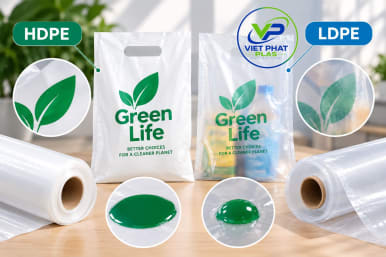
HDPE, LDPE, and biodegradable trash bag samples side by side
HDPE (High-Density Polyethylene) bags are thinner and stiffer, with good tensile performance even at thin gauges — a common choice for everyday waste where cost control matters more than puncture resistance, such as general office and retail waste.
LDPE (Low-Density Polyethylene) bags are softer and more flexible, and generally offer more stretch and puncture resistance for a given thickness. They're often the better choice for heavier or sharper waste streams, including many industrial and construction applications — though as VietPhatPlas's own HDPE vs. LDPE buyer guide notes, actual performance depends on thickness and bag construction, not resin type alone, so finished-bag testing matters more than a general material rule.
Biodegradable and compostable bags are a fast-growing category as more regions regulate single-use plastics, but "biodegradable" is a loosely used term. The one standard with a specific, testable claim is ASTM D6400, which requires at least 90% conversion to CO₂ within 180 days under industrial composting conditions — a bag that doesn't meet that specific bar isn't necessarily compostable just because the packaging says so. Full sourcing and compliance detail: Biodegradable vs. Compostable Trash Bags: A B2B Sourcing and Compliance Guide.
Trash Bags by Seal and Closure Design
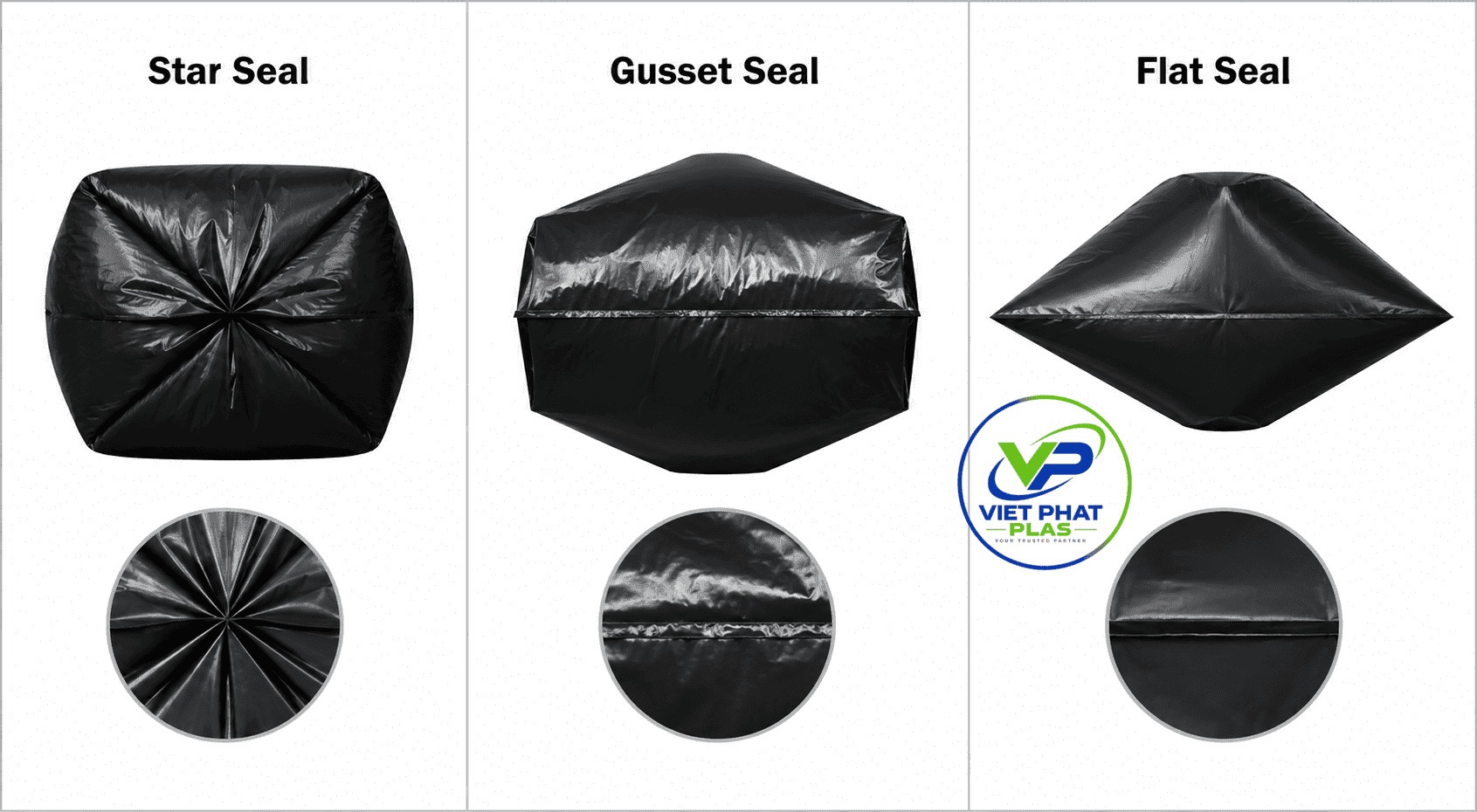
Close-up of star-seal, flat-seal, and gusset-seal
How a bag is sealed at the bottom affects load distribution and how it handles irregular or heavy waste. Star-seal bags have a reinforced, gathered bottom that spreads weight more evenly, which is why they show up often in heavier-duty applications. Flat-seal and gusset-seal bags trade some of that load distribution for a flatter, more compact shape that's easier to store and dispense. Which one actually fits a given operation depends on the waste stream and dispensing setup: Star-Seal vs. Flat-Seal vs. Gusset-Seal Trash Bags: Which Seal Type Fits Your Operation.
Trash Bags by Size and Load Capacity
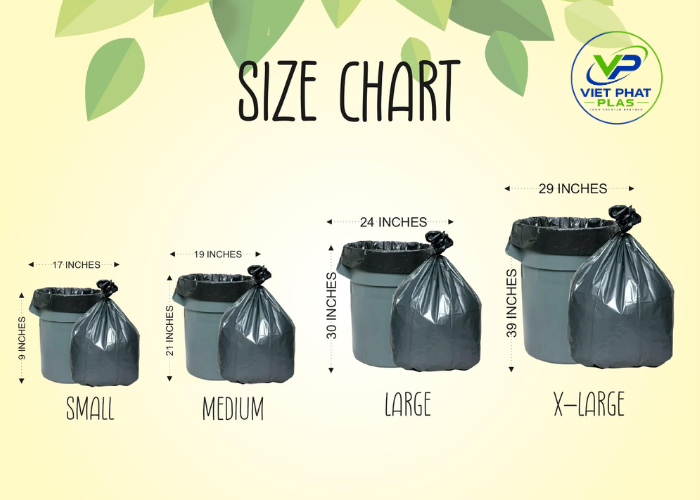 Four trash bag sizes lined up from smallest to largest
Liter capacity alone is a rough guide, not a precise spec — it doesn't tell you the container's rim shape, height, or how sharp or heavy the contents are, which is why matching a bag to a container by capacity rating alone is a common sourcing mistake. For the actual measurements and load-capacity math to size bags correctly for a specific container: Trash Bag Size and Load Guide for Commercial Buyers.
Trash Bags by Thickness
Thickness is usually the first spec buyers reach for when a bag keeps failing in the field, but "thicker" isn't automatically "better" — it's also a direct driver of material cost. Getting the mil rating right for the actual waste stream, instead of over-speccing out of caution, is where most of the savings are: Trash Bag Mil Thickness Guide: How Many Mils Do You Actually Need.
Trash Bags by Grade: Industrial vs. Commercial
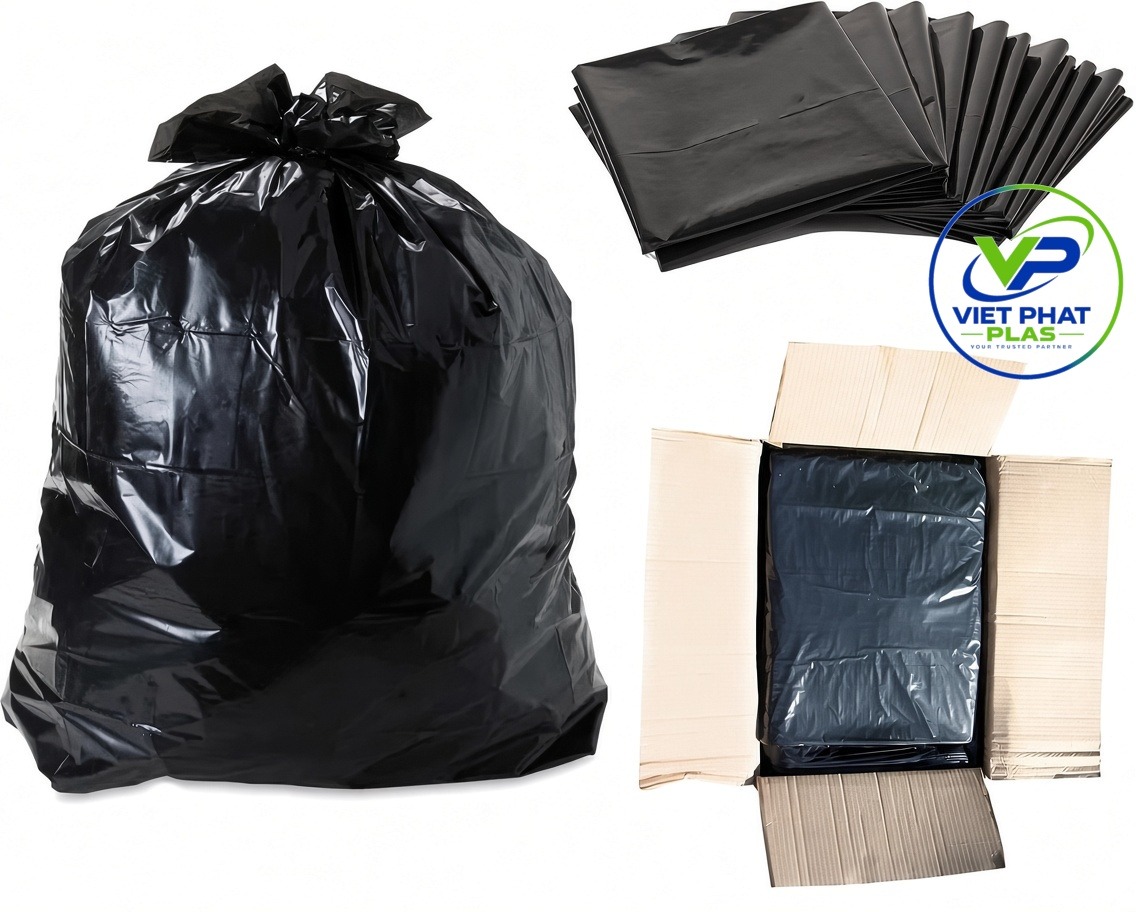
Industrial-grade trash bag
"Industrial" and "commercial" get used almost interchangeably in casual conversation, but the distinction — mainly mil thickness, resin type, and seal construction — determines whether a bag actually survives the job it's bought for. Getting this wrong is one of the more common and costly sourcing mistakes: Industrial Trash Bags vs. Commercial Garbage Bags: A B2B Buying Guide.
Trash Bags by Format: Rolls, Flat-Packs, and Coreless
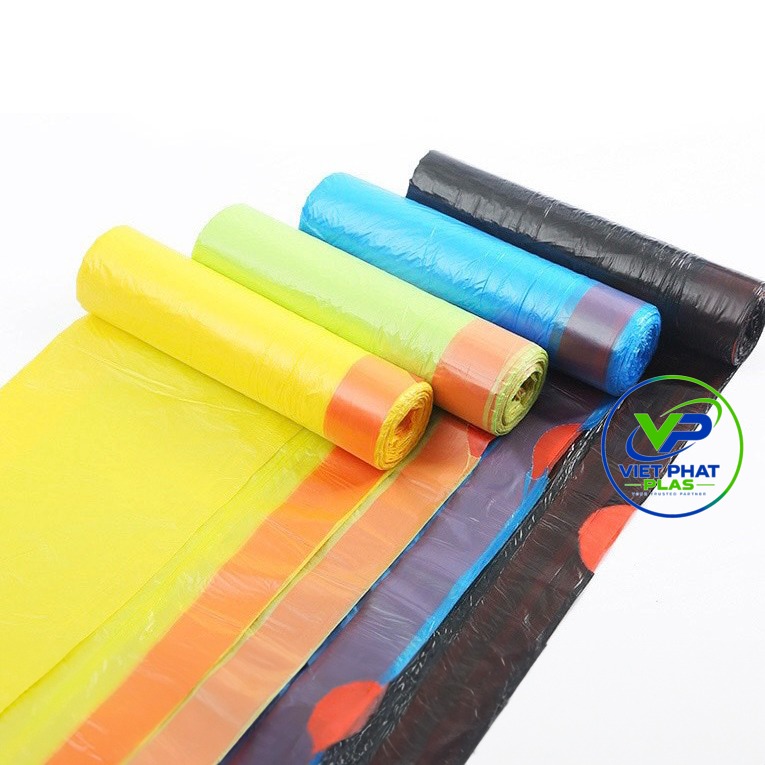
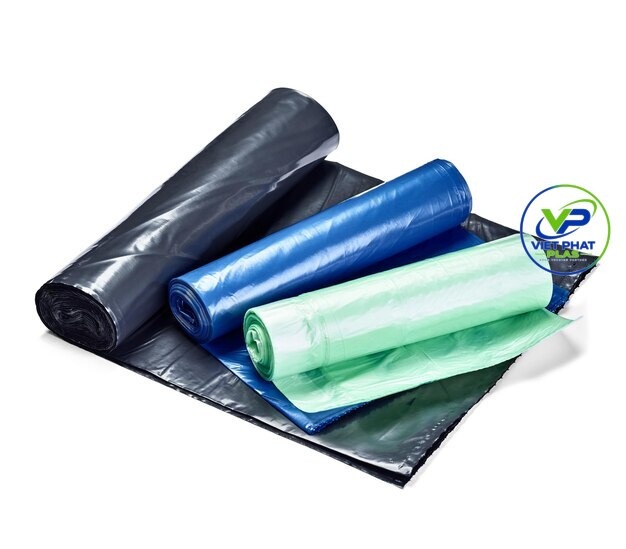
Roll of perforated trash bags for easy tear-off dispensing
Beyond material and size, how bags are packaged for dispensing matters for high-volume users: bags on a roll dispense one at a time with a perforated tear-off, which reduces waste and speeds up restocking compared to flat-packed stacks. For bulk and private-label sourcing of roll-format bags: Garbage Bags on Roll: Manufacturer and Supplier Guide for Bulk Solutions. For buyers sourcing contractor-grade bags specifically, including specs and MOQ: Contractor-Grade Trash Bags: Specs, MOQ, and Sourcing From Vietnam.
At a Glance
|
Dimension |
Main choices |
Full guide |
|
Material |
HDPE, LDPE, biodegradable/compostable |
Biodegradable vs. Compostable guide (above) |
|
Seal design |
Star-seal, flat-seal, gusset-seal |
Seal type guide (above) |
|
Size / load |
Matched to container, not capacity rating alone |
Size and load guide (above) |
|
Thickness |
Measured in mils, matched to waste stream |
Mil thickness guide (above) |
|
Grade |
Industrial vs. commercial |
Industrial vs. commercial guide (above) |
|
Format |
Roll, flat-pack, coreless |
Roll format guide (above) |
FAQ
What are the main types of trash bags?
The main ways to classify trash bags are by material (HDPE, LDPE, biodegradable/compostable), seal design (star-seal, flat-seal, gusset-seal), size and load capacity, thickness (measured in mils), and grade (industrial vs. commercial).
Which trash bag material is strongest?
LDPE is generally more resistant to tearing and puncturing than HDPE, making it a common choice for heavier or sharper waste. HDPE is thinner and more cost-effective for lighter, general waste.
What does "biodegradable" actually mean for a trash bag?
It depends on the standard behind the claim. ASTM D6400 requires at least 90% conversion to CO₂ within 180 days under industrial composting conditions — a specific, testable bar that not every bag marketed as "biodegradable" actually meets.
How do I know what size trash bag I need?
Liter capacity is a rough starting point, not a precise spec. Matching a bag correctly means measuring the container itself — see the size and load guide linked above for the calculation.
Conclusion
Types of trash bags break down along a handful of practical dimensions — material, seal, size, thickness, and grade — and the right combination depends on the waste stream, not on picking the most familiar option. Use the guides linked above to go deep on whichever dimension matters most for your sourcing decision.
VietPhatPlas manufactures trash bags in Vietnam across HDPE, LDPE, and biodegradable materials, with a verified export capacity of up to 500 tons per month. Contact VietPhatPlas to discuss specs for your specific waste stream.
Author Bio: Written by the VietPhatPlas content team, based on VietPhatPlas's own published production data and the company's existing in-depth trash bag buying guides.
Sources
-
ASTM D6400 Compostability Standard Explained — independently verified requirement of ≥90% conversion to CO₂ within 180 days under industrial composting conditions.
-
Global Plastic Sheeting — LDPE, HDPE, and LLDPE: Understanding the Differences and Applications — independent source confirming LDPE's greater flexibility/stretch versus HDPE's higher tensile rigidity, consistent with VietPhatPlas's own HDPE vs. LDPE guide.