Custom Packaging Brand Identity: What Printed Bags Actually Do for B2B Buyers

Custom packaging brand identity is often pitched with vague, unsourced stats — but there's real, traceable research behind why unbranded packaging is a missed opportunity for B2B buyers. This guide covers what independent studies actually show about packaging's effect on purchase decisions and brand consistency, what to check in a printed bag order beyond the logo itself, and VietPhatPlas's real, verifiable production standards behind every custom-printed bag.
Custom packaging brand identity gets pitched constantly, often with numbers that don't hold up to a second look. That's a shame, because the real research behind branded packaging ROI is genuinely compelling on its own — it just requires citing the actual studies instead of a vague, unattributed statistic. For a B2B buyer deciding whether printed plastic bags for business are worth the extra step over a plain bag, or whether custom printed bags with logos are worth the extra step over a blank one, the honest version of this case is more useful than the inflated one anyway.
This guide walks through what independently conducted research actually shows about packaging's role in purchase decisions and brand consistency, what to check before ordering beyond just "does the logo look right," and the real, verifiable production standards behind VietPhatPlas's printed bags — with no invented statistics and no invented customer stories.
Why Blank Packaging Is a Missed Marketing Channel
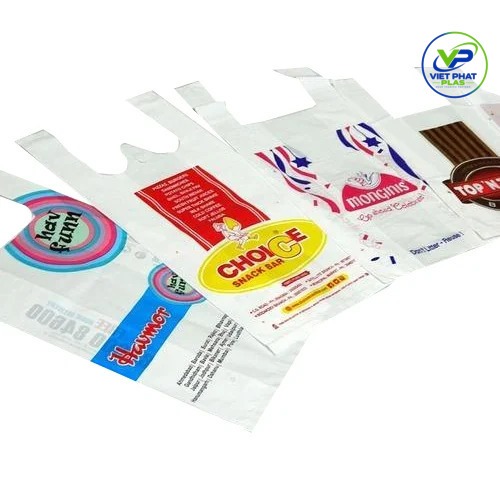
Custom logo-printed plastic bags
Packaging is one of the few marketing touchpoints a B2B seller's customer physically holds. A 2018 Ipsos poll conducted on behalf of the Paper and Packaging Board found that 72% of Americans agree the design of a product's packaging often influences their purchase decisions — a large, independently fielded number that doesn't need embellishing. For a business shipping product in a plain, unbranded bag instead of custom printed bags with a logo, that's 72% of the audience getting zero brand reinforcement from a touchpoint they're already paying attention to.
The gap matters most for buyers sourcing printed plastic bags for business purposes who resell or hand off products to end customers — a retailer, a food service operator, an e-commerce brand doing its own fulfillment. Every plain bag that reaches an end customer is packaging real estate spent on nothing. (For the psychological mechanism behind why a printed bag keeps working as marketing long after checkout — repetition, perceived quality, and the limits of both — see our guide on the psychology behind branded shopping bags; this article focuses on the research and buying-decision side rather than the psychology itself.) VietPhatPlas's own custom plastic bags for B2B brands page covers the sizing and material side of ordering a printed run.
The Real Research Behind Branded Packaging ROI
The most commonly cited branding-consistency statistic — a 2019 Lucidpress/Demand Metric survey of more than 200 organizations — found that companies with brand consistency problems estimated an average 23% revenue increase from presenting their brand consistently everywhere. It's worth being precise about what this number does and doesn't say: the study isn't packaging-specific, and it measures brand consistency broadly across "all the places people might encounter" a brand, not packaging alone. But packaging is one of those places — and for a B2B seller, it's one of the few brand touchpoints that travels directly into a customer's hands at the exact moment of delivery, which makes it a natural place to start if consistency is uneven elsewhere.
Put together, these two data points make a fair, unembellished case for branded packaging ROI: packaging design measurably affects how people respond to a purchase (Ipsos), and consistent branding is independently associated with real revenue impact (Lucidpress/Demand Metric) — without needing an unsourced recall statistic to make the point.
What Buyers Should Actually Check Beyond the Logo
Getting a logo onto a bag is the easy part — what actually determines whether branded packaging helps or undercuts a brand is print consistency batch to batch. A logo that prints crisp on a sample and comes out faded, misaligned, or off-color on a production run does more damage than no logo at all, since it signals inconsistency rather than the polish it was supposed to convey. For the technical side of this — printing methods, MOQ by number of colors, and cost drivers — see our printing methods and manufacturer-vetting guide; this article focuses on the brand and buying-decision side rather than repeating those specs.
Beyond print quality, the practical checklist for a buyer evaluating a supplier for custom printed bags with logo comes down to: consistent color matching across repeat orders (not just the first run), a sample approval step before bulk production, matching packing format to how the bags will actually be used downstream, and some form of independent quality verification rather than the supplier's own unverified claim. Our manufacturer-vetting checklist and questions to ask a plastic bag manufacturer both go into more detail on verifying a supplier before committing to a print run.
Behind Every Printed Bag: VietPhatPlas's Real Production Standards
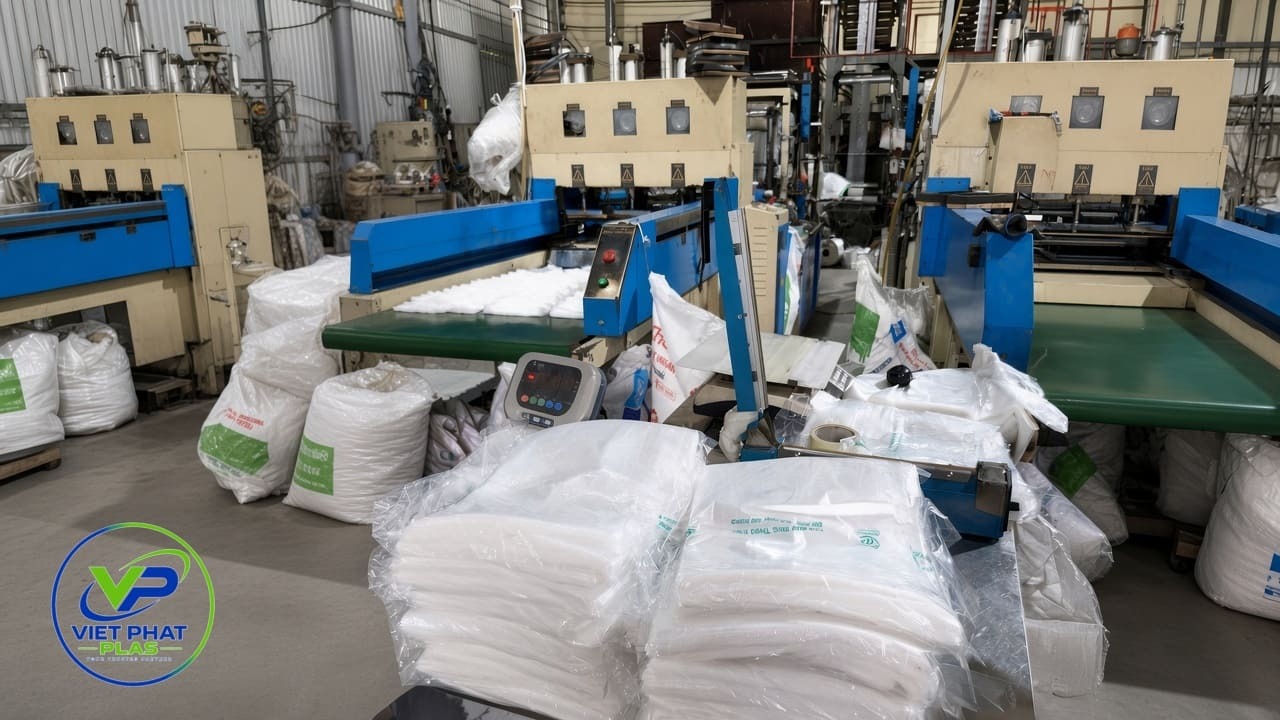
VietPhatPlas plastic bag production facility
VietPhatPlas operates an 8,000 m² factory with a 500 tons/month export capacity, built over more than 10 years of operation, shipping to more than 20 countries. On the quality side, VietPhatPlas provides third-party test reports from SGS for each production batch — an independently verifiable check rather than a self-reported defect rate. These are the numbers we can actually stand behind, and they're the ones worth asking any packaging supplier for directly, rather than taking a marketing page's claims at face value. Our full plastic bag product range is built on these same production standards, printed or not — and pricing factors for a custom run are covered in our wholesale pricing guide.
Blank vs. Branded Packaging at a Glance
|
Factor |
Blank Bag |
Custom-Printed Bag |
|
Brand exposure at point of delivery |
None |
Direct, per the 72% Ipsos finding on packaging's influence |
|
Consistency with other brand touchpoints |
N/A — no brand element |
One more "place people encounter" the brand, per Lucidpress/Demand Metric's consistency research |
|
Production consideration |
Simplest, lowest MOQ |
Requires sample approval and consistent print QC batch to batch |
|
Best for |
Internal use, unbranded resale |
Retail-facing, direct-to-consumer, food service handoff |
FAQ
Does custom printed packaging actually affect purchase decisions?
Independently, yes — a 2018 Ipsos poll for the Paper and Packaging Board found 72% of Americans say packaging design often influences their purchase decisions. That's a general consumer finding, not a guarantee for any specific product, but it's a real, traceable data point.
Is there real data on branded packaging ROI?
The most commonly cited figure is a 2019 Lucidpress/Demand Metric study finding companies with brand consistency issues estimated a 23% average revenue increase from consistent branding across all touchpoints. It's a broad brand-consistency study, not packaging-specific, so treat it as directional context rather than a guaranteed packaging ROI number.
What actually determines whether branded packaging helps or hurts a brand?
Print consistency batch to batch matters more than the logo itself. A logo that looks sharp on a sample but prints inconsistently at bulk volume undercuts the polished impression it's meant to create.
Is it worth ordering custom printed bags with logo for a wholesale or private-label order?
For buyers who resell or hand product directly to end customers, yes — that's exactly the scenario the Ipsos and Lucidpress/Demand Metric findings apply to most directly, since the bag itself becomes a brand touchpoint at the point of delivery. For purely internal or back-of-house use, a plain bag is a reasonable choice.
Does VietPhatPlas have documented customer case studies for branded packaging?
Not published on our site at this time — this article is based on independently sourced industry research and VietPhatPlas's own verified production data, not customer case studies.
Conclusion
Custom packaging brand identity holds up without needing an inflated statistic to sell it: real, independently conducted research shows packaging design measurably affects purchase decisions, and consistent branding is linked to real revenue outcomes. For B2B buyers sourcing printed plastic bags for business, the more useful question than "does branding work" is whether a supplier can deliver consistent print quality batch after batch — which is a production and QC question as much as a design one.
VietPhatPlas prints custom bags at an 8,000 m² Vietnam facility with SGS batch test reports and more than 10 years of export experience. Contact VietPhatPlas to discuss logo printing specifications for your next order.
Sources: