Types of Zipper Plastic Bags: A Complete Guide by Structure, Material, and Size

Types of zipper plastic bags fall into three practical questions for a B2B buyer: which structure fits the product (stand-up, flat, slider, or specialty), which material fits the shelf life and budget, and which size avoids paying for packaging you don't need. This guide breaks all three down with real classification data from independent packaging sources, plus VietPhatPlas's own production standards for buyers ready to place a custom order
Types of zipper plastic bags aren't really one classification — a buyer comparing quotes from any zipper bag manufacturer in Vietnam is usually mixing up three different questions at once: zipper bag materials (what the film is made of), a zipper bag sizes guide (how big a bag actually needs to be for the product), and the structural question of stand-up pouch vs flat bag (how the bag holds its shape on a shelf or in a box). Treating all three as "one kind of bag" is how buyers end up overpaying for a stand-up pouch when a flat bag would do, or choosing a thin film that fails for a product that needed a heavier gauge from the start.
This guide works through each classification separately, using real data from independent packaging sources rather than a single supplier's product list, then shows how VietPhatPlas's own production — as a zipper bag manufacturer in Vietnam — maps onto each category for buyers ready to place a custom bulk order.
Why "Types of Zipper Bags" Is Really Three Separate Questions
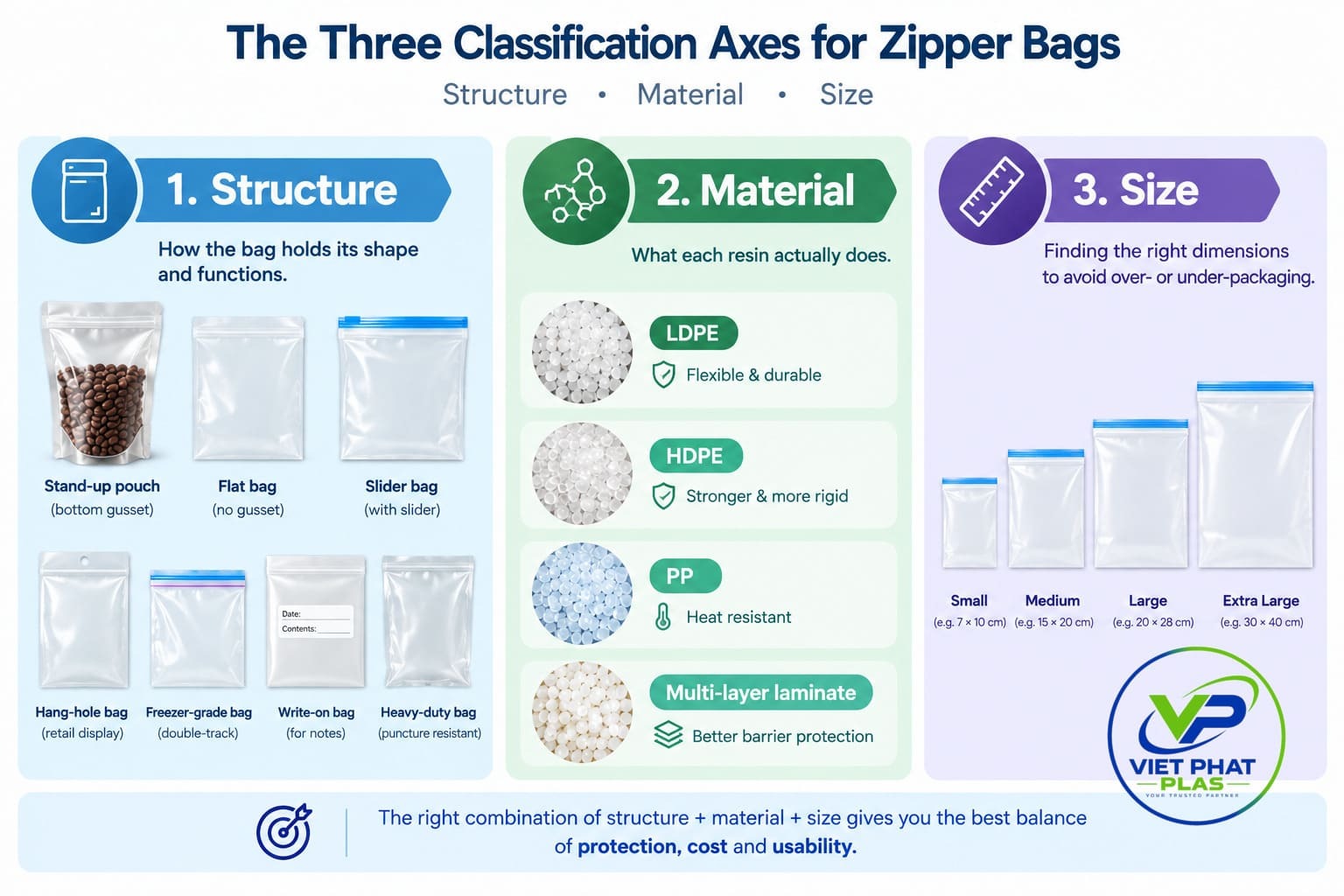
Diagram showing three classification axes for zipper bags: structure, material, and size
Most "types of zipper bags" articles blend structure, material, and size into a single list, which makes it harder to use the information when sourcing. A stand-up pouch can be made from several different materials, and a flat bag can come in the same size range as a stand-up pouch — the three questions are independent of each other, and a buyer usually needs an answer to all three before requesting a quote. The sections below separate them deliberately, in the order a sourcing conversation usually goes: shape first, then material, then size.
1. Classify by Structure: Stand-Up, Flat, Slider, and Specialty Bags
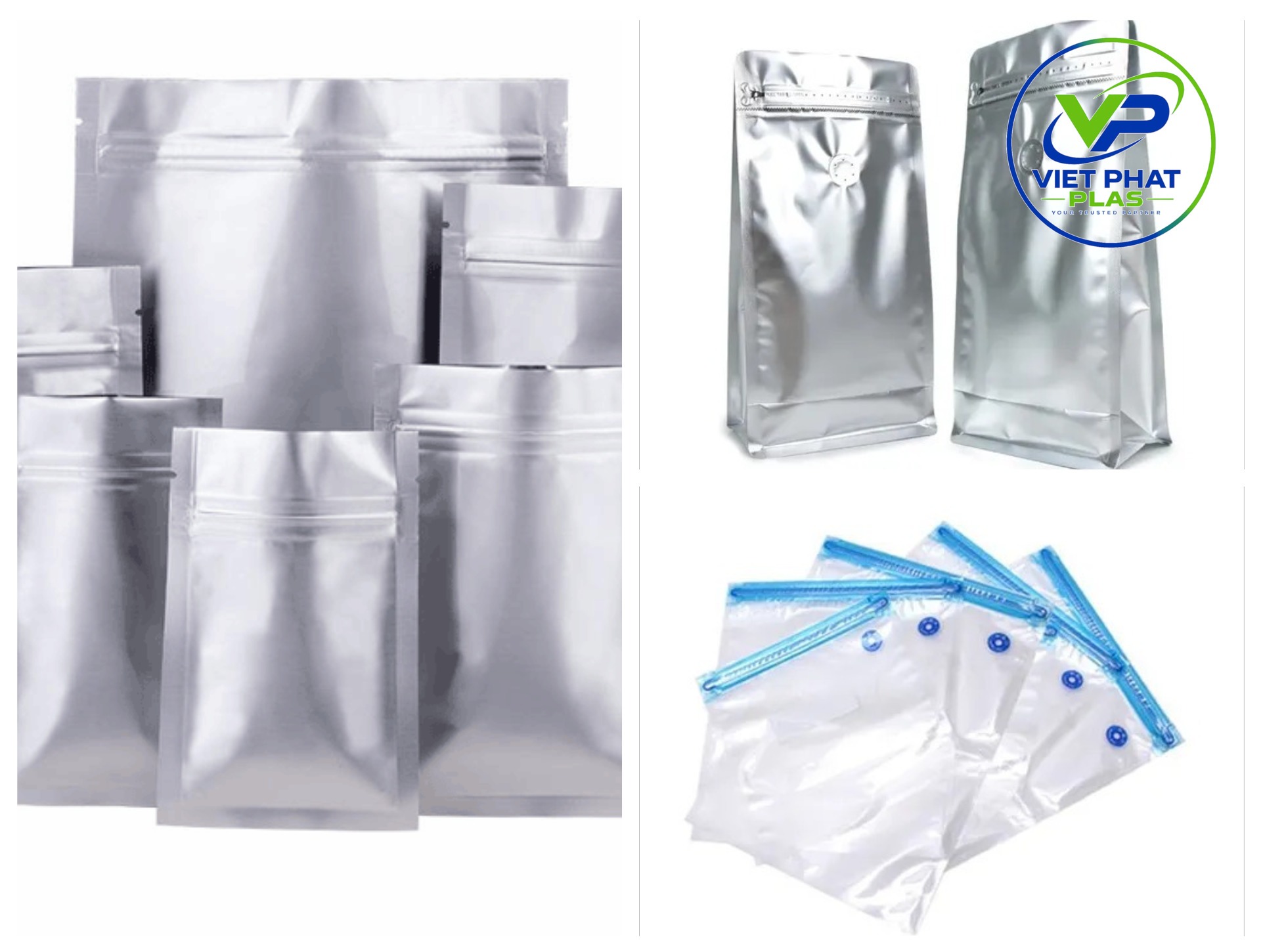
Comparison of stand-up, flat, and slider zipper bag structures
A packaging breakdown from Chuancheng Packaging catalogs seven structural types that cover most of what's actually sourced in bulk. A press-to-seal (ziplock-style) bag uses "two interlocking plastic profiles pressed together by hand," typically in LDPE film running 1.5-6 mil thick — the standard, lowest-cost option for general storage. A slider-top bag replaces the press seal with "a plastic slider that moves along the track to engage or disengage the seal," trading some seal strength for faster, easier opening on packaging lines or for end users who reopen the bag often. A stand-up pouch adds a bottom or "W-gusset" so the bag holds itself upright on a shelf, usually built from multi-layer laminate film for a stronger barrier — the format most associated with coffee, snacks, and premium retail presentation. The remaining four are more specialized: hang-hole bags (a reinforced header hole for peg-hook retail display), freezer-grade bags (LDPE formulated to stay flexible at low temperatures, usually with a double-track closure), write-on block bags (a treated white panel for pen or marker notes, common in pharmacy and workshop use), and heavy-duty industrial bags (4-6 mil film for puncture resistance, sometimes with anti-static additives for electronics).
For a B2B buyer, the stand-up pouch vs. flat bag decision is usually the first real fork in the road: a stand-up pouch costs more per unit because of the gusset and the laminate build, but it sells itself on a shelf and needs no secondary display fixture; a flat bag is cheaper and faster to produce in volume but relies on a box, a hook, or a counter display to be seen by the end buyer. Slider and specialty variants (freezer-grade, write-on, heavy-duty) are usually chosen to solve one specific handling problem rather than for shelf appearance. If a stand-up pouch is the right call, two follow-up decisions go beyond what this overview covers: the bottom structure (our flat bottom vs. side gusset pouch guide breaks down capacity and cost by fill weight) and the barrier film (our clear window vs. foil pouch guide covers shelf appeal versus light/oxygen protection).
2. Classify by Material: What Each Resin Actually Does
Material classification is where generic "types of bags" articles tend to get vague, because the broader zipper-bag market (per an independent materials overview from MyPackLove) actually spans polyethylene, polypropylene, fabric, and bio-based options — PP, for instance, "typically offers a balance of strength, rigidity, and chemical resistance," which is why some suppliers offer it for rigid-feel applications. VietPhatPlas's own production is narrower and more verifiable: LDPE and LLDPE for flexible, clear zipper film; HDPE where rigidity and a crisp hand-feel matter more than clarity; MDPE as a middle ground balancing stiffness and toughness; and biodegradable resin for buyers who need a compostable or degradable option. VietPhatPlas does not produce or print on PP, so a buyer comparing quotes across suppliers should confirm which resin family they're actually being quoted on — "plastic" alone doesn't specify performance.
The practical difference buyers should ask about is thickness-to-performance, not just resin name: a thinner LDPE bag suits light, dry goods, while a thicker LLDPE blend holds up better against punctures from sharp or heavy contents at a similar gauge. For the full mil-to-micron conversion and thickness ranges by application, our thickness guide and materials guide cover this in more depth than a types overview can.
3. Classify by Size: Avoiding Over- and Under-Packaging
Size classification gets granular fast once you look at a real supplier chart rather than a rough "small/medium/large" label. A Japanese packaging reference (JAPACKS) uses a lettered system from A to L, with each step roughly 20-30% larger than the last — Size A at 50 x 70 mm for items like stamps or AA batteries, Size E at 100 x 140 mm for photos or travel items, up to Size L at 340 x 480 mm for A3 paper or 2-liter bottles, each available in either a standard 0.04 mm or a thicker 0.08 mm film. The exact break points vary by supplier, but the pattern holds everywhere: ordering a size one or two steps larger than the product needs is the single most common way buyers overpay on a bulk zipper bag order, since the cost scales with film area almost linearly.
At the largest end of the size range, garment and textile packaging (bags sized for folded clothing, bedding, or duvets) has its own set of considerations — material weight, legal suffocation-warning requirements for bags shipped to the US, and resealable-vs-single-use tradeoffs — that go beyond what a general sizing overview can cover well. If clothing or textile packaging is the actual use case, our dedicated guide to zipper bags for clothes covers that ground in full, including the specific legal requirements by US state.
4. Closure Mechanism: Press-to-Close vs. Slider
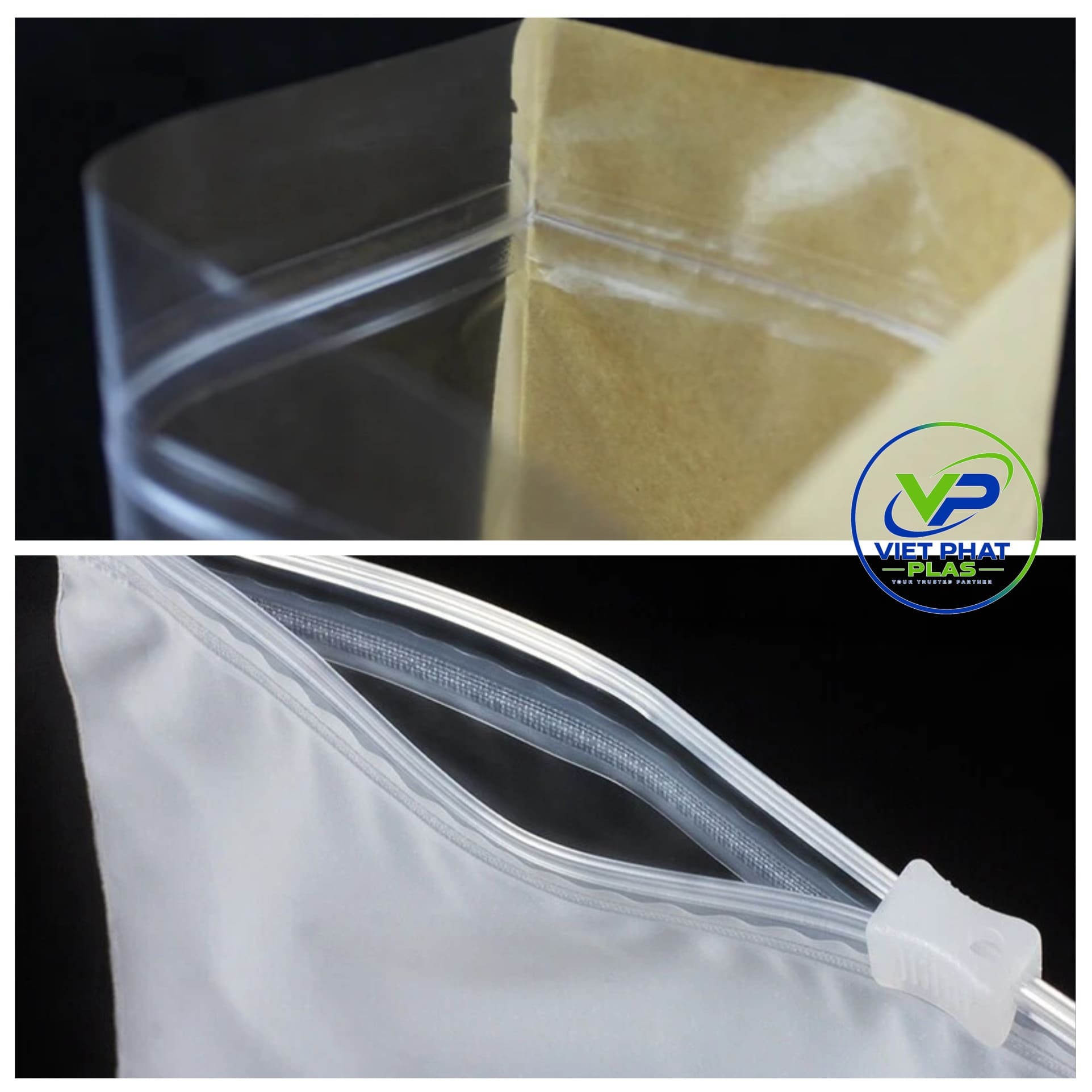
Close-up of press-to-close and slider zipper mechanisms
Structure and closure mechanism are often bundled together, but they're a separate decision: both stand-up pouches and flat bags can be built with either a press-to-close seal or a slider track. The short version is that a press-to-close seal holds a stronger barrier over time but takes more hand strength and a bit more care to seal fully, while a slider track opens and closes faster and more consistently but is a slightly weaker barrier per close cycle. For buyers specifically sourcing food-contact packaging, where reseal frequency and seal integrity both matter a great deal, our slider vs. press-to-close comparison for food storage goes deeper into reseal-cycle testing than fits here.
5. Matching a Type to Your Order
In practice, most B2B orders settle on a combination rather than a single "best" type: a flat press-to-close bag in LDPE for low-cost general storage, a stand-up pouch in laminate film for retail-facing food or specialty goods, or a heavier LLDPE flat bag for industrial or bulk-component packaging. The questions worth answering before requesting a quote are straightforward — does the product need to stand upright on a shelf, how often will the bag be reopened, and what's the heaviest or sharpest item it has to hold without puncturing. Getting those three answers first usually narrows the structure, material, and size questions down together rather than one at a time, and our production team can work through the combination with you directly once you share a sample or a target spec. For the full procurement side — RFQ preparation, MOQ by material, and export logistics — our B2B sourcing guide and wholesale pricing guide cover what happens after the type is chosen; for applications centered on cost and logistics efficiency specifically, our commercial zipper bag efficiency guide covers dimensional-cost and freight considerations this article doesn't.
Behind Every Zipper Bag Order: VietPhatPlas's Real Production Standards
The type, material, and size questions above only matter if the bag that actually ships matches what was quoted — a thinner film or a slightly off size on a reorder can undo the sourcing decision entirely. VietPhatPlas verifies this with an independent third-party SGS test report for each production batch, rather than a self-reported spec sheet, so a buyer can confirm the exact film thickness and material they're receiving against the original order — on the first order and on every reorder after it.
Request a Quote
Once you've narrowed down structure, material, and size, our team can confirm exact specs and turnaround for your order. Share the product you're packaging, the approximate quantity, and any size or thickness preference, and we'll work through the remaining tradeoffs with you rather than starting from a generic catalog spec.
Types of Zipper Plastic Bags: At a Glance
|
Classification |
Common Options |
Best For |
|
By structure |
Flat (press-to-close), stand-up pouch, slider-top, hang-hole, freezer-grade, write-on, heavy-duty |
Flat = cost; stand-up = shelf presence; specialty = one specific handling need |
|
By material (VietPhatPlas) |
LDPE, LLDPE, HDPE, MDPE, biodegradable |
LDPE/LLDPE = clarity & flexibility; HDPE = rigidity; biodegradable = compostable requirement |
|
By size |
Small (component/sample), standard (retail/storage), large (garment/bulk) |
Match to product footprint — oversizing is the most common cost leak |
|
By closure |
Press-to-close, slider track |
Press-to-close = stronger seal; slider = faster, easier reopening |
FAQ
What's the main difference between a stand-up pouch and a flat zipper bag?
A stand-up pouch has a bottom gusset that lets it hold itself upright on a shelf, usually built from a multi-layer laminate for a stronger barrier; a flat bag is a simple two-layer construction that's cheaper per unit but needs a box, hook, or display to be seen on a shelf.
Which material should I choose for a zipper bag?
It depends on the product: LDPE and LLDPE give clarity and flexibility for general and food-adjacent storage, HDPE gives more rigidity and a crisper feel, and biodegradable resin is the right choice when a compostable claim matters to the buyer or end customer. VietPhatPlas does not produce on PP, so confirm which resin a supplier is actually quoting before comparing prices.
Does VietPhatPlas manufacture custom zipper bags as a factory in Vietnam?
Yes — VietPhatPlas is a Vietnam-based zipper bag manufacturer producing custom structure, material, and size combinations for B2B export orders, with each production batch verified by an independent third-party SGS test report.
What size zipper bag should I order?
Match the bag to the product's actual footprint rather than rounding up "to be safe" — cost scales close to linearly with film area, so a size that's one or two steps larger than needed is a common and avoidable cost. For garment or textile-specific sizing, see our dedicated clothing packaging guide.
Conclusion
Types of zipper plastic bags only get confusing when structure, material, and size are treated as one decision instead of three. Settle the structure first (does it need to stand up or just hold contents), then the material (what the product and shelf life actually require), then the size (matched to the real footprint, not rounded up) — and the choice narrows quickly. VietPhatPlas produces across all three axes from a single verified Vietnam factory, with batch-level SGS testing standing behind whatever combination ends up on your quote.
Author Bio: VietPhatPlas content team — Vietnam-based B2B plastic packaging manufacturer and exporter.
Sources:
Chuancheng Packaging — 7 Essential Types of Zipper Plastic Bags
MyPackLove — Zipper Bag Materials: Plastic, Fabric and Eco-Friendly Options