Clear Window Pouch vs Foil Pouch: Choosing the Right Stand-Up Pouch for Shelf Appeal and Freshness
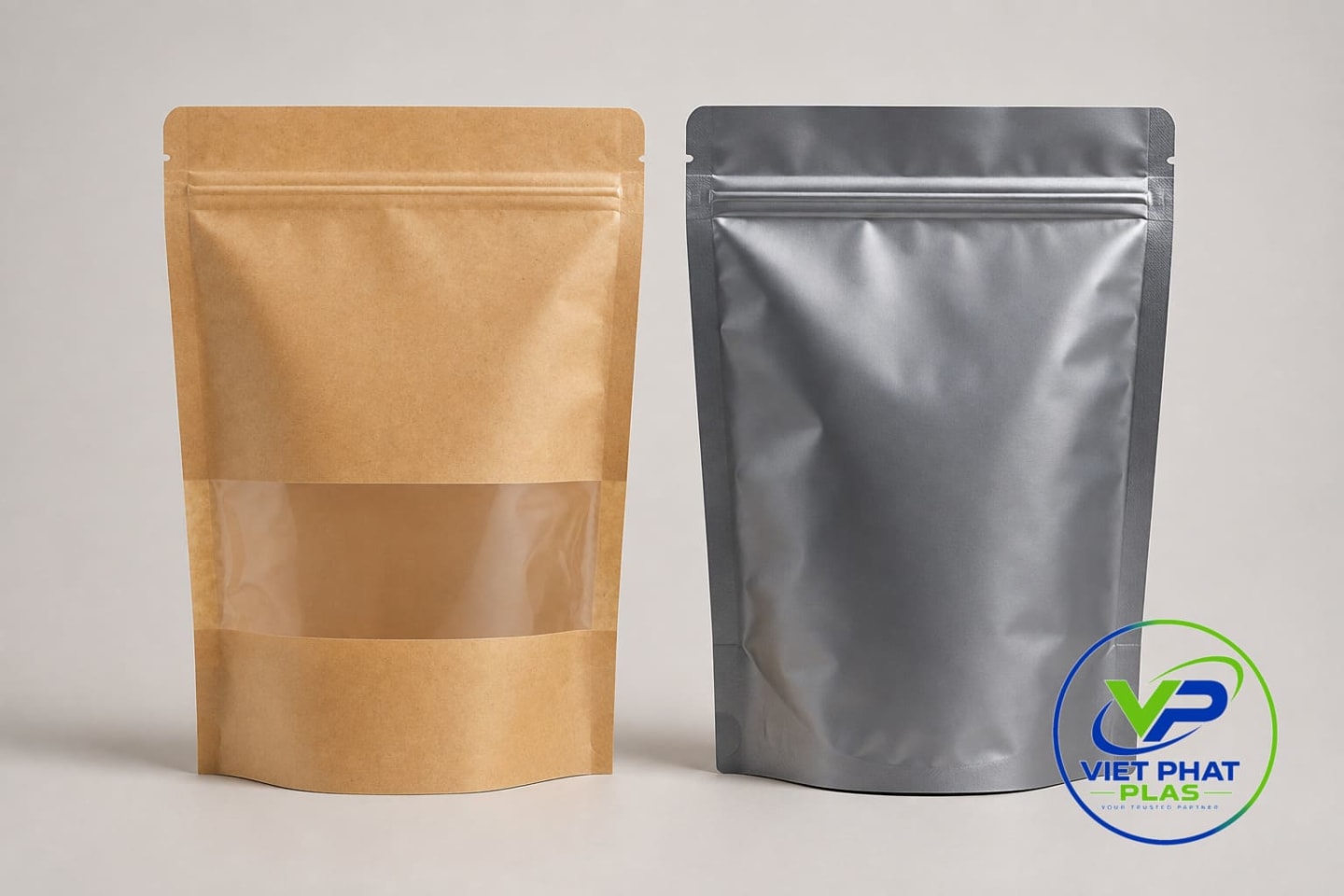
Clear window pouch vs foil pouch isn't a question of which looks better on a shelf — it's a barrier decision that directly affects how long a product stays fresh. This guide breaks down what each pouch structure actually blocks, why coffee and other light-sensitive products behave differently behind a window than behind foil, and how to match pouch type to your product's real sensitivity to light and oxygen.
Clear window pouch vs foil pouch looks like a branding decision at first glance — one shows the product, one doesn't — but the material behind that choice changes how long the contents actually stay fresh. A stand-up pouch is a stand-up pouch structurally, but the film laminate inside it is doing very different jobs depending on whether it's built to let light through or block it out.
This guide is written for private-label brands and procurement teams sourcing stand-up pouches for coffee, snacks, spices, or other packaged food, where the choice between a visible window and a fully opaque or foil-backed structure affects shelf presentation, shelf life, and how much the pouch has to work to protect what's inside.
Clear Window Pouch vs Foil Pouch: Same Format, Different Trade-offs
A stand-up pouch is defined by its shape — a flexible pouch with a gusseted or flat base that lets it stand upright on a shelf — not by what it's made of. The same format can be built from a clear laminate such as PET/PE, a fully opaque foil-backed structure such as PET/AL/PE, or a paper-look opaque structure such as BOPP/Kraft Paper/PE, and each of those material choices changes what the pouch actually does once the product is inside it, not just how it looks sitting on a shelf.
The trade-off comes down to two things a pouch can't fully deliver at once: visibility and barrier protection. A clear structure lets light pass through by definition, which is exactly what makes it good for showing off the product but also what makes it a weaker barrier against light-driven degradation. A foil-backed or opaque structure blocks that same light almost completely, which protects the contents but means the brand has to rely entirely on printing to sell the product instead of letting buyers see it. Neither structure is the "better" pouch — they're built for different products and different shelf strategies.
Clear Window Pouches: Shelf Appeal and Buyer Trust
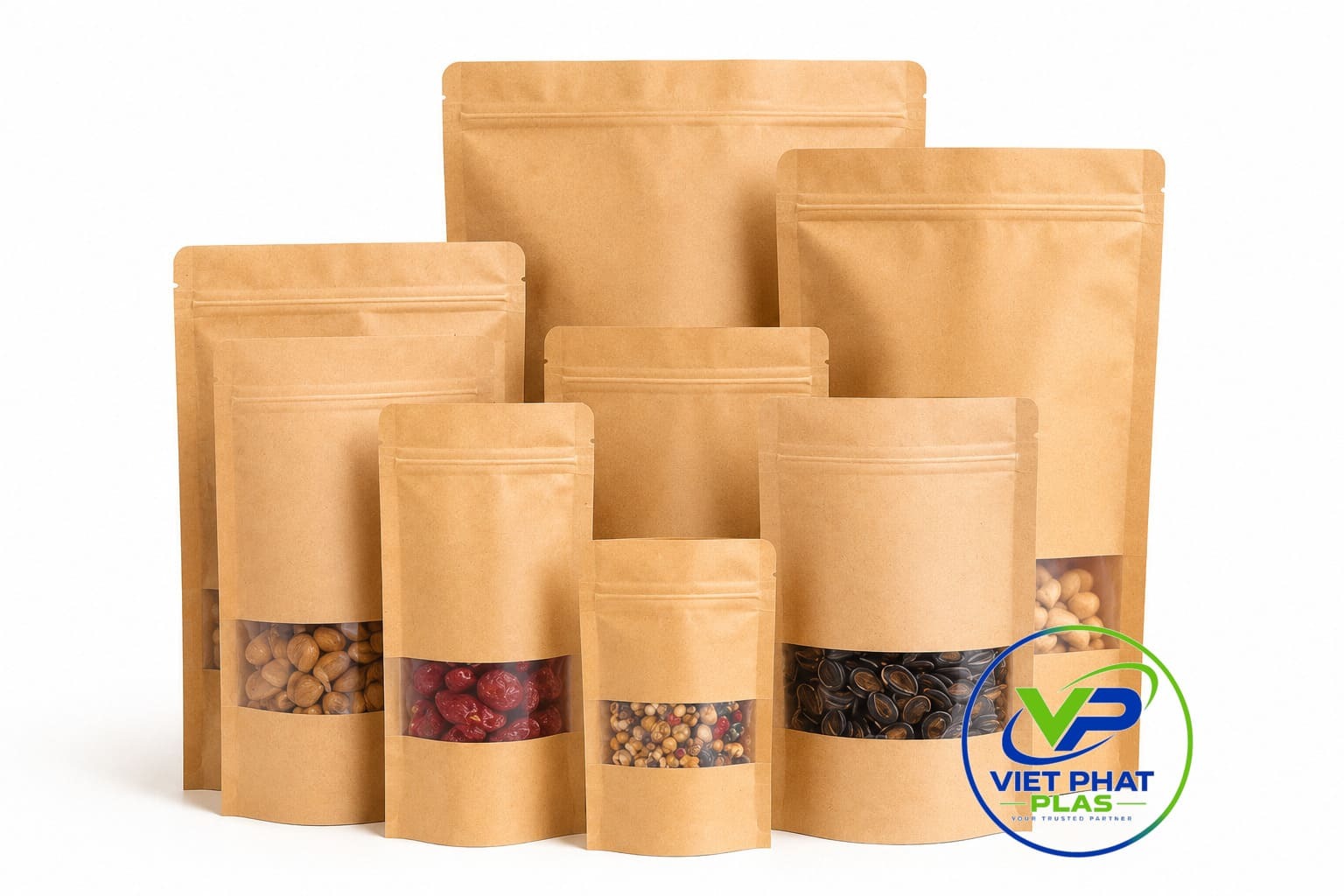
Clear window stand-up pouch on a retail shelf showing colorful snack contents inside
A clear or windowed stand-up pouch, typically built on a PET/PE laminate, exists to answer a question the buyer is already asking at the shelf: what does this actually look like. For products where color, texture, or shape is part of the sale — colorful candy, whole-bean coffee, dried fruit, granola with visible mix-ins — a transparent stand-up pouch shelf life trade-off is usually worth accepting in exchange for the buyer trust that comes from seeing the real product rather than a printed photo of it. This is also why a food pouch window vs full print decision often isn't all-or-nothing: many brands run a partial window over an otherwise printed pouch, keeping most of the barrier benefit of an opaque structure while still giving buyers a look at the product through one section.
The cost of that visibility is barrier performance. A clear PET/PE laminate lets light pass through more or less unfiltered, which accelerates any light-driven degradation in the product behind it, and it typically offers a thinner oxygen barrier than a foil-backed structure unless additional barrier layers are added to the laminate. For products that aren't particularly light- or oxygen-sensitive — many dry snacks, hard candy, or non-perishable dry goods — that trade-off barely matters. For products where freshness is closely tied to light and oxygen exposure, it matters a great deal, which is the subject of the next section.
Foil and Metallized Pouches: Light and Oxygen Protection
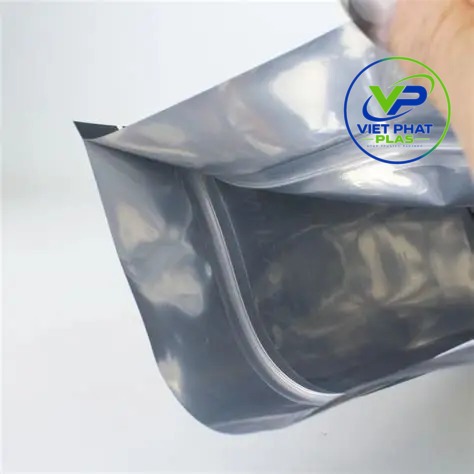
Foil stand-up pouch with inner aluminum foil layer for gas, moisture, and light barrier protection
A foil stand-up pouch — also called a metallized or opaque pouch — built on a PET/AL/PE structure adds an aluminum foil layer between the outer print film and the inner sealant layer, and that foil layer is what does the real protective work. A metallized pouch light barrier is close to a complete block on light transmission — aluminum reflects and absorbs light rather than letting it pass through — and the same foil layer also cuts oxygen and moisture transmission far below what a clear plastic laminate achieves on its own. A paper-look alternative such as BOPP/Kraft Paper/PE achieves a similar opacity and light block through the kraft paper layer instead of foil, trading some of the barrier performance for a different shelf look that many specialty food and coffee brands use deliberately.
The trade-off runs the other way from a clear pouch: buyers can't see the product, so the pouch has to sell it entirely through print, color, and branding. This is also where tamper-evident and resealable features matter more, since a foil pouch is often the only signal a buyer gets about product condition before opening — VietPhatPlas produces these structures with heat-sealed closures or tear strips for tamper evidence, alongside resealable zipper or slider options for repeat use after the first opening.
Shelf Life Impact by Product Type: Coffee, Snacks, and Spices
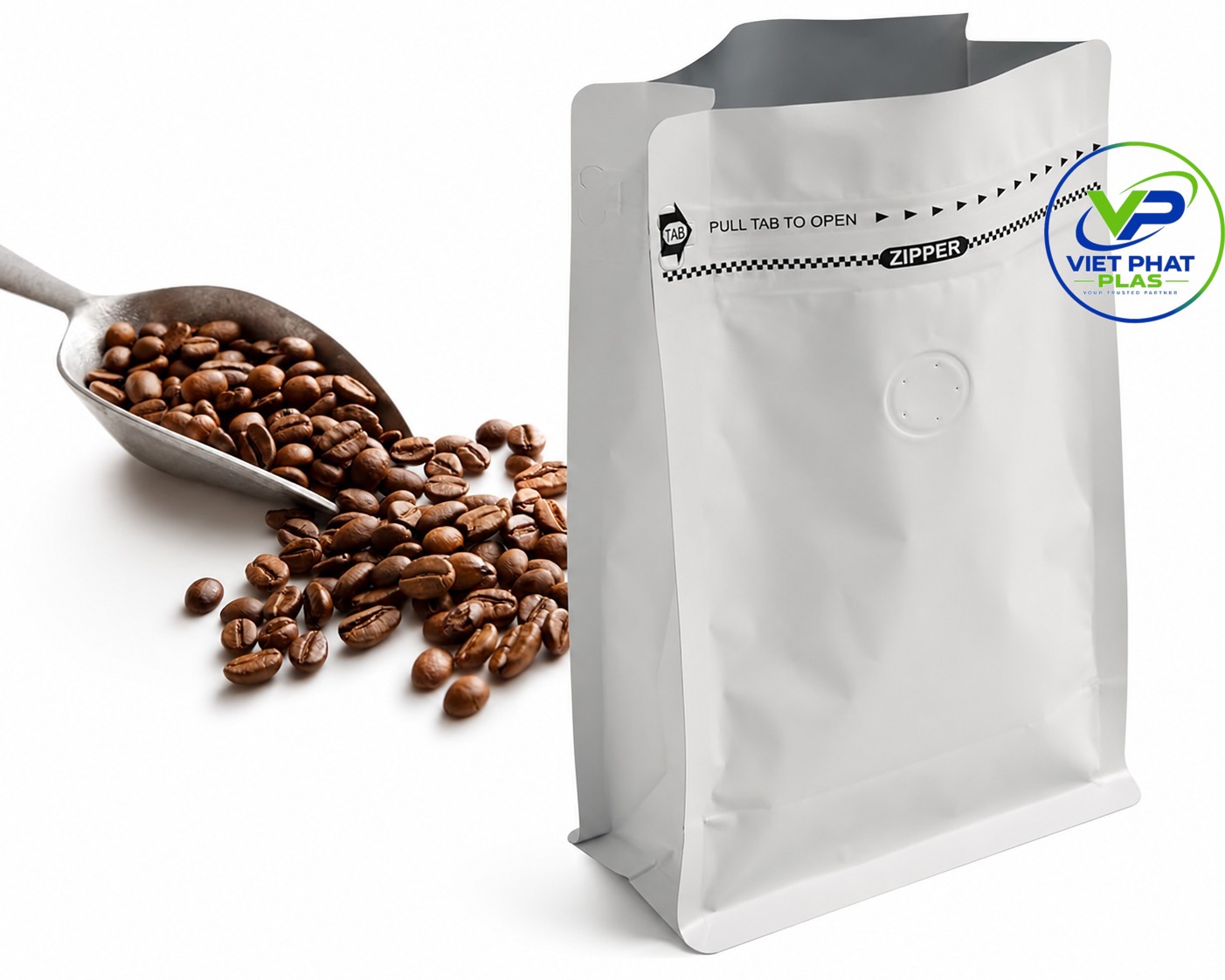
Roasted coffee beans in a foil stand-up pouch
Coffee is the clearest case for why this decision isn't cosmetic. Roasted coffee stales primarily through oxidation, and research reviewed by the Specialty Coffee Association found that for each 1% increase in oxygen exposure, the rate of degradation increases by roughly 10%, with one study showing that reducing oxygen inside the package to 0.5% could extend shelf life by as much as 20-fold compared to coffee packed in ordinary air. Light exposure compounds the problem through photodegradation, breaking down the same aromatic compounds that oxygen attacks and accelerating the loss of flavor and aroma that roasters call staling. A coffee pouch light protection strategy built on a foil-backed structure directly addresses both drivers of staling at once, which is why whole-bean and ground coffee are among the most common products packed in foil-lined stand-up pouches rather than clear ones.
Snacks and spices sit further along a spectrum rather than at either extreme. Fatty or oily snacks — nuts, chips, some baked goods — are vulnerable to the same light- and oxygen-driven rancidity that affects coffee, just typically at a slower rate, so brands often compromise with a partial window or a foil structure with strong branding instead of full transparency. Dried spices lose color and aromatic oil content under light and oxygen exposure over time but generally tolerate a longer window of acceptable quality than roasted coffee does, which is why spice pouches appear in both clear and foil formats depending on how long the brand expects the product to sit on shelf before purchase.
Comparison Table: Visibility, Barrier Protection, and Print Options
|
Structure |
Product Visibility |
Light Barrier |
Oxygen/Moisture Barrier |
Best Fit |
|
Clear (PET/PE) |
Full — product fully visible |
Low — light passes through |
Moderate, laminate-dependent |
Colorful snacks, candy, products where visual sale matters most |
|
Partial window (clear panel + print) |
Partial — one section visible |
Reduced in printed area, low in window |
Moderate, same as clear laminate |
Products wanting shelf appeal with some print-driven branding |
|
Foil/metallized (PET/AL/PE) |
None — fully printed |
Near-complete block |
High — foil layer blocks most transmission |
Coffee, fatty snacks, light- and oxygen-sensitive products |
|
Kraft-paper opaque (BOPP/Kraft Paper/PE) |
None — fully printed |
High, paper-layer dependent |
Moderate to high, structure-dependent |
Specialty coffee, premium snacks wanting a paper-look shelf presence |
Choosing Based on Your Product's Sensitivity to Light and Oxygen
The practical way to make this decision is to start with the product, not the shelf design. If the product is genuinely sensitive to light and oxygen — roasted coffee, fatty or oily snacks, anything where rancidity or aroma loss is the main freshness risk — a foil or metallized structure protects the shelf life claim on the label, and print quality has to carry the entire visual sale. If the product's main risk is looking unappealing behind unnecessary packaging rather than degrading quickly, a clear or partially windowed pouch usually earns back more in buyer trust and shelf stand-out than it costs in barrier performance.
VietPhatPlas is a Vietnam-based manufacturer producing stand-up pouches in clear PET/PE, foil-backed PET/AL/PE, and kraft-paper BOPP/Kraft Paper/PE structures, with custom sizing, printing, and window placement for B2B food brands. Contact VietPhatPlas to compare clear, partial-window, and foil pouch structures against your product's actual light and oxygen sensitivity before your next order.
FAQ
Does a clear window reduce coffee's shelf life compared to a foil pouch? Yes, generally. Roasted coffee stales mainly through oxidation, which light exposure accelerates through photodegradation. A clear or windowed pouch lets more light reach the product than a foil pouch, so most coffee brands packing whole bean or ground coffee for shelf life beyond a few weeks use foil or metallized structures rather than clear ones.
Do foil or metallized pouches need product photography instead of a visible window? Effectively, yes. Since the buyer can't see the actual product through a foil or metallized pouch, the print design — photography, illustration, or graphic branding — has to do the work a clear window would otherwise do in showing what's inside.
Which pouch type suits colorful snacks better? A clear or partially windowed pouch usually suits colorful, visually appealing snacks better, since the product's own color and texture become part of the shelf appeal. Products that are less visually distinctive or more prone to rancidity often perform better in a foil structure with strong print design instead.
Can a stand-up pouch have a small window instead of being fully clear or fully foil? Yes. A partial window over an otherwise printed, opaque pouch is a common middle-ground option, giving buyers a view of the product in one section while keeping most of the barrier protection and branding space of a foil structure.
Does switching between clear and foil pouch materials affect MOQ or lead time? Material choice itself doesn't usually change the MOQ, but switching structures for an existing SKU counts as a new specification requiring its own sample approval. VietPhatPlas's standard MOQ for stand-up pouches is 500,000 pieces, with production lead time of 20-25 days after the sample is approved — budgeting for that approval step matters most when comparing a new material structure against a current one.
Conclusion
Clear window pouch vs foil pouch isn't a question with one right answer — it's a match between a product's actual sensitivity to light and oxygen and how much visual sale the shelf needs to do. Coffee and fatty snacks generally belong behind foil or kraft-paper opacity; colorful, less perishable products often sell better behind a clear or partial window. Getting that match right protects both the shelf-life claim on the label and the buyer trust the packaging is supposed to build.
VietPhatPlas is a Vietnam-based manufacturer supplying stand-up pouches in clear, foil/metallized, and kraft-paper structures to B2B food brands and distributors across export markets, with customized printing and sizing for repeat production runs. Contact VietPhatPlas to request samples in the structure that matches your product's light and oxygen sensitivity.