Flat Bottom vs Side Gusset Pouch: Choosing the Right Stand-Up Packaging for Food Brands

Flat bottom vs side gusset pouch comes down to a trade-off most buyers don't realize they're making until the sample arrives wrong: shelf stability and print space against fill capacity and per-unit cost. This guide breaks down how each bottom structure actually behaves once it's filled, sealed, and sitting on a shelf, and how to match pouch style to your product's weight and your filling line.
Flat bottom vs side gusset pouch is a question that only comes up once a brand has already decided on a stand-up pouch and needs to pick the bottom structure — and it's a more consequential decision than it looks. The two styles share the same basic idea, a flexible pouch that stands upright on a shelf, but the way each one is built changes how much product it actually holds, how it prints, and how it behaves on a filling line.
This guide is for private-label brands and procurement teams sourcing stand-up pouches for coffee, snacks, pet food, or other packaged goods, where the choice between a flat bottom and a side gusset structure affects unit cost, shelf presentation, and how the pouch performs once it's actually filled rather than sitting empty on a sample table.
Flat Bottom vs Side Gusset Pouch: Three Bottom Structures, Three Trade-offs
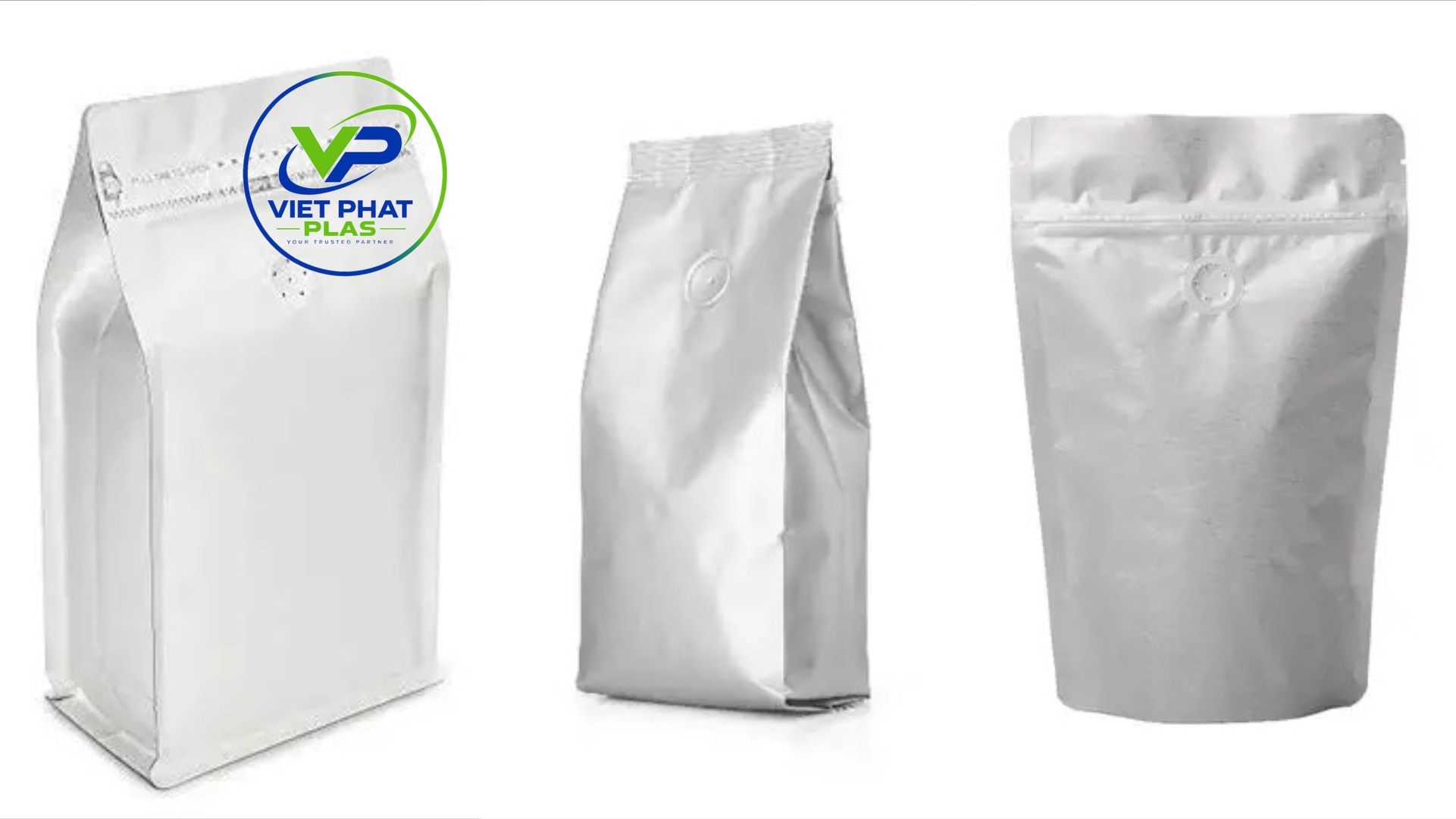
Three stand-up pouch bottom structures — flat bottom, side gusset, and doypack — shown side by side
"Stand-up pouch" describes a category, not one specific bottom structure, and understanding the main stand-up pouch types is the first step before comparing any two of them head to head. Three shapes dominate the category: a flat bottom pouch, built with a rectangular base panel that gives it five printable faces and a box-like stance; a side gusset pouch, built with folded panels on each side that expand outward as it fills; and the classic doypack-style pouch, a rounded or oval gusseted base that's become the default silhouette most people picture when they hear "stand-up pouch." This guide focuses on the flat bottom vs side gusset pouch comparison specifically, since that's the decision point most private-label brands actually face once they've settled on a stand-up format over a flat bag or a doypack.
The trade-off across all three comes down to the same handful of variables: how much the pouch holds relative to its footprint, how it looks and prints on shelf, how it performs on an automated filling line, and what it costs per unit. Flat bottom and side gusset sit at different points on that spectrum, which is why the same product can end up in either structure depending on which variable a brand is optimizing for.
Flat Bottom Pouches: Best Shelf Stability for Dense or Heavy Fill
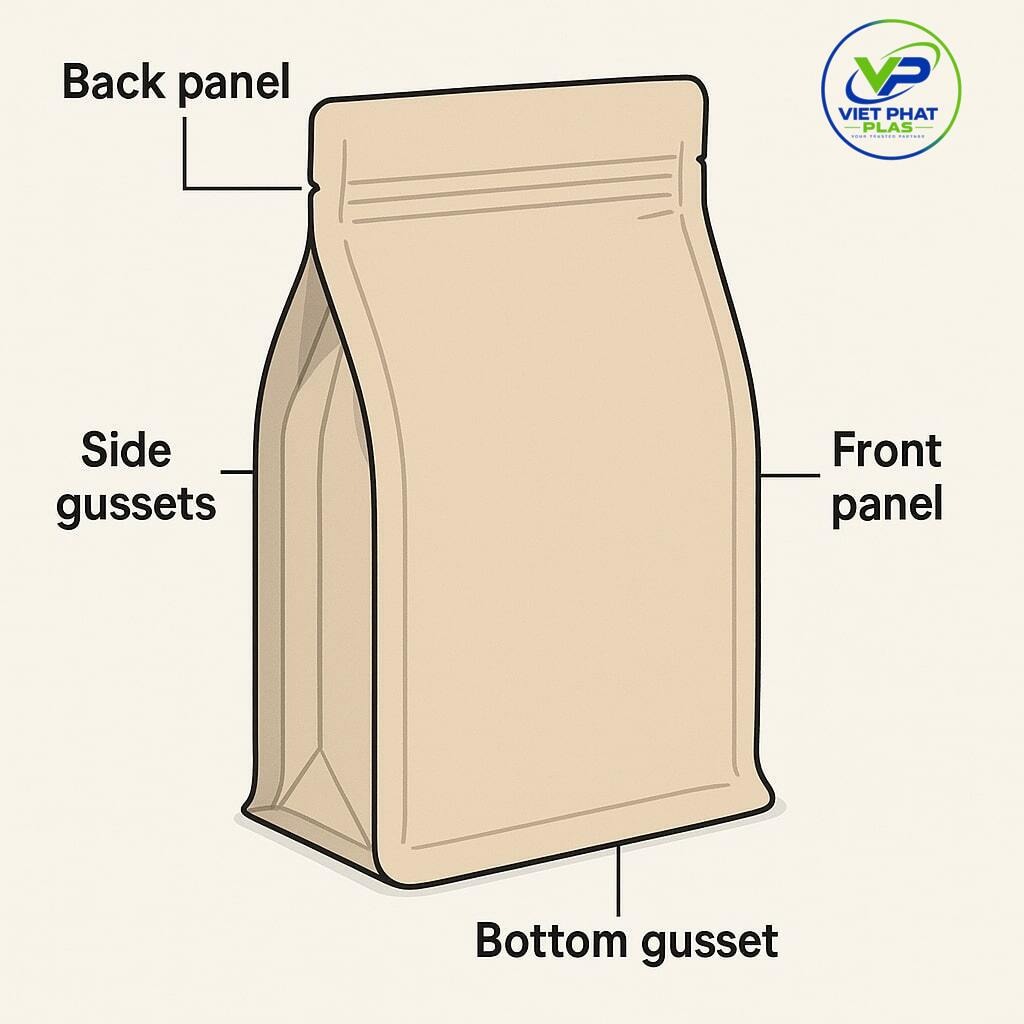
Flat bottom pouch with 5-panel construction for food/goods packaging
A flat bottom pouch is built from five panels — front, back, two side gussets, and a rectangular base — that fold into a box-like shape once the pouch is filled. That base panel is what gives a flat bottom pouch its shelf stability: it stands on a flat, wide footprint rather than balancing on folded gusset panels, which matters most for dense or heavy fills like whole-bean coffee, granola, or pet kibble that would otherwise tip a lighter-footprint pouch over on a shelf. The five-panel construction is also more complex to manufacture than a two-panel or side-gusset structure, which is generally reflected in a higher per-unit cost for a comparable size and material.
The stability trade-off comes with a genuine flat bottom pouch shelf presence advantage worth weighing on its own, covered in the "Shelf Presence and Print Space" section below — but the short version is that a flat bottom pouch's rectangular base and flat front panel give it a premium, box-like stance that many brands use deliberately for products positioned above commodity pricing.
Side Gusset Pouches: More Capacity, Lower Cost, Flatter Storage
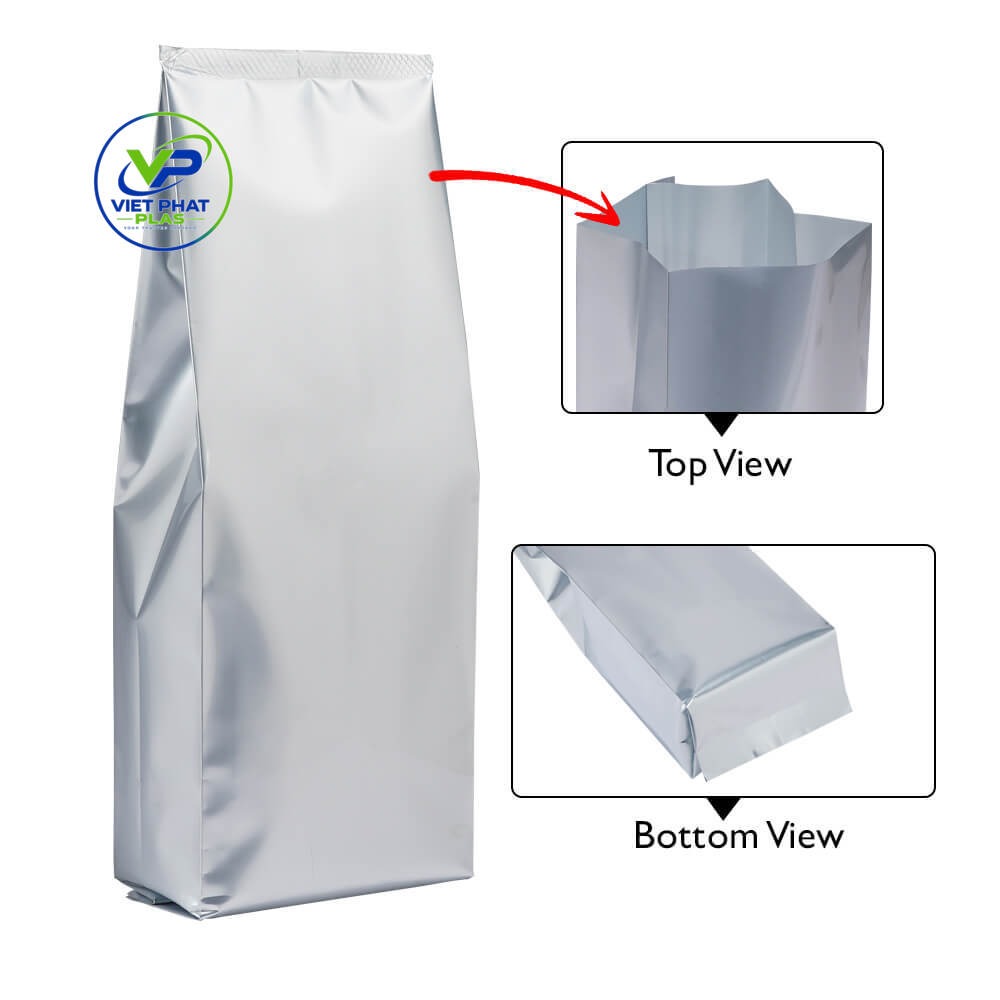
Side gusset stand-up pouch with folded side panels expanded outward showing increased fill volume
A side gusset pouch folds inward at both sides rather than adding a separate base panel, and those side gussets are what define its trade-offs. As a side gusset bag capacity advantage often cited in the industry, the folded side panels let the pouch expand outward as it's filled, adding usable volume beyond what a flat bottom's fixed five-panel base allows at the same nominal width and height. That said, the direction and size of this difference isn't as settled across packaging sources as it's sometimes presented — a flat bottom's reinforced base can also add usable volume of its own on denser fills, so the safest approach is to compare actual fill volume on matched samples from your supplier rather than assuming one structure always outperforms the other by a fixed margin. The simpler construction — two gusset folds instead of a separate base panel — also generally makes a side gusset pouch less costly to produce per unit than a comparable flat bottom pouch, though the actual price gap depends more on size, film structure and material choice, and print coverage than on bottom style alone.
Side gusset pouches also stack and store flatter than flat bottom pouches before filling, since there's no rigid base panel holding the pouch open, which matters for brands managing warehouse space or shipping empty pouches to a co-packer for filling. The trade-off is a narrower stance once filled — a side gusset pouch generally needs a slightly heavier or denser fill than a flat bottom to stand reliably upright on a retail shelf.
Shelf Presence and Print Space: Where Each Style Wins
Print space follows directly from the panel structure. A flat bottom pouch's flat, undistorted front and back panels give a designer more usable print real estate than a side gusset's narrower front panel flanked by folded sides, and the box-like stance reads as more premium on shelf — which is why flat bottom pouches show up disproportionately often on higher-priced specialty coffee, premium snacks, and gift-positioned products. A side gusset pouch's front panel is still fully printable, but the narrower stance and lower shelf footprint generally signal a more everyday, value-positioned product even when the film quality and barrier performance are identical.
Both structures support resealable stand-up pouch closures — zipper or slider options that let the end user reopen and reclose the pouch after first use — so the print-space and shelf-stance differences are really about brand positioning rather than functional performance. A brand selling a commodity dry good at volume often gets more value from a side gusset pouch's lower unit cost than from print space it doesn't need; a brand positioning a product as premium often gets more value from a flat bottom pouch's shelf presence than it loses in the higher per-unit cost.
Comparison Table: Capacity, Cost, and Best-Fit Product Types
Comparison chart of flat bottom and side gusset pouches across capacity, cost, and product fit criteria
|
Factor |
Flat Bottom Pouch |
Side Gusset Pouch |
|
Fill capacity at same footprint |
Reinforced base can carry dense fills well; expansion is limited |
Often cited as higher due to gusset expansion; verify with matched samples |
|
Shelf stability |
Strongest — flat, wide base |
Good, but needs adequate fill weight/density |
|
Per-unit cost |
Generally higher — five-panel construction |
Generally lower — simpler two-gusset construction |
|
Print space |
Widest — flat front and back panels |
Narrower front panel, still fully printable |
|
Empty-pouch storage |
Bulkier — base panel holds shape |
Flatter — folds down before filling |
|
Typical best fit |
Whole-bean coffee, granola, premium snacks, pet food |
Ground coffee, chips, dried fruit, everyday dry goods |
Matching Pouch Style to Your Fill Weight and Filling Line
The most reliable way to choose is to start with what's actually going inside the pouch, not which style looks better empty. A dense or heavy product — whole beans, kibble, chunky snacks — generally performs better in a flat bottom pouch because the wide base keeps it standing once filled, while a lighter or finer product often does fine in a side gusset pouch and benefits from the lower per-unit cost and better storage efficiency before filling. Filling-line compatibility matters just as much: flat bottom pouches typically need forming and filling equipment set up for a rectangular base, while side gusset pouches often run on the same general stand-up-pouch filling lines used for doypack-style pouches, which can matter if a brand is adding a new SKU to an existing line rather than commissioning new equipment.
VietPhatPlas is a Vietnam-based manufacturer producing stand-up pouches in flat bottom and side gusset structures, with custom sizing, film structure, and printing for B2B food brands. Contact VietPhatPlas to compare flat bottom and side gusset samples against your product's actual fill weight before your next order.
FAQ
Does a side gusset pouch hold more than a flat bottom pouch of the same size? It's often cited as holding more at the same nominal footprint, since the side gussets expand outward as the pouch fills. This isn't a fixed rule, though — a flat bottom pouch's reinforced base can also carry meaningful volume on denser fills, and packaging-industry sources don't fully agree on the direction of the difference. Comparing actual fill volume on matched samples from your supplier is more reliable than assuming either structure always wins.
Which pouch style stands up better on a supermarket shelf? A flat bottom pouch generally stands more reliably, since its rectangular base gives it a wider, flatter footprint. A side gusset pouch can stand just as well once it's adequately filled, but a lighter or unevenly distributed fill is more likely to cause it to lean or tip.
Is a flat bottom pouch more expensive than a side gusset pouch? Generally, yes, per unit, because the five-panel construction is more complex to manufacture than a side gusset's two-fold structure. The actual price gap depends heavily on size, film structure, and print coverage, so it's worth comparing quotes on matched specifications rather than assuming a fixed percentage difference.
Which style should I choose for whole-bean coffee or snacks? Whole-bean coffee and denser snacks like granola or nuts generally do better in a flat bottom pouch, since the weight and shape need the wider base for shelf stability. Lighter snacks like chips or dried fruit often work well in either structure, and a side gusset pouch's lower cost can make it the more practical choice at volume.
Does switching between flat bottom and side gusset affect MOQ or lead time? Not directly — VietPhatPlas's standard MOQ for stand-up pouches is 500,000 pieces, with production lead time of 20–25 days after sample approval, regardless of bottom structure. Switching structures for an existing SKU still counts as a new specification requiring its own sample approval before that lead time starts.
Conclusion
Flat bottom vs side gusset pouch isn't a question of which structure is objectively better — it's a match between what's going inside the pouch, how it needs to look on shelf, and what the per-unit cost needs to be. Dense, heavy, or premium-positioned products generally belong in a flat bottom pouch's wider, more stable base; lighter or value-positioned products often get more practical benefit from a side gusset pouch's higher capacity-to-cost ratio and flatter storage before filling.
VietPhatPlas is a Vietnam-based manufacturer supplying flat bottom and side gusset stand-up pouches to B2B food brands and distributors across export markets, with customized sizing and printing for repeat production runs. Contact VietPhatPlas to request samples in the structure that matches your product's fill weight and filling line.