Custom Plastic Bag Manufacturer: Printing Methods Guide
Most "custom plastic bag manufacturer" pages read the same: a list of bag types, a pitch about branding, and a company introduction. This guide skips that and answers the two questions that actually decide whether an order goes well — which printing method fits your design and volume, and what to verify about a manufacturer before you commit to one.
Searching for a custom plastic bag manufacturer usually turns up pages that all say the same three things: bags build your brand, printing is affordable at scale, and the company writing the page is a great choice. None of that helps you place a correct order. What actually determines whether your custom bags come out right — and at a fair price — is the printing method your design and volume call for, and whether the manufacturer you pick can be verified rather than just trusted on faith. This guide covers both.
How Custom Plastic Bags Are Actually Printed
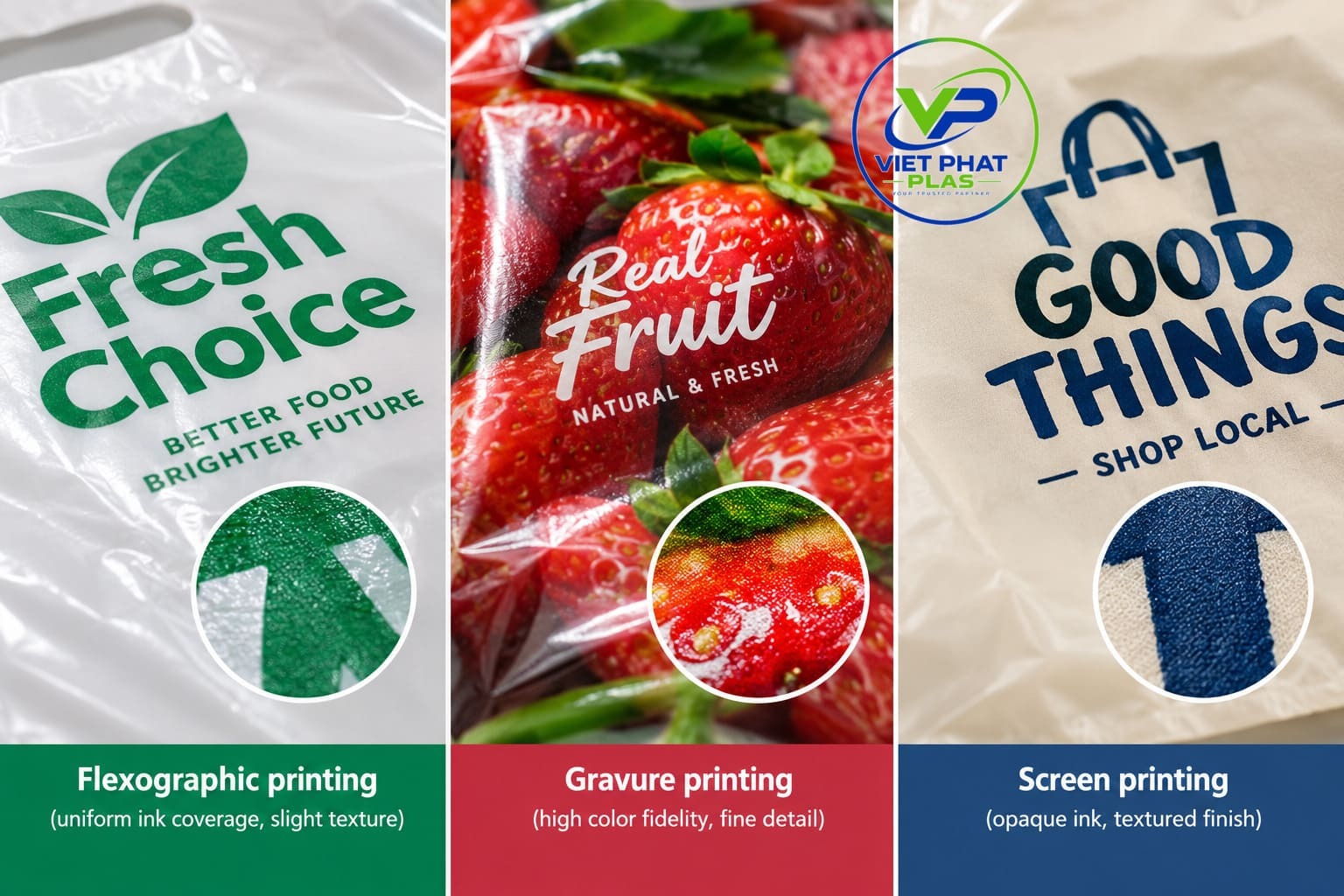
Close-up comparison of flexographic, gravure, and screen-printed plastic bag surfaces
Three printing methods cover almost all custom plastic bag orders, and each one is suited to a different job:
Flexographic printing uses flexible relief plates — one per color — to transfer ink onto rolls of film before the bags are formed. It's fast, uses water-based inks, and is the industry default for poly carryout, merchandise, and mailer bags ordered in the thousands. Because each color requires its own plate, setup cost is fixed regardless of order size, which is why flexo quotes typically start at order volumes in the thousands rather than the hundreds.
Gravure (rotogravure) printing uses engraved cylinders to transfer ink, producing the highest color fidelity and the finest detail of the three methods — the standard for photographic-quality images and tight color registration across many colors. The catch is cost: engraving a cylinder is expensive, and that cost only makes sense spread across very large production runs. Gravure is not a premium option for small orders; it's specifically a large-volume method that happens to also produce premium results.
Screen printing pushes ink through a mesh stencil directly onto the bag. It's slower per unit than flexo or gravure and typically limited to fewer colors, but it needs no film plates or cylinders, which makes it the most accessible method for shorter runs, thicker gusseted bags, or bags that are already made up before printing.
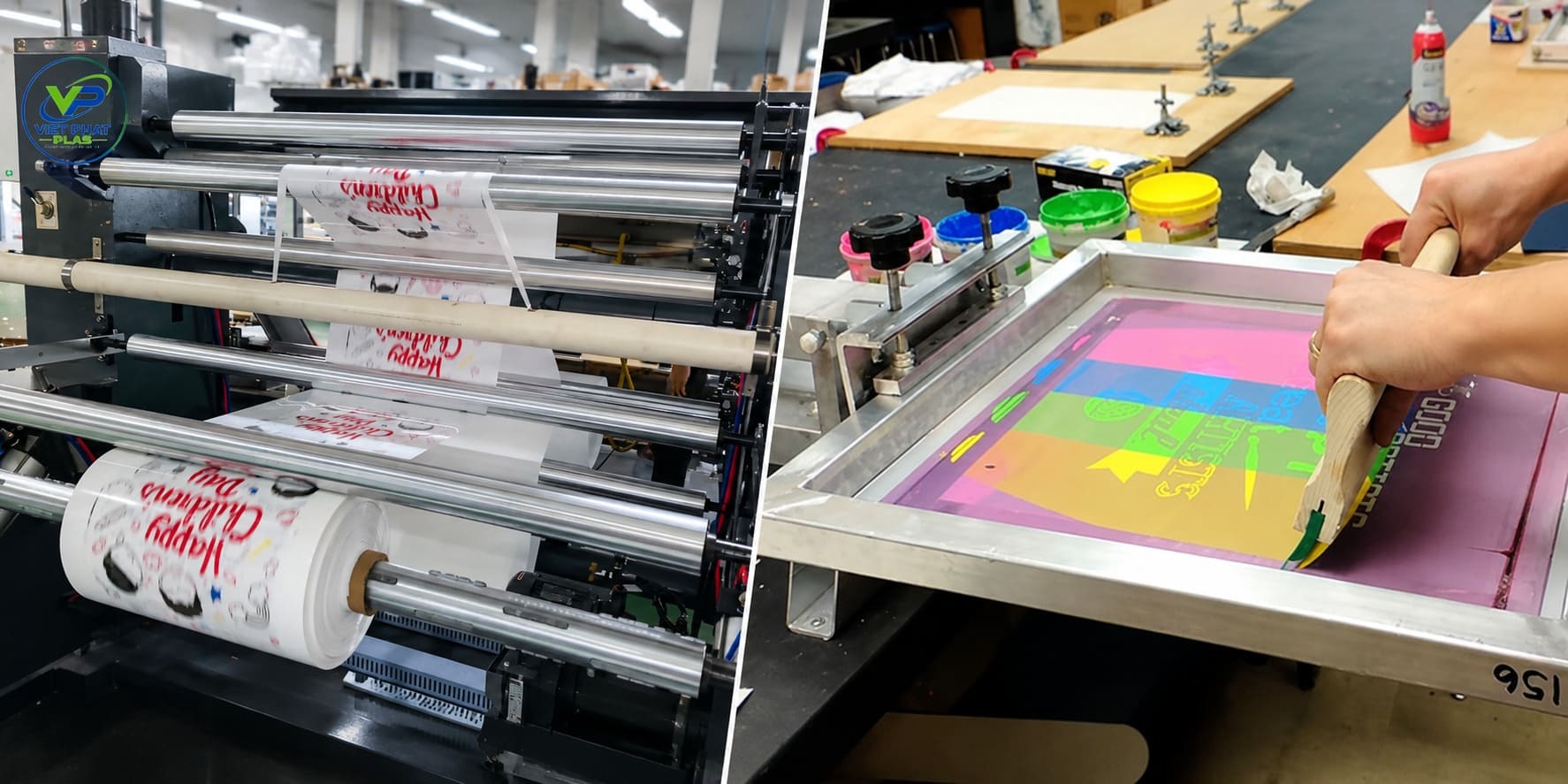
Cheap Custom plastic bags with flexographic printing and screen printing
Matching Printing Method to Order Volume and Budget
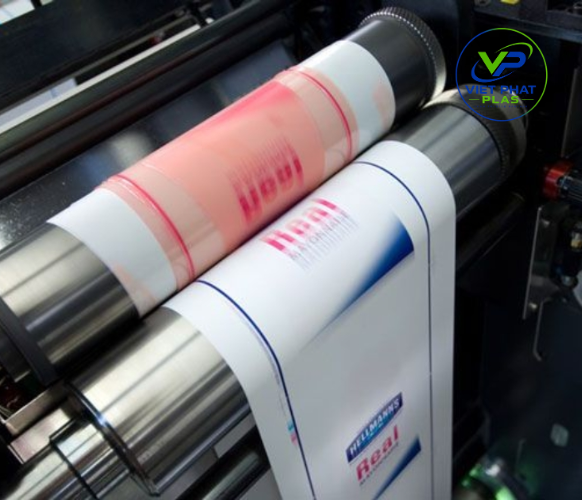
Custom plastic bags with gravure printing
As a practical starting point: small trial orders or bags with only one or two colors usually fit screen printing. Standard multi-color branded bags at commercial volume are almost always flexo, since it's the method built for exactly that combination of speed and moderate setup cost. Gravure only becomes worth discussing once volume is high enough, and image quality demanding enough, to justify the cylinder engraving cost — a national retail chain's packaging, for example, rather than a single store's order. A manufacturer that recommends the same method regardless of your volume or design complexity is worth a follow-up question.
What to Verify Before Choosing a Manufacturer
A manufacturer's own claims about certifications, machine counts, or production capacity are marketing copy until they're backed by something you can check. Four things are worth confirming directly rather than taking at face value:
Certifications and test reports. Ask for the actual, current test or certification document — not just a logo or a name on a page — and check that it covers the specific product you're ordering, not the company in general. A quality claim without a document behind it is not verifiable.
A physical print proof before full production. Color and print quality vary enough between a digital mockup and the finished film that a physical proof, not just a PDF, is the only reliable check before committing to a full run.
Realistic MOQ for your chosen method. A manufacturer quoting flexo pricing for a screen-printing-sized order (or vice versa) is a sign they haven't matched the method to your actual volume — see the section above.
Lead time that accounts for the method. Gravure cylinder engraving and flexo plate-making both add lead time upfront that screen printing doesn't; a quote that doesn't distinguish between these is likely an estimate, not a real production schedule.
For the branding case for custom bags — why printed packaging works as long-term marketing — see Custom Plastic Bags with Logo: Building Brand Identity and How Shopping Bags for Brand Promotion Help Businesses Grow. For how the bag material itself affects print quality — HDPE, LDPE, or PP — see Plastic Bag Material for Printing: HDPE vs LDPE.
At a Glance
|
Method |
Best for |
Typical order size |
Trade-off |
|
Screen printing |
Small runs, 1-2 colors, thicker/gusseted bags |
Hundreds to low thousands |
Slower per unit, fewer colors |
|
Flexographic |
Standard multi-color commercial orders |
Thousands+ |
Fixed plate cost per color regardless of volume |
|
Gravure |
Photographic detail, tight multi-color registration |
Very large runs |
High upfront cylinder engraving cost |
FAQ
Which printing method is cheapest for a small custom bag order?
Screen printing usually works out cheapest for small runs, since it doesn't require film plates or engraved cylinders, though it's slower per unit and typically limited to fewer colors.
Is gravure printing better than flexo?
Gravure produces higher color fidelity and finer detail, but it's not simply "better" — its engraved-cylinder cost only makes sense at very large production volumes, so it's the right choice for high-volume, high-detail orders, not for typical commercial runs.
What should I ask a manufacturer before placing a custom bag order?
Ask for the actual test or certification document for your specific product, request a physical print proof before full production, confirm the MOQ matches the printing method being quoted, and get a lead time that reflects that method's setup requirements (plate-making or cylinder engraving).
Do all custom plastic bag manufacturers offer all three printing methods?
No — capability varies by manufacturer. Confirming which methods a manufacturer actually runs in-house, rather than assuming, is part of verifying their capability.
Conclusion
Choosing a custom plastic bag manufacturer comes down to matching the right printing method to your design and volume, then verifying — rather than assuming — that the manufacturer can actually deliver on certifications, proofing, MOQ, and lead time. VietPhatPlas manufactures custom printed plastic bags in Vietnam from an 8,000 m² factory, with an export capacity of up to 500 tons per month, 10+ years of experience, and shipments to 20+ countries; quality is verified through independent third-party SGS batch test reports available on request. Contact VietPhatPlas to discuss which printing method fits your order.
Author Bio: Written by the VietPhatPlas content team, based on published industry references on plastic bag printing methods and VietPhatPlas's own verified production data.
Sources