What California SB 343 Truth-in-Labeling Actually Requires
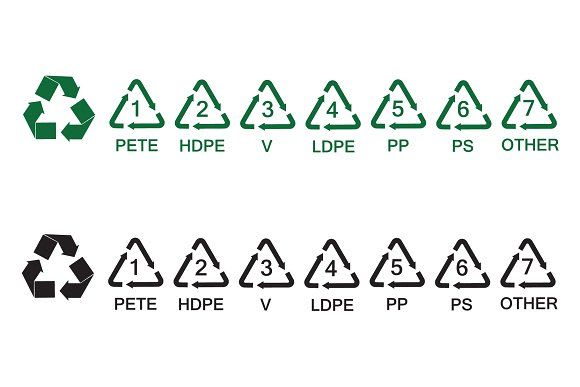
California SB 343 truth in labeling was set to restrict recyclability claims on packaging starting October 4, 2026 — but a federal court blocked enforcement in July 2026, and that injunction is still in effect. This guide explains what SB 343 actually requires, what the court injunction does and doesn't change, and why plastic bag exporters shipping into the US should keep preparing even though the deadline currently isn't being enforced.
California SB 343 truth in labeling was supposed to become a hard compliance line for anyone selling plastic packaging into California: use the recycling "chasing arrows" symbol or claim a product is recyclable without meeting the law's criteria, and risk enforcement starting October 4, 2026. That deadline is still on the books — but as of this writing, it isn't being enforced, because a federal court blocked California from enforcing SB 343 while a constitutional challenge to the law plays out.
This matters directly for plastic bag manufacturers and exporters shipping into the US market, where recyclability claims on packaging are exactly what SB 343 restricts. This guide covers what the law requires, what the court actually blocked, and why "the deadline is paused" is not the same thing as "this is no longer worth preparing for."
What California SB 343 Truth-in-Labeling Actually Requires
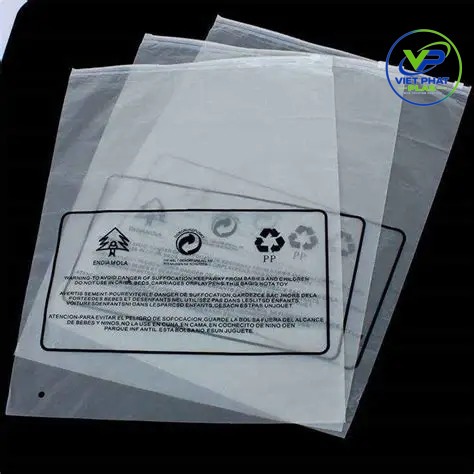
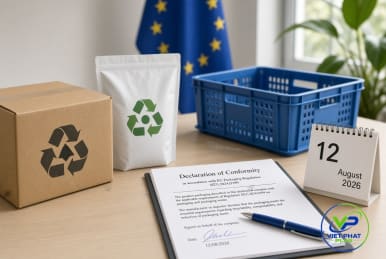
Recycling chasing arrows symbol on plastic packaging
SB 343 (Allen, Chapter 507, Statutes of 2021), administered by CalRecycle, restricts the use of the chasing-arrows recycling symbol and other recyclability claims on products and packaging sold in California unless the material meets specific criteria — most notably what's commonly called the "60/60" requirement: the material must be collected for recycling by programs that reach at least 60% of California's population and actually be sorted and sent to end markets for recycling, not just theoretically recyclable in a lab sense. Items that don't meet that bar aren't supposed to carry an unqualified recyclable claim or the chasing-arrows symbol at all.
As originally written, the restriction was set to apply to products and packaging manufactured after October 4, 2026, with items manufactured before that date exempt regardless of when they're actually sold. CalRecycle's other obligations under the law — a material characterization study completed in 2024, expanded material-recovery-facility reporting starting in 2025, and a follow-up study due in 2027 and every five years after — continue independent of the labeling restriction's enforcement status.
Timeline: How SB 343 Got to This Point
SB 343 was signed into law in 2021, giving CalRecycle and the industry roughly five years to prepare before the labeling restrictions were due to take effect. Industry groups, led by the California League of Food Producers along with other trade associations, filed suit challenging the law's constitutionality earlier in 2026, arguing that several of its provisions were too vague to give manufacturers fair notice of what counts as compliant and that the restriction on truthful recyclability claims raised free-speech concerns under the First Amendment.
On July 14, 2026, Judge William Q. Hayes of the US District Court for the Southern District of California granted a preliminary injunction in California League of Food Producers, et al. v. Bonta, blocking California Attorney General Rob Bonta from enforcing SB 343 while the case proceeds. As of the most recent reporting available at the time of writing (late August 2026), no trial date had been set, and environmental groups — Earth Island Institute, the Plastic Pollution Coalition, and Californians Against Waste — had separately asked the court for permission to join the case to help defend the law, since the Attorney General's office was the only party defending it.
The July 2026 Injunction: What It Blocks and What It Doesn't
The injunction is narrower than "SB 343 is dead," and broader than a technicality — it's worth being precise about both directions. The court found four specific provisions unconstitutionally vague: language requiring that material "routinely become feedstock" for new products, a reference to Basel Convention compliance (a treaty the US doesn't recognize), a reference to the Association of Plastic Recyclers' Design Guide standards, and the broader requirement that packaging be "designed to ensure recyclability." The court also found the law's restriction on truthful recyclability speech was not narrowly tailored enough to survive First Amendment scrutiny, reasoning that if manufacturers respond by removing recyclability claims altogether rather than meeting the standard, that could reduce useful recycling information rather than improve it. Notably, the core "60/60" collection-and-processing threshold itself was not the part struck down as vague — the vagueness findings centered on the more technical feedstock, Basel, and design-guide language layered on top of it.
What the injunction does not do: it doesn't strike SB 343 from the books, doesn't resolve the underlying case, and doesn't touch CalRecycle's separate study and reporting obligations. It also doesn't directly block SB 54, California's broader packaging extended producer responsibility (EPR) law — but since SB 54 leans on SB 343's recyclability criteria to define compliant packaging, the litigation creates real uncertainty for that program too.
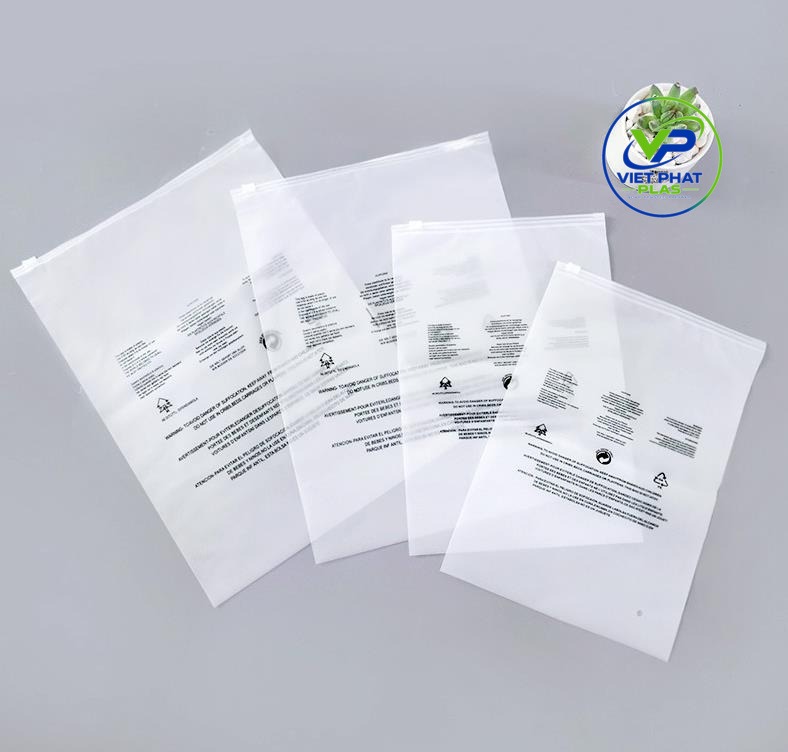
The chasing arrows symbol on zipper bags
What This Means for Plastic Bag Exporters Right Now
For a plastic bag manufacturer exporting into the US, the practical takeaway is that California cannot currently enforce SB 343's October 4, 2026 labeling restriction against recyclability claims on your packaging — the injunction blocks the Attorney General from doing so "until further order of the Court." That means there is no immediate legal requirement to strip chasing-arrows symbols or recyclability claims off packaging bound for California by that date.
That said, someone still has to stand behind any recyclability claim once enforcement resumes. SB 343 itself doesn't explicitly define "manufacturer" or spell out how liability splits between a US brand and an overseas contract factory — CalRecycle's own guidance simply puts the burden on "the brand" making the claim to self-substantiate it against CalRecycle's published data, with enforcement authority resting with the Attorney General, district attorneys, city attorneys, or private parties rather than a dedicated regulator. As a useful reference point, California's related SB 54 packaging law — which leans on SB 343's recyclability standard — explicitly defines its "producer" as the entity that owns or licenses the brand or trademark under which the product is sold, not the contract manufacturer that physically makes it. That points toward the US brand or importer of record carrying primary compliance responsibility rather than the overseas factory, but exporters should still confirm exact labeling specs and any claims printed on the bag itself with their US buyer, since the factory is the one actually applying them.
Why Exporters Should Keep Preparing Anyway
A preliminary injunction is exactly that — preliminary. It's the court's assessment of who's likely to win while the case continues, not a final ruling, and it can be narrowed, appealed, or dissolved as the litigation moves forward. If the state successfully defends the law, appeals the injunction, or the legislature amends the vague provisions the court flagged, enforcement could resume — potentially with limited advance notice for a shipment already in transit or on the water.
The lowest-risk position for exporters is to treat the pause as a planning window rather than a reason to stop tracking the issue: know which of your product lines currently carry recyclability claims or the chasing-arrows symbol, understand whether those claims would meet the 60/60 standard if enforcement resumed tomorrow, and keep the labeling conversation open with US buyers rather than treating it as resolved. That positioning costs nothing today and avoids a scramble if the injunction changes.
Status Snapshot: SB 343 as of This Writing
|
Item |
Status |
|
Original compliance deadline |
October 4, 2026 (unchanged in the statute itself) |
|
Current enforcement status |
Blocked by preliminary injunction since July 14, 2026 |
|
Case |
California League of Food Producers, et al. v. Bonta (S.D. Cal.) |
|
Trial date |
Not yet set as of late August 2026 |
|
CalRecycle study/reporting duties |
Continue on schedule, unaffected by the injunction |
|
SB 54 (EPR program) impact |
Not directly blocked, but implementation uncertainty given its reliance on SB 343 criteria |
FAQ
Is California's SB 343 recyclability labeling law currently being enforced?
No. A federal court issued a preliminary injunction on July 14, 2026 blocking the California Attorney General from enforcing SB 343's labeling restrictions "until further order of the Court." The law itself hasn't been repealed — enforcement is paused pending the litigation.
What did the SB 343 court injunction actually block?
The court found four specific provisions unconstitutionally vague (language about material "routinely becoming feedstock," a Basel Convention reference, an APR Design Guide reference, and a general "designed to ensure recyclability" requirement) and found the overall speech restriction not narrowly tailored enough under the First Amendment. The core 60/60 collection threshold itself was not the specific basis for the vagueness finding.
What was the original SB 343 compliance deadline, and does it still apply?
The original deadline is October 4, 2026, for products and packaging manufactured after that date. The deadline still exists in the statute, but it currently cannot be enforced because of the preliminary injunction.
Should exporters keep preparing for SB 343 even though enforcement is paused?
Yes. A preliminary injunction is not a final ruling and can be appealed, narrowed, or dissolved. Exporters that keep track of which products carry recyclability claims and whether those claims would meet the 60/60 standard will be better positioned if enforcement resumes.
Does the SB 343 injunction affect California's SB 54 packaging EPR program too?
Not directly — the injunction doesn't block SB 54 itself. But SB 54 relies on SB 343's recyclability criteria to define compliant packaging, so the ongoing litigation creates uncertainty for how SB 54 gets implemented as well.
Who is responsible for SB 343 compliance — the US brand or the overseas factory that makes the packaging?
SB 343 itself doesn't explicitly define "manufacturer" or split liability between a brand and its contract factory. CalRecycle's guidance places the self-substantiation burden on "the brand" making the recyclability claim, and the related SB 54 law defines its "producer" as the brand/trademark owner rather than the contract manufacturer — both point toward the US brand or importer of record as the party primarily responsible, though exporters should still confirm exact labeling specs with their buyer.
Conclusion
California SB 343 truth in labeling is a real law with a real October 4, 2026 deadline — but as of this writing, that deadline cannot be enforced because of a federal court injunction issued in July 2026, with the underlying case still unresolved. For plastic bag exporters, that means no immediate compliance emergency, but also no reason to stop paying attention: the injunction is preliminary, the litigation is ongoing, and enforcement could resume. The safest position is to know your own recyclability claims, understand what the 60/60 standard would require, and keep the conversation open with your US buyers rather than treating either "comply now" or "ignore it" as the right answer.
VietPhatPlas is a Vietnam-based manufacturer exporting custom plastic bags and packaging to B2B buyers across export markets, including the US. Contact VietPhatPlas to discuss labeling and material specifications for your California-bound orders.
Related Products
Sources