Are Bagasse Containers Microwave Safe?

Discover if bagasse containers are microwave safe, how they perform under heat, and why bagasse food containers are a sustainable packaging choice.
In recent years, bagasse containers have become one of the most popular solutions in sustainable food packaging as businesses shift away from single-use plastic. Made from sugarcane fiber, these products are widely used in restaurants, takeaway services, and food delivery systems due to their durability and eco-friendly properties. Many brands now rely on bagasse food containers because they are compostable, heat-resistant, and suitable for both hot and cold meals.
A common question from users and businesses is whether microwave safe bagasse containers are truly safe for reheating food. The answer is yes, and this is one of the key reasons they are replacing traditional plastic packaging across global food industries. As part of the broader category of bagasse tableware, these containers are designed to handle heat, oil, and moisture while maintaining structural stability and food safety.
Why bagasse containers are microwave safe
The microwave safety of bagasse containers comes from their natural fiber composition. Bagasse is a byproduct of sugarcane processing, consisting of plant fibers that are naturally resistant to heat. Unlike plastic materials, which may melt or release harmful substances under high temperatures, microwave safe bagasse containers maintain their shape and integrity during reheating.
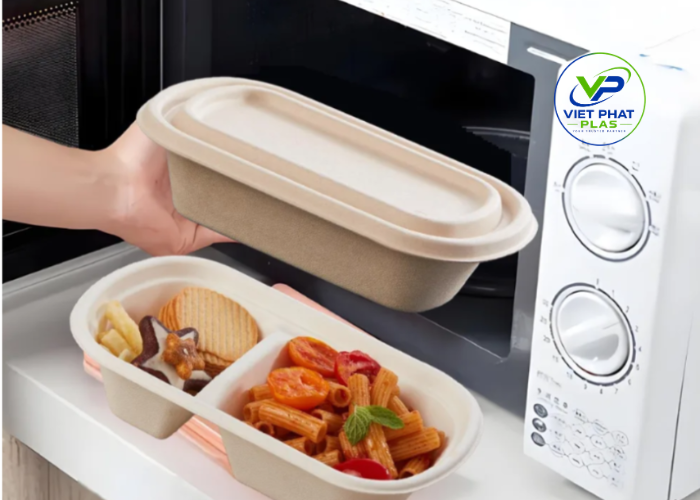
Microwave safe bagasse containers being reheated
In addition, bagasse food containers are manufactured using high-pressure molding technology, which compresses fibers into dense and durable structures. This process significantly improves heat resistance and moisture control, allowing the containers to withstand real microwave usage conditions.
Within the broader category of bagasse tableware, including plates, bowls, and clamshell boxes, these same properties ensure consistent performance across different product types.
Key properties that make bagasse containers microwave safe
There are several important reasons why bagasse containers are suitable for microwave use:
-
Made from natural sugarcane fiber without plastic coating
-
Resistant to heat up to approximately 100–120°C
-
Does not release toxic chemicals when heated
-
Maintains structure under steam, oil, and moisture exposure
-
Suitable for reheating both dry and liquid foods
Because of these characteristics, bagasse food containers are widely used in food delivery and takeaway services. Microwave safe bagasse containers are especially valued for their convenience, as food can be reheated directly without transferring to another dish.
Heat resistance and real-world performance
One of the strongest advantages of bagasse containers is their stability under real usage conditions. Most reheated meals fall within safe temperature ranges for these materials, making them highly practical for everyday food service.
In real applications, bagasse food containers perform well in scenarios such as:
-
Reheating rice, noodles, and meat dishes without deformation
-
Holding soups and sauces without leakage
-
Containing oily or greasy foods without softening
-
Supporting frozen-to-microwave meal transitions
Compared to plastic alternatives, microwave safe bagasse containers provide better structural integrity and reduce the risk of warping or chemical contamination. Within bagasse tableware, this makes them one of the most reliable eco-friendly packaging options available today.
Advantages of bagasse containers compared to plastic packaging
Switching from plastic to bagasse containers provides both environmental and functional benefits. These advantages are driving rapid adoption in food service industries.
-
Fully biodegradable and compostable after use
-
No harmful chemical release during heating
-
Strong resistance to heat, oil, and moisture
-
Better rigidity than plastic under high temperature
-
Supports sustainable branding and environmental compliance
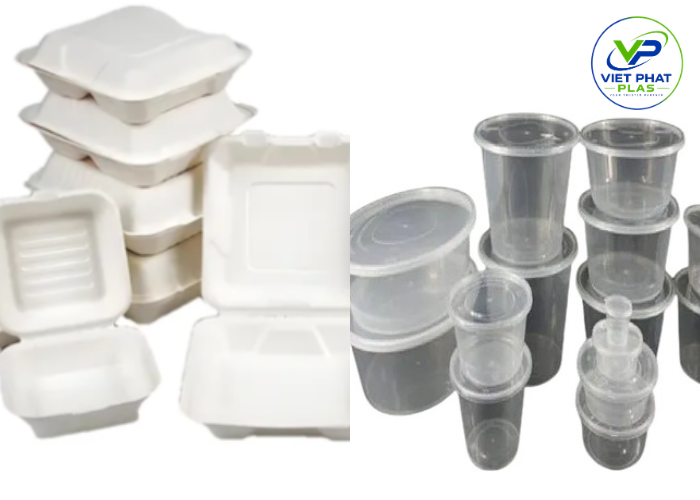 Switching from plastic to bagasse containers provides both environmental and functional benefits
However, it is also important to note that plastic packaging still plays a role in certain parts of the supply chain. While bagasse food containers are ideal for hot meals and food presentation, many businesses still rely on plastic materials for transport and outer packaging.
For example, in logistics and delivery operations, products like plastic bags remain commonly used for carrying food orders, storing dry goods, or bundling takeaway items. You can explore packaging solutions such as Vietphatplas as part of a complete food packaging system that combines both eco-friendly and functional materials.
>>>>>>> Read also: How To Choose The Right Reusable Shopping Bag For Retail Businesses In 2026
This combination allows businesses to use bagasse containers for food safety and presentation while still using flexible packaging options when necessary.
Practical usage guidelines for bagasse containers
Although bagasse containers are highly durable, proper usage helps maximize performance and lifespan.
For best results:
-
Avoid continuous microwave heating beyond 3–5 minutes
-
Do not microwave completely dry food for long periods
-
Store bagasse food containers in a dry environment
-
Use standard microwave power settings for reheating
-
Ensure containers are not damaged before use
These practices help maintain the durability of bagasse tableware and ensure microwave safe bagasse containers continue to perform reliably in both commercial and household environments.
Applications in the food industry
The use of bagasse containers has expanded significantly across global food service industries. Their combination of sustainability and practicality makes them suitable for multiple applications.
Common use cases include:
-
Fast food and takeaway restaurants
-
Food delivery platforms such as GrabFood and Uber Eats
-
Supermarkets offering ready-to-eat meals
-
Catering services for events and corporate functions
-
Institutional food services such as schools and hospitals
In most of these scenarios, bagasse food containers are preferred because they allow direct reheating. Customers can place microwave safe bagasse containers into the microwave without transferring food, improving convenience and reducing waste.
Within bagasse tableware, this flexibility is a key reason for their rapid adoption in modern food ecosystems.
Growing demand and sustainability trends
Global demand for bagasse containers continues to increase as governments introduce stricter regulations on single-use plastics. Many companies are actively switching to bagasse food containers to meet sustainability goals and improve brand perception.
Consumer awareness is also a major factor. Modern customers prefer packaging that is safe, eco-friendly, and practical. Microwave safe bagasse containers meet all these expectations, making them a preferred choice in competitive food markets.
As part of the broader shift toward bagasse tableware, this trend is expected to continue growing across both developed and emerging markets.
Conclusion
In conclusion, bagasse containers are a safe, durable, and environmentally friendly alternative to plastic packaging. Their ability to function as microwave safe bagasse containers makes them highly suitable for modern food consumption habits where convenience and sustainability are equally important.
Across restaurants, delivery services, and retail packaging, bagasse food containers continue to grow in popularity due to their heat resistance, structural strength, and compostable nature. As part of the broader bagasse tableware category, they represent a long-term shift toward more sustainable packaging systems.
At the same time, a complete packaging strategy often combines multiple materials. While bagasse containers are ideal for food contact and heating, other packaging options such as plastic bags still play an important role in transport and logistics.
Choosing bagasse containers is therefore not only a functional decision but also a strategic step toward building a more sustainable and efficient food packaging ecosystem.