LDPE vs HDPE Plastic Bags: A B2B Buyer Guide

Compare LDPE and HDPE plastic bags by flexibility, clarity, strength, thickness, cost drivers and applications before requesting a wholesale quotation.
LDPE and HDPE are both polyethylene materials, but they do not produce the same bag. Film feel, clarity, stiffness, tear behavior, sealing performance and practical thickness can differ significantly. For wholesale buyers, choosing between LDPE and HDPE plastic bags should begin with the packed product and the way the bag will be handled, not with resin name alone.
This guide compares LDPE vs HDPE bags for retail, food, garbage, industrial and export packaging. It also explains what information a manufacturer needs to recommend the right structure and prepare an accurate quotation.
What is the difference between LDPE and HDPE?
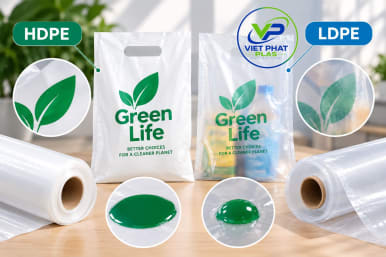
Low-density polyethylene (LDPE) has a more branched molecular structure. In flexible packaging, it is commonly associated with a softer feel, good flexibility, good heat-sealing behavior and higher clarity than typical HDPE film. High-density polyethylene (HDPE) has a more linear structure and higher density. HDPE film is usually stiffer, more opaque or translucent, and has the familiar crisp or crinkly feel found in many thin shopping and produce bags.
These descriptions are useful starting points, but commercial film is rarely defined by resin family alone. Grade selection, recycled content, pigments, additives, processing conditions and blends with linear low-density polyethylene (LLDPE) can change performance. Buyers should evaluate the finished bag against an approved specification and test method.
LDPE vs HDPE bags at a glance
| Property | LDPE bags | HDPE bags |
|---|---|---|
| Typical feel | Soft, flexible and smooth | Stiffer, crisp and crinkly |
| Typical appearance | Clearer film is achievable | Usually translucent or more opaque |
| Common gauge approach | Often specified at a thicker gauge for softness and puncture resistance | Can perform well at thinner gauges for many light-duty applications |
| Seal behavior | Good heat-sealing range when correctly processed | Requires suitable film grade and controlled sealing conditions |
| Typical applications | Flat bags, liners, garment bags, heavy-duty sacks and clear packaging | T-shirt bags, produce bags, thin can liners and lightweight retail bags |
| Buyer priority | Flexibility, clarity, sealability and puncture performance | Stiffness, economical thin film and carrying performance |
The table does not mean one material is universally stronger. Strength depends on bag dimensions, thickness profile, resin grade, film orientation, seal design, handle geometry and the actual load.
When should a buyer choose LDPE bags?
LDPE is a strong candidate when the application needs a soft film, better visual clarity, flexibility around irregular products or reliable sealing. Common examples include flat poly bags, garment packaging, pallet covers, box liners, mattress or furniture covers, heavy-duty industrial liners and bags where product presentation matters.
LDPE can also be useful when a bag must stretch around an item rather than immediately split. However, sharp edges, metal parts and concentrated loads still require a puncture test using the actual product. Increasing nominal thickness without testing the packed item can add cost without solving the correct failure mode.
Typical reasons to specify LDPE
- A softer and more flexible bag is preferred.
- Clarity and product visibility are important.
- The package needs a broad, dependable heat-seal window.
- The contents are bulky, irregular or require more puncture resistance.
- The bag is an industrial liner, protective cover or thicker reusable package.
When should a buyer choose HDPE bags?
HDPE is widely used when buyers need a lightweight, economical bag with useful carrying strength and a crisp feel. T-shirt shopping bags, produce bags, bakery bags, lightweight garbage liners and bags on a roll are common examples. HDPE film can provide practical performance at a lower thickness than a comparable soft LDPE structure in some applications, which can reduce material consumption per bag.
HDPE is not automatically the best low-cost option for every order. If the packed product requires high clarity, softness, puncture resistance or a specific seal behavior, a thin HDPE bag may fail even though its tensile strength looks acceptable on a data sheet.
Typical reasons to specify HDPE
- The application is a lightweight carrier, produce bag or thin liner.
- A crisp film feel is acceptable or preferred.
- The design aims to reduce bag weight while maintaining functional performance.
- High optical clarity is not the main requirement.
- The bag will be manufactured on a roll, wicket or T-shirt bag conversion line.
Where does LLDPE fit in the comparison?
LLDPE is frequently used alone or blended with LDPE and HDPE to adjust toughness, stretch, puncture resistance and processing behavior. For garbage bags and industrial liners, the best commercial structure may be a blend rather than a single-resin film. A supplier can tune the formulation around load, seal, drop and puncture requirements.
For a broader overview of polyethylene and other packaging materials, read our plastic bag materials guide for B2B buyers.
Thickness is not directly comparable across materials
A 20-micron LDPE bag and a 20-micron HDPE bag will not necessarily feel or perform the same. HDPE may feel thinner and stiffer, while LDPE may feel softer. The correct comparison is whether each proposed structure passes the same functional requirements at the agreed size.
Buyers should define whether thickness is controlled as a nominal target, average, minimum reading or range. Measurement location matters because blown film can vary across the web. Review our plastic bag thickness guide before converting between micron, mil and gauge.
How bag design changes material performance
Resin is only one part of the specification. A side gusset increases volume but changes how load is distributed. A star seal can help a can liner conform to a round container. A bottom seal may be suitable for flat packaging, while a handle cutout can concentrate stress around the opening. Perforations, drawstrings, zippers and vent holes also create distinct performance requirements.
Width and length must fit the product or container without excessive tension. Use our width, length, gusset and flap guide to prepare dimensions consistently.
Printing and color considerations
Both LDPE and HDPE bags can be colored and printed, but surface treatment, film movement, opacity and artwork coverage affect the result. A clear LDPE bag may support a different visual objective from a thin translucent HDPE carrier. Buyers should provide vector artwork, color references, print side, number of colors, coverage and registration tolerances during quotation.
If recycled resin, heavy pigmentation or special additives are required, ask the supplier how they can affect color consistency, odor, print adhesion and film properties. Approve a production reference rather than relying only on a screen proof.
Cost drivers beyond the resin name
- Bag width, length, gusset and thickness.
- Net material weight per 1,000 bags.
- Virgin, recycled or certified material requirements.
- Film color, clarity, additives and blend design.
- Seal type, handle, perforation, wicket, roll or closure.
- Printing colors, coverage, plate or cylinder setup and artwork changes.
- Quantity per SKU and production efficiency.
- Inner packing, cartons, pallets, shipping destination and Incoterm.
Comparing price per kilogram alone can be misleading. Compare price per usable bag, packing quantity, failure rate and the performance achieved by the proposed specification.
Testing LDPE and HDPE samples
Ask for samples made to the proposed size and structure, then test them with the real product or container. Depending on the application, useful checks include dimensions, thickness profile, seal integrity, suspended load, drop, puncture, tear, leak, odor, print adhesion and packing-line trials.
Write down load, duration, temperature, conditioning and pass criteria so both sides evaluate the same requirement. For production orders, use the plastic bag quality inspection checklist to align sampling and defect rules.
RFQ checklist for LDPE or HDPE plastic bags
- Bag style and end use.
- Internal or external width, length, gusset, flap and seal position.
- Target material or permission for the supplier to recommend a blend.
- Thickness requirement and measurement method.
- Maximum load, product shape, sharp edges and use temperature.
- Color, clarity, odor and recycled-content requirements.
- Printing artwork, colors, coverage and tolerances.
- Functional tests and acceptance criteria.
- Quantity per size, packing method, destination and delivery terms.
Frequently asked questions
Is HDPE stronger than LDPE?
Not in every sense. HDPE film can provide good tensile performance at thin gauges, while LDPE often offers more softness, stretch and puncture resistance. Finished-bag testing is more useful than a general strength claim.
Which material is clearer?
LDPE is generally selected when higher clarity is required. Actual appearance also depends on grade, thickness, recycled content, pigments, additives and processing.
Can LDPE and HDPE be blended?
Yes. Manufacturers may combine polyethylene grades, including LLDPE, to balance processing, stiffness, toughness, sealing and cost. The final blend should meet the agreed specification and compliance requirements.
Which material is better for garbage bags?
Light-duty liners can use HDPE, while heavier or puncture-prone waste often benefits from LDPE or LLDPE-rich structures. Container size, waste type and load test determine the best option.
Can recycled material be used?
It can be suitable for many non-food applications when the source, quality, odor, color and performance are controlled. Buyers must also confirm applicable legal and customer requirements for their market.
Request a material recommendation and quotation
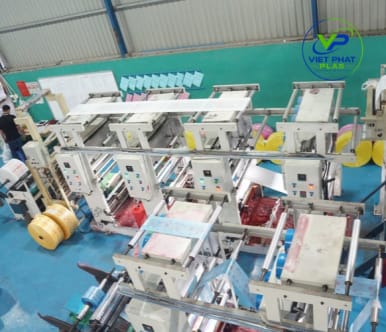
Viet Phat Plas manufactures flexible packaging for wholesale and export orders. Send the bag style, dimensions, load, material preference, printing, test requirements, quantity and destination. Explore our plastic bag product range or contact Viet Phat Plas for samples and a specification-based quotation.