Contractor-Grade Trash Bags: Specs, MOQ & Sourcing From Vietnam

"Contractor-grade" isn't a regulated term, so the same label can hide very different mil thickness, resin, and seal construction between suppliers. This guide covers the specs actually worth verifying, realistic MOQ ranges when sourcing from Vietnam, and what to confirm before placing a bulk order.
Contractor-Grade Trash Bags are one of the most inconsistently defined categories in the industrial packaging market — there's no regulatory standard behind the term, which means one supplier's "contractor-grade" can sit at a meaningfully different spec than another's. For distributors and facilities buying in bulk, especially when sourcing internationally, that ambiguity is exactly where budget gets wasted or job sites end up with bags that fail mid-use. This guide covers what the term actually should mean, the specs worth verifying before ordering, and realistic MOQ expectations when sourcing from a Vietnam-based manufacturer.
What "Contractor-Grade" Actually Means (It's Not Regulated)
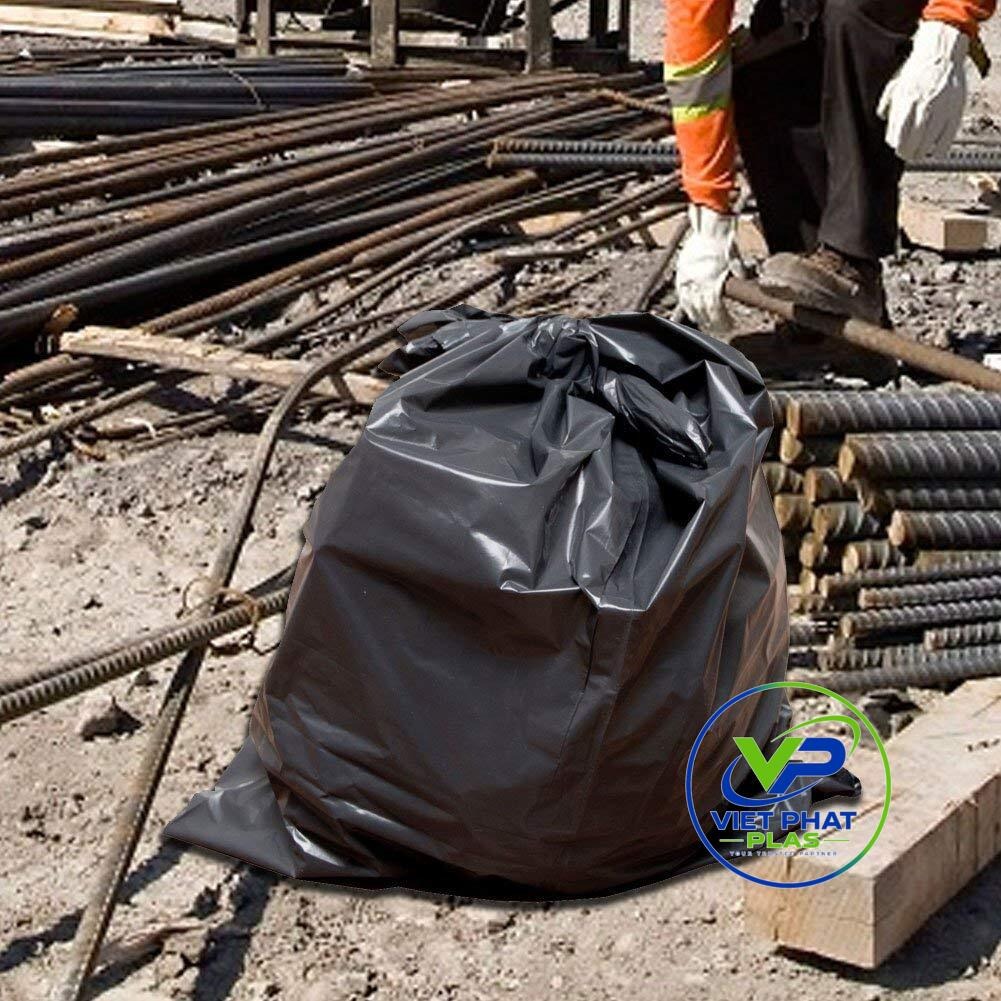
Contractor-grade trash bag holding heavy, sharp-edged construction debris
"Contractor-grade" is a marketing term, not a certified specification — no regulatory body defines a minimum mil thickness, resin type, or seal construction that a bag must meet to carry the label. In practice, the term is used across the market to signal bags built for construction and demolition debris: broken drywall, wood scraps, masonry fragments, and similarly heavy, sharp, irregular waste that would tear through a standard commercial can liner.
Because the label itself is unregulated, two "contractor-grade" bags from different suppliers can differ substantially in mil thickness, resin, and seal type while both wearing the same name. This is the central risk buyers need to manage: evaluating the actual spec behind the label, not trusting the label to guarantee a minimum performance level. For the mil ranges typically associated with this waste category, see our trash bag mil thickness guide.
The Specs That Actually Matter for Job Site Use
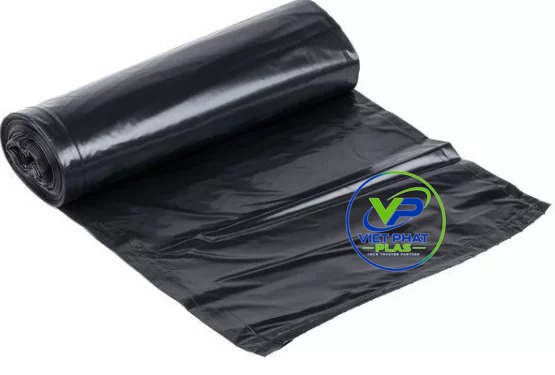
Close-up of contractor trash bag thickness and construction
Rather than relying on the label, buyers evaluating contractor-grade bags should confirm four specific attributes:
Mil thickness — construction and demolition debris typically calls for the higher end of the mil range, generally 3.0–6.0 mil, given the combination of weight, sharp edges, and irregular shapes common on job sites. As covered in our mil thickness guide, the right number also depends on resin type, not mil alone.
Resin type — LLDPE (linear low-density polyethylene) is the more common choice for contractor-grade bags because its elasticity resists puncture from sharp debris better than standard LDPE at the same thickness, stretching around sharp points rather than tearing immediately.
Seal construction — flat seal or gusseted bottom construction is typical for contractor bags, since these handle concentrated heavy loads differently than star seal bags designed for lighter, more evenly distributed waste. See our seal type comparison guide for how construction affects load performance.
Actual capacity vs stated capacity — job site bags are frequently oversold on capacity relative to what they can genuinely hold without tearing during lifting or tying; requesting a real-world load test rather than trusting a stated gallon or liter capacity is worth the extra step before a bulk commitment.
Realistic MOQ Ranges When Sourcing From Vietnam
Minimum order quantities for contractor-grade trash bags sourced from Vietnamese manufacturers vary based on customization level and container fill:
Stock or near-stock specs (standard mil thickness, standard box count, no custom printing) typically carry the lowest MOQs, often in the range of a few thousand kilograms of resin equivalent or a partial container load, since the manufacturer isn't retooling for a custom run.
Custom specifications (non-standard mil thickness, custom box sizes, private-label printing) generally require a full container load or close to it to be cost-viable for the manufacturer, since custom runs involve line changeovers that aren't worth doing for small volumes.
Private label / custom branding adds the highest MOQ threshold of the three, since printing plates and custom packaging design work only amortize sensibly across larger volumes.
Buyers new to sourcing from Vietnam should expect a manufacturer to quote MOQ in terms of container volume (20ft or 40ft equivalent) or total weight, and should clarify early whether a first order can be a smaller trial run before committing to a full container — many manufacturers, including VietPhatPlas, can accommodate a smaller qualifying order for new B2B relationships before scaling to full container volumes.
What to Verify Before Placing a Bulk Order
Before committing to a bulk order from any manufacturer, whether new or established:
Request physical samples and load-test them against the actual waste type your job sites generate — a sample that survives a generic drop test may still fail against your specific debris profile.
Confirm resin and mil thickness in writing, not just the "contractor-grade" label, so any dispute over received quality has a documented spec to reference.
Ask about seal construction directly if it isn't stated, since flat seal, gusset, and star seal bags perform differently under the same load and the label alone won't tell you which is included.
Clarify Incoterms and lead time upfront for international sourcing — FOB vs CIF pricing, typical production lead time, and shipping transit time all affect total landed cost and should be confirmed before a purchase order is placed, not after.
Ask for a compliance and safety documentation package if the bags will be resold or used in regulated environments, since documentation requirements vary by destination market.
Comparison Table: Contractor-Grade Spec Ranges
|
Spec |
Typical Range for Contractor-Grade |
Why It Matters |
|
Mil thickness |
3.0–6.0 mil |
Matches weight and sharpness of C&D debris |
|
Resin |
LLDPE (common), HDPE (some applications) |
Elasticity vs puncture resistance trade-off |
|
Seal type |
Flat seal or gusseted bottom |
Distributes concentrated heavy loads |
|
Typical MOQ (stock spec) |
Partial container / few thousand kg |
Cost-viable without custom retooling |
|
Typical MOQ (custom spec) |
Full container load |
Line changeover cost amortization |
Ranges vary by manufacturer — always request the specific numbers behind any "contractor-grade" label rather than relying on the category name.
VietPhatPlas is a Vietnam-based garbage bags manufacturer supplying contractor-grade trash bags at both stock and custom specifications, with MOQ flexibility for qualifying new B2B accounts. For mil thickness selection, see our trash bag mil thickness guide, and for seal construction, see star seal vs flat seal vs gusset seal.
FAQ
Is "contractor-grade" a regulated or standardized term? No — there's no regulatory definition, so mil thickness, resin, and seal construction can vary between suppliers even when both use the "contractor-grade" label. Always request the actual spec sheet.
What mil thickness should contractor-grade trash bags be? Typically 3.0–6.0 mil, though the right number also depends on resin type and the specific debris the bags will hold — heavier, sharper waste generally needs the higher end of that range.
What's a realistic MOQ when sourcing contractor bags from Vietnam? Stock specifications often qualify for smaller trial orders or partial container loads, while custom specifications (non-standard thickness, private label printing) generally require a full container load to be cost-viable.
What resin is best for contractor-grade trash bags? LLDPE is common because its elasticity resists puncture from sharp construction debris better than standard LDPE at equivalent thickness.
Can I get a smaller trial order before committing to a full container? Many manufacturers, including VietPhatPlas, can accommodate a smaller qualifying order for new B2B buyers before scaling to full container volumes — this is worth clarifying directly with the supplier before your first purchase order.
Conclusion
Contractor-grade trash bags are defined by the buyer's diligence, not the label — since the term carries no regulatory standard, verifying actual mil thickness, resin, and seal construction is the only reliable way to ensure bags perform on the job site as expected. For international sourcing, clarifying MOQ, Incoterms, and trial-order options upfront avoids costly surprises on a first bulk purchase.
If you're sourcing contractor-grade trash bags in bulk, VietPhatPlas is a Vietnam-based manufacturer offering both stock and custom specifications with MOQ flexibility for new B2B accounts. Contact VietPhatPlas to request samples, spec sheets, and a quote matched to your job site requirements.
Sources:
-
Trash Bags Market — Mordor Intelligence