Trash Bag Mil Thickness Guide: How Many Mils Do You Actually Need?
"How many mils do I need" doesn't have one answer — the same mil rating performs differently depending on resin, and the right thickness depends on what's actually going into the bag. This guide busts the HDPE-vs-LDPE-at-equal-mil myth, breaks down mil thickness by waste type, and shows how seal construction changes how much mil margin a buyer actually needs.
Trash bag mil thickness is usually the first spec a buyer asks about, and often the only one — "how many mils do I need" gets treated as a single number that determines whether a bag will hold up. It doesn't work that way. Two bags rated at the same mil thickness can perform very differently depending on resin, and the mil number that's right for one facility's waste stream can be wrong for another's identical-looking bin. This guide covers what mil thickness actually tells you, what it doesn't, and how to spec it correctly for your waste stream specifically.
For the basic unit conversions between mil, micron, and gauge, see our general plastic bag thickness guide — this guide picks up where that one leaves off, focused specifically on how mil interacts with resin and waste type for trash bags.
Why "How Many Mils" Is the Wrong First Question
A buyer asking only "how many mils" is asking a question that doesn't have a single correct answer, because mil thickness alone doesn't determine whether a bag holds up under a given load — resin type, seal construction, and the actual sharpness or wetness of the waste all interact with mil rating to determine real-world performance.
The more useful question is: what is actually going into this bag, and how is it going to be lifted, carried, or dragged once it's full? A 2 mil bag holding shredded paper faces a completely different failure risk than a 2 mil bag holding wet food waste or broken glass, even though the mil spec on the box looks identical. Framing the decision around waste type first, and mil thickness second, avoids the two most common sourcing mistakes: paying for thickness a light waste stream never needed, or under-speccing a heavy one.
The HDPE vs LDPE Myth: Same Mil, Different Strength
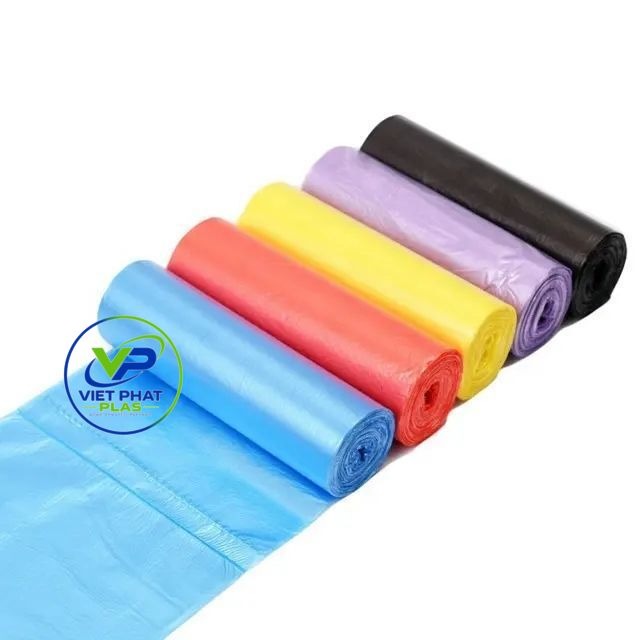
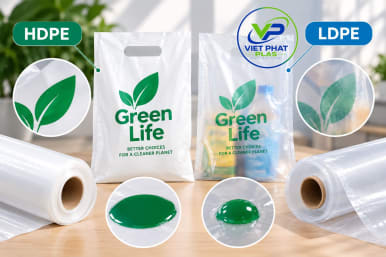
HDPE/LDPE trash bags
Here's the assumption that causes the most sourcing mistakes in this category: that a higher mil number always means a stronger bag, regardless of resin. It doesn't. HDPE and LDPE behave differently enough at equal mil ratings that comparing two suppliers' bags purely by the number on the spec sheet can lead a buyer to the wrong product.
HDPE (high-density polyethylene) achieves strength through resin density rather than bulk — a thinner-feeling, waxier film that resists puncture well against sharp point-loads like broken glass or metal shavings, but is less flexible and can crack rather than stretch under sudden, uneven weight.
LDPE (and its industrial variant LLDPE) is typically thicker in mil rating for a given weight capacity, but trades that bulk for elasticity — it stretches rather than tears when a load shifts or drags across a rough surface, which is why it's the more common choice for wet or heavy waste where flexibility matters more than raw puncture resistance.
The practical result: a 1.5 mil HDPE bag and a 3 mil LDPE bag can offer genuinely comparable load performance despite the mil numbers looking very different on paper. A buyer comparing two quotes purely on mil thickness, without confirming resin, can end up paying more for a spec they didn't actually need — or under-buying strength because a low mil number looked cheap without accounting for a stronger resin behind it.
Mil Thickness by Waste Type: A Practical Chart
Trash bag mil thickness chart organized by waste type and application
Rather than a generic light/medium/heavy scale, mil thickness is more useful when matched directly to what's going into the bag:
|
Waste Type |
Typical Mil Range |
Why |
|
Office paper, dry light waste |
0.7–1.2 mil |
Low weight, no sharp or wet risk |
|
Mixed commercial waste (retail, hospitality) |
1.3–1.9 mil |
Moderate weight, occasional moisture |
|
Food service, wet kitchen waste |
1.5–2.5 mil (often LDPE/LLDPE) |
Wetness and drag risk favor flexibility over raw thickness |
|
Manufacturing scrap, moderate sharp edges |
2.0–3.0 mil |
Puncture resistance matters more than stretch |
|
Construction/contractor debris |
3.0–6.0 mil |
Sharp, heavy, irregular loads need both resistance and flexibility |
These ranges are starting points, not universal standards — different manufacturers set their own thresholds for what counts as "heavy duty," so confirm the actual mil rating and resin rather than trusting a category label alone.
How Seal Type Changes What Mil You Actually Need
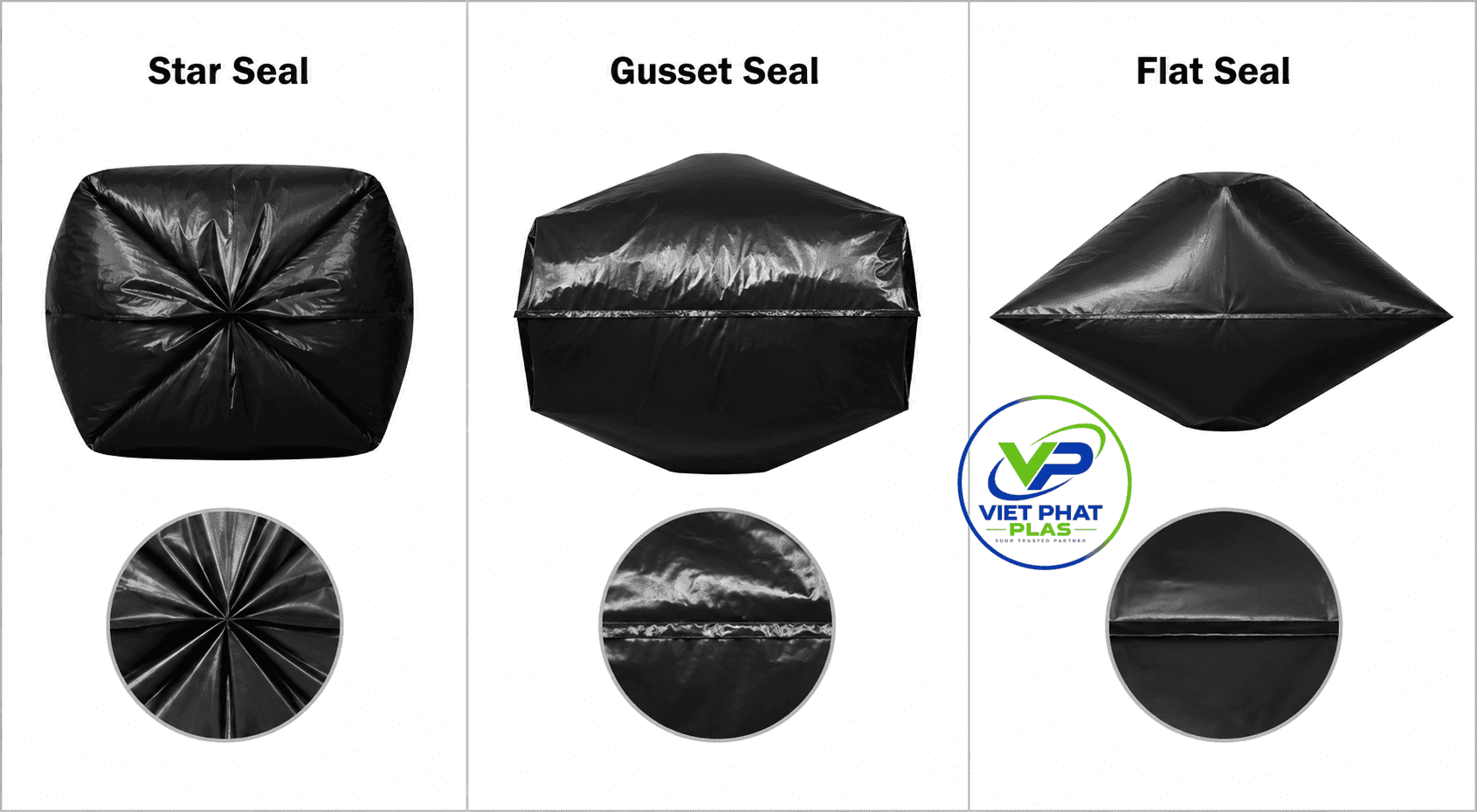
Trash bags with different seal types under load, illustrating stress distribution
Mil thickness doesn't act alone — seal construction changes where stress concentrates on a filled bag, which changes how much mil margin you actually need. A star seal bag distributes weight evenly across its folded base, which means it can sometimes hold up at a slightly lower mil rating than a flat seal bag carrying the same wet or heavy load, since the flat seal's unsupported corners are where failures concentrate first.
This is why two facilities with the same waste type can reasonably spec different mil thicknesses if they're using different seal constructions — a buyer optimizing purely on mil number without accounting for seal type is only half-speccing the bag. See our seal type comparison guide for how star, flat, and gusset seals affect load performance independently of thickness.
Over-Speccing vs Under-Speccing: The Real Cost
Buying thicker than necessary wastes budget on resin the waste stream never tests — a facility running light office waste in 4 mil bags is paying for puncture resistance against threats that don't exist in its bins. Under-speccing is the more expensive mistake in practice: a 1.2 mil bag used for wet food waste or construction debris tears mid-shift, creating cleanup labor, an emergency reorder, and often a rushed purchase of whatever thickness is available rather than the correct spec.
The lowest-cost mistake to avoid is treating "heavy duty" as a standardized term — it isn't regulated, and one supplier's heavy-duty line can sit at a different mil rating than another's. Requesting the actual mil number and resin, rather than trusting the category label, is the single habit that prevents both over- and under-speccing.
How to Verify Mil Claims Before Bulk Ordering
A mil claim on a spec sheet is only as reliable as the measurement behind it. Before committing to a bulk order:
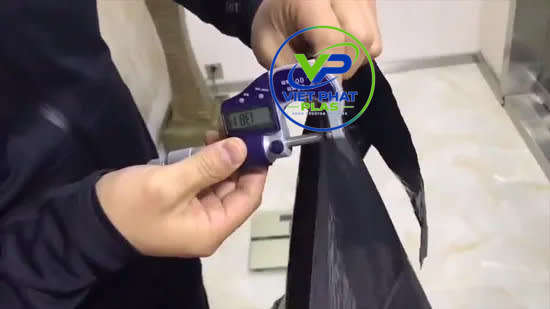
Request a physical sample and measure it. A mil gauge tool is inexpensive and gives a direct reading — don't rely on a supplier's stated number alone, especially on a first order from a new supplier.
Ask whether the mil rating is per-wall or folded. Some suppliers state thickness as a folded measurement, which can misrepresent the actual single-wall thickness a bag relies on under load.
Test the sample against your actual waste, not a generic load — fill it with a representative sample of what your facility actually disposes of, including its wettest, heaviest, or sharpest realistic case, and handle it the way your staff actually will (lifting, tying, dragging).
Confirm resin alongside mil thickness in any RFQ — as covered above, the mil number alone doesn't tell a supplier or a buyer enough to guarantee comparable performance across quotes.
VietPhatPlas supplies trash bags across the mil ranges and resin types covered in this guide, so buyers can match thickness and material to their specific waste stream. For seal construction alongside mil thickness, see the star seal vs flat seal vs gusset seal guide, and for the broader industrial-vs-commercial comparison, see industrial trash bags vs commercial garbage bags.
FAQ
Is a thicker trash bag always stronger? Not necessarily. Resin type affects performance as much as mil thickness — a 1.5 mil HDPE bag and a 3 mil LDPE bag can offer comparable load performance, since HDPE gains strength from resin density while LDPE relies more on bulk and elasticity.
What mil thickness do I need for office waste? Light, dry office waste is typically well served by 0.7–1.2 mil bags, since there's minimal puncture or moisture risk to plan for.
What mil thickness is right for construction debris? Contractor and construction waste generally calls for 3.0–6.0 mil, given the combination of sharp edges, weight, and irregular shapes typical of that waste stream.
Does seal type affect how much mil thickness I need? Yes — a star seal distributes weight more evenly than a flat seal, which can mean a facility using star seal bags needs slightly less mil margin for the same waste type compared to flat seal bags carrying an identical load.
How can I verify a supplier's mil claim before ordering in bulk? Request a physical sample and measure it with a mil gauge tool, confirm whether the stated thickness is per-wall or folded, and test it against your actual waste stream and handling conditions before committing to volume.
Conclusion
Trash bag mil thickness only tells the full story when it's read alongside resin type, seal construction, and the actual waste stream a bag is meant to hold — a mil number by itself is an incomplete spec. Buyers who match mil to waste type, confirm resin behind the thickness claim, and verify samples before bulk ordering avoid both the wasted cost of over-speccing and the mid-shift failures of under-speccing.
If you're sourcing bulk trash bags for a facility, warehouse, or job site, VietPhatPlas is a Vietnam-based garbage bags manufacturer producing across the mil and resin ranges covered in this guide. Contact VietPhatPlas to discuss your waste stream and get a spec-matched quote.
Sources:
-
Trash Bags Market — Mordor Intelligence