Industrial Trash Bags vs Commercial Garbage Bags: A B2B Buying Guide

Industrial and commercial trash bags differ on three factors: mil thickness, resin type (HDPE vs. LDPE), and seal construction — not just plastic thickness. The guide gives a mil chart by use case (0.7–6.0 mil), explains that HDPE resists punctures while LDPE stretches under uneven loads, and notes seal strength is often the real failure point, not the film. Buyers should lock down four specs before quoting: mil + resin, bag dimensions, MOQ, and packaging format, while avoiding common mistakes like comparing case prices without normalizing for mil or trusting unregulated "heavy duty" labels. Bottom line: match the spec to your actual waste stream to avoid tear failures or wasted budget.
Procurement teams ordering industrial trash bags for the first time often assume the category is a simple upgrade from the bags used in an office kitchen — just "thicker plastic." That assumption causes real problems on the receiving dock: bags that split under construction debris, liners that tear against pallet corners, or a supplier invoice priced for commercial-grade film when the job called for something rated for sharp, heavy, or wet waste. The terms "industrial trash bags" and "commercial garbage bags" get used almost interchangeably in casual conversation, but for a buyer writing a purchase order, the distinction determines whether the bags actually survive the job they're bought for.
This guide breaks down what separates industrial-grade bags from commercial-grade ones in practical terms — mil thickness, resin type, seal construction, and how those specs translate into cost and performance. It's written for facilities managers, procurement officers, and janitorial/sanitation supply buyers who need to spec an order correctly the first time, not just skim a supplier's marketing page.
None of this is academic for a buyer holding a purchase order deadline. Getting the spec wrong on a bulk order doesn't just mean a support ticket — it means a truck full of bags that split on the first shift, a facilities team improvising with double-bagging, and a reorder that pushes the real cost of the mistake well past whatever was "saved" by choosing a cheaper, under-specced case price.
Industrial vs Commercial: What Actually Separates Them
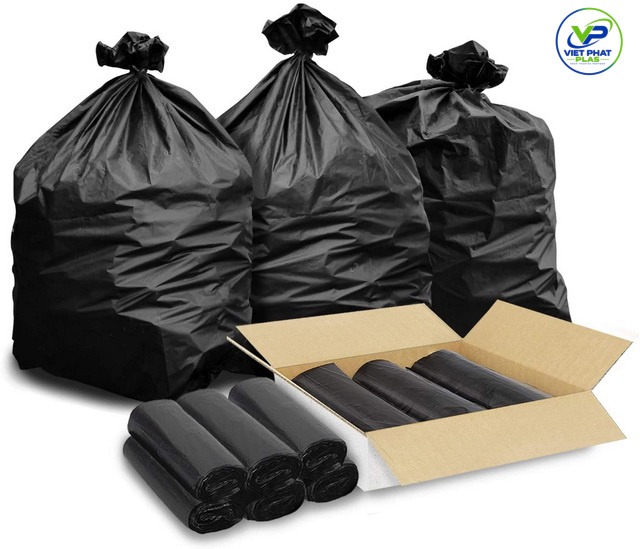
Industrial trash bag rolls
The line between "industrial" and "commercial" trash bags isn't a marketing label — it's a combination of three measurable factors: film thickness (mil), resin type, and load tolerance.
Commercial-grade bags are built for predictable, moderate-weight waste streams: office paper, food service scraps, retail packaging. They're designed to be light enough to handle in volume — a janitorial crew changing dozens of liners per shift needs bags that are easy to pull, tie, and carry without excess bulk.
Industrial-grade bags exist for waste streams that commercial bags weren't built to survive: construction debris with sharp edges, manufacturing scrap with metal shavings, heavy wet waste from food processing, or anything generated at a job site rather than an office. The defining requirement isn't just "more plastic" — it's puncture and tear resistance under load, which is why industrial bags are specified by mil thickness ranges roughly triple what commercial-grade bags use, and increasingly by resin blends chosen specifically for tear resistance rather than just bulk.
For a B2B buyer, the practical question isn't "which one sounds tougher" — it's what your waste stream actually contains. A distribution center handling shrink-wrapped cardboard has very different requirements than a demolition contractor clearing drywall and lumber offcuts, even though both might currently be ordering the same generic "heavy duty trash bags" SKU.
Mil Thickness Chart by Use Case
Mil thickness is the single most useful spec for separating bag categories, but it's also where buyers most often get confused — partly because some suppliers quote in micron instead of mil, and partly because "mil" gets used loosely in sales conversations without a buyer confirming the actual measured range.
One mil equals one-thousandth of an inch (0.001"), and it is not the same unit as micron (1 mil ≈ 25.4 microns). When a supplier quotes thickness in micron rather than mil, always ask for the mil-equivalent conversion before comparing that quote against a mil-based spec sheet — otherwise it's easy to misread a genuinely thin bag as a mid-weight one.
|
Use Case |
Typical Mil Thickness |
Typical Application |
|
Kitchen /light office liners |
0.7–1.2 mil |
Wastebaskets, break rooms, light retail |
|
Commercial /janitorial |
1.3–1.9 mil |
Office buildings, hospitality, general commercial waste |
|
Heavy-duty industrial |
2.0–3.0 mil |
Warehouses, light manufacturing, moderate wet waste |
|
Contractor /construction |
3.0–6.0 mil |
Job sites, demolition debris, sharp or heavy waste |
This chart is a starting reference, not a universal standard — different manufacturers set their own thresholds for what counts as "commercial" versus "heavy-duty," so a buyer comparing two suppliers' catalogs should confirm the actual mil rating rather than trusting the category label alone. A bag marketed as "heavy duty" by one supplier might sit at 1.8 mil, while another supplier's "heavy duty" line starts at 2.5 mil — the label isn't regulated, the number is what matters.
Over-speccing (buying 4 mil bags for office waste) wastes budget on unnecessary material. Under-speccing (using 1.5 mil commercial bags for construction debris) causes tear failures, cleanup delays, and often ends up costing more in replacement bags and labor than ordering correctly from the start.
VietPhatPlas stocks both ends of this range across its trash bags and garbage bags product lines, so buyers can match mil rating to use case without switching suppliers between commercial and industrial orders.

Recommended garbage bag thickness by purpose
HDPE vs LDPE for Heavy Waste — Fixing a Common Misconception
A common assumption among first-time industrial bag buyers is that a thicker mil rating automatically means a stronger bag, regardless of resin. That's not accurate — the resin type affects performance as much as thickness does, and the two most common resins used in trash bags behave very differently under stress.
HDPE (high-density polyethylene) bags are made from a thinner, waxier-feeling film but achieve high tensile strength through resin density rather than bulk. HDPE tends to resist puncture well against sharp point-loads — think broken glass or metal shavings — but can be less flexible, meaning it may crack rather than stretch under sudden, uneven weight distribution.
LDPE (low-density polyethylene) bags are typically thicker in mil rating for a given weight capacity but offer more elasticity — they stretch rather than tear when a load shifts or a bag is dragged across a rough surface. This makes LDPE (and its more common industrial variant, LLDPE — linear low-density polyethylene) a frequent choice for wet or heavy waste where flexibility matters more than raw puncture resistance.
The practical takeaway for buyers: a 1.5 mil HDPE bag and a 3 mil LDPE bag can offer genuinely comparable load performance, despite the mil numbers looking very different on paper. This is exactly why comparing two suppliers purely by mil thickness, without confirming resin type, can lead to buying the wrong product — or paying more than necessary for a spec you didn't actually need. When evaluating a bulk garbage bags supplier, ask for both the mil rating and the resin type, and if possible, request a sample to test against your actual waste stream rather than relying on the spec sheet alone.
Seal Types That Matter for Industrial Use
How a bag is sealed at the bottom affects leak resistance and load capacity just as much as thickness does — a detail that's easy to overlook when comparing quotes on mil rating alone.
The three seal types most relevant to industrial and commercial buyers are star seal (also called X-seal), flat seal, and gusset seal. Star seal construction pulls the bottom of the bag into a tapered star shape, which tends to distribute weight evenly and resist leaking at the corners — a common choice for wet or loose waste. Flat seal bags have a straight seam across the bottom, which generally maximizes usable volume for a given bag size but can concentrate stress at the seam corners under heavy point loads. Gusset seal bags have folded sides that expand outward, offering more shape flexibility for bulky or irregular waste, though this seal style has become less common in standard commercial lines as manufacturers have shifted toward star seal for its leak performance.
For contractor and industrial applications specifically, seal strength at the seam is often the actual point of failure — not the film itself. A bag rated at the correct mil thickness can still fail if the seal wasn't built to hold that load, which is why buyers sourcing heavy duty trash bags for job sites should ask suppliers directly about seal type and tested load capacity, not just mil rating.
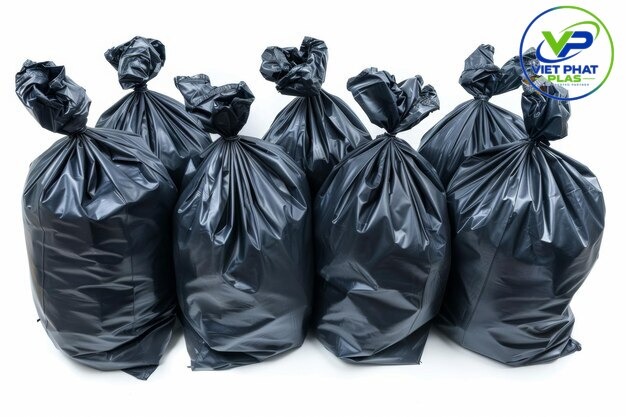
Heavy duty trash bags used on a construction job site
How Buyers Should Spec an Order
Getting a bulk trash bag order right the first time comes down to specifying four things clearly before requesting a quote, rather than leaving them to a supplier's default assumptions:
Mil thickness and resin type. State both explicitly — "2.5 mil" alone doesn't tell a supplier whether you need HDPE puncture resistance or LDPE flexibility for your specific waste stream.
Bag dimensions and capacity. Match bag size to bin or container dimensions, not just gallon capacity marketed on the packaging — a bag rated for a 55-gallon drum won't necessarily fit a 55-gallon toter with a different shape.
MOQ (minimum order quantity). Bulk suppliers typically set MOQs by case or pallet rather than by unit count, and MOQ can vary significantly between a standard commercial-grade SKU and a custom mil/color/print specification. Confirm MOQ early, since a custom spec that seems minor (a specific tint, a printed logo) can push MOQ far higher than a standard catalog item.
Packaging format. Bags supplied on a roll are typically easier to dispense one at a time from a dispenser box, which suits janitorial use; flat-packed cases in boxes are more common for contractor and industrial use where bags are pulled in bulk rather than one at a time.
Buyers who provide all four specs upfront generally get faster, more accurate quotes — and avoid the back-and-forth that happens when a supplier has to guess at unstated requirements.
It also helps to specify color and opacity where it matters operationally. Black or dark-tinted bags are the default for industrial and construction waste because they conceal contents during handling and transport, while clear or tinted commercial bags are sometimes required by facilities that need visual contents checks for recycling compliance or hazard screening before disposal. This is a minor line item on a spec sheet, but it's one suppliers can't guess correctly on your behalf — leaving it unstated is one of the more common reasons a first bulk order doesn't match what the buyer actually needed.
Common Mistakes When Sourcing Bulk Trash Bags
Even experienced procurement teams run into avoidable issues when sourcing trash bags at volume. A few patterns show up repeatedly:
Ordering by price-per-case without normalizing for mil thickness. A cheaper case price often means a lower mil rating — comparing across suppliers only makes sense once thickness and resin are matched.
Assuming "heavy duty" is a standardized term. As covered above, there's no regulated threshold for this label — always request the actual mil spec.
Skipping a sample or trial order before committing to a bulk purchase. A small trial run — ideally combined with testing bag strength against your actual waste stream — catches performance issues before they show up in a 500-case order.
Not confirming lead time against your usage rate. Bulk industrial orders, especially custom specs, can carry longer production and shipping lead times than commercial off-the-shelf products — running out of stock mid-project is a common and avoidable failure.
Overlooking seal type entirely. As discussed above, seal construction is frequently the actual failure point, not the film thickness — yet it's the spec buyers ask about least.
Treating every location or department as identical. A facility running both an office building and an on-site loading dock often needs two different bag specs, not one "good enough for everything" SKU — standardizing on a single heavy-duty spec across the board usually means overpaying for the office waste stream to compensate for the dock's requirements, while standardizing on a lighter commercial spec risks failures at the dock.
Buyers who work through these five points before requesting a quote generally end up with a shorter sourcing cycle overall, even though it takes slightly longer to write the initial spec — the time saved by avoiding a failed bulk order and a rushed reorder is almost always greater.
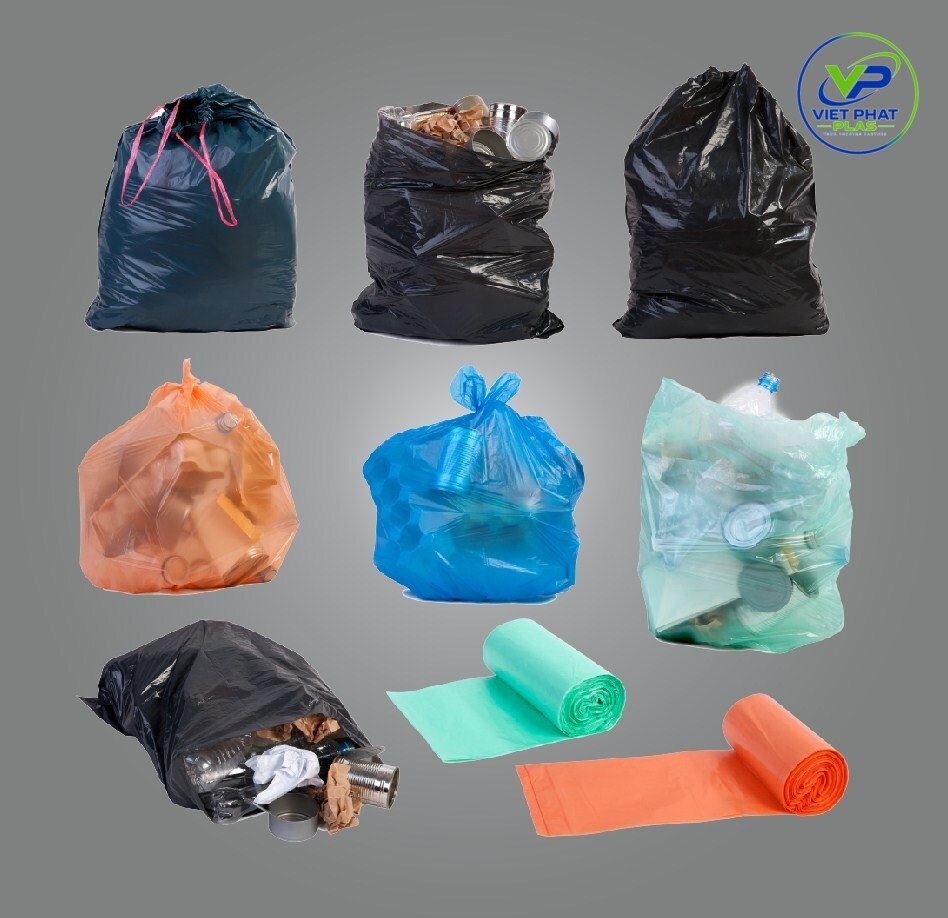
Waste Type Determines Bag Thickness and Color
FAQ
-
Can a 3 mil bag be used on a construction job site? 3 mil generally sits at the lower end of the contractor-grade range and can handle moderate construction debris, but for demolition work involving sharp materials like broken drywall, tile, or metal offcuts, many buyers move up to 4–6 mil for a wider safety margin against tears.
-
Does HDPE or LDPE handle sharp waste better? HDPE generally resists puncture from sharp, pointed objects more effectively due to its denser resin structure, while LDPE/LLDPE tends to perform better against tearing from uneven or shifting loads. The better choice depends on whether your waste stream is dominated by sharp point-loads or bulky, shifting weight.
-
What's a typical MOQ for industrial-grade trash bags? MOQ varies by supplier and specification, but industrial-grade orders are typically quoted by case or pallet rather than by unit, and custom specs (specific mil, color, or printing) generally carry a higher MOQ than standard catalog items. Confirm MOQ directly with your supplier before finalizing a spec.
-
Does star seal or flat seal hold more weight? Flat seal construction generally maximizes usable bag volume for a given size, while star seal tends to offer better leak resistance and more even weight distribution at the seam — the better choice depends on whether your priority is capacity or leak performance for wet waste.
-
How does price change as mil thickness increases? Price per bag generally rises with mil thickness, since higher mil ratings use more resin per unit — but the increase isn't always linear across resin types, which is another reason to request itemized quotes by both mil and resin rather than relying on category labels like "heavy duty."
-
Should I choose black bags or clear bags for industrial waste? Black or dark-tinted bags are the more common default for industrial and construction waste because they conceal contents during handling, while clear or lightly tinted bags are typically specified when a facility needs to visually verify contents for recycling or hazard screening before disposal — the choice depends on your site's handling and compliance process, not on bag strength.
Conclusion
Choosing between industrial trash bags and commercial garbage bags isn't about picking the "stronger-sounding" option — it's about matching mil thickness, resin type, and seal construction to what your waste stream actually contains. Buyers who spec mil rating, resin, dimensions, and packaging format upfront get more accurate quotes and avoid the tear failures and reorders that come from under-speccing, as well as the wasted budget that comes from over-speccing.
If you're sourcing bulk trash bags or garbage bags for a facility, warehouse, or job site, VietPhatPlas is a Vietnam-based garbage bags manufacturer producing both commercial and industrial-grade options across the mil ranges covered in this guide. Contact VietPhatPlas to discuss your waste stream and get a spec-matched quote.
Author Bio: Written by the VietPhatPlas content team, drawing on manufacturing and export experience supplying trash and garbage bags to B2B buyers across foodservice, facilities management, and construction sectors.
Sources:
-
Trash Bags Market — Fortune Business Insights