Cast vs Blown Pallet Film: Technical Differences B2B Buyers Should Know

Cast and blown pallet film aren't just two price points on the same product — they're made through different processes that trade off clarity, cling, and cost against puncture and tear resistance. This guide breaks down where each production method actually wins, so buyers can match the right film to their load type instead of defaulting to whatever's cheapest or most familiar.
Cast vs blown pallet film gets treated as a footnote in most sourcing conversations — buyers ask about gauge, roll width, and price, and rarely ask which production method made the film in the first place. That's a gap worth closing, because cast and blown stretch film are made through genuinely different processes, and that difference shows up directly in clarity, tear resistance, noise, and cost — often more than gauge does.
This guide covers what actually separates cast from blown pallet film, where each production method has a real performance edge, and how to match the choice to your load type rather than defaulting to whichever one a supplier happens to stock. It's written for warehouse managers, logistics buyers, and procurement teams sourcing stretch film at volume who want to understand what they're actually paying for.
How Cast and Blown Film Are Actually Made
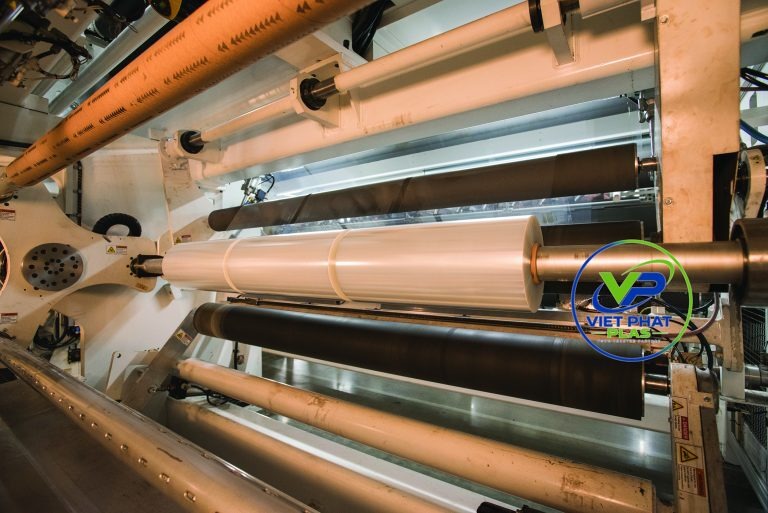
Cast stretch film production line with chilled roller system
Cast film is made by extruding molten resin through a flat die and cooling it rapidly on a chilled roller. That fast, controlled cooling is what gives cast film its two signature traits — high clarity and strong cling — and it also makes cast film a faster, less resin-intensive process to run, which is why cast film production tends to cost less per unit of output.
Blown film is made by extruding resin upward through a circular die and inflating it into a bubble, which is then cooled by air rings before being flattened and wound. That bubble-forming process orients the film's polymer chains in multiple directions rather than the single direction cast film gets from the chilled roller, which is the underlying reason blown film resists puncture and tearing better than cast film of comparable thickness.
Neither process is inherently "better" — they produce film with different mechanical properties by design, and general industry consensus puts cast film at roughly 70–80% of the stretch film market by volume, largely because most palletized loads don't need blown film's extra toughness and do benefit from cast film's lower cost and better clarity.
Clarity & Cling: Where Cast Film Wins
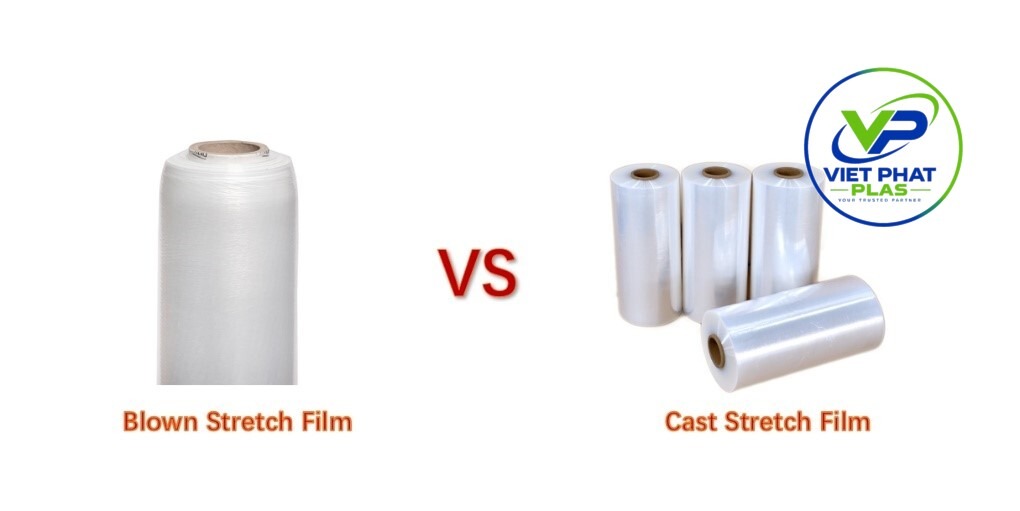
Clarity comparison between cast stretch film and blown stretch film held up to light
Cast film's rapid, even cooling produces a clear, glossy finish, while blown film's air-ring cooling process tends to leave it hazier and less uniform. For a warehouse running barcode scanners or RFID readers over wrapped pallets, that clarity difference is not cosmetic — a hazy blown film can reduce first-pass scan success on labels read through the wrap, which matters in high-throughput distribution centers where re-scanning a pallet costs real time.
Cast film also tends to offer stronger, more consistent cling — the property that lets the film grip itself and the load as it's wrapped. This is part of why cast film remains the default choice for automated wrapping machines, where consistent cling behavior at high wrap speeds matters more than raw puncture resistance for most standard loads.
The trade-off is that cast film's single-direction orientation from the chilled-roller process makes it less forgiving against sharp or uneven loads — which is exactly where blown film earns its place, covered next.
Puncture & Tear Resistance: Where Blown Film Wins
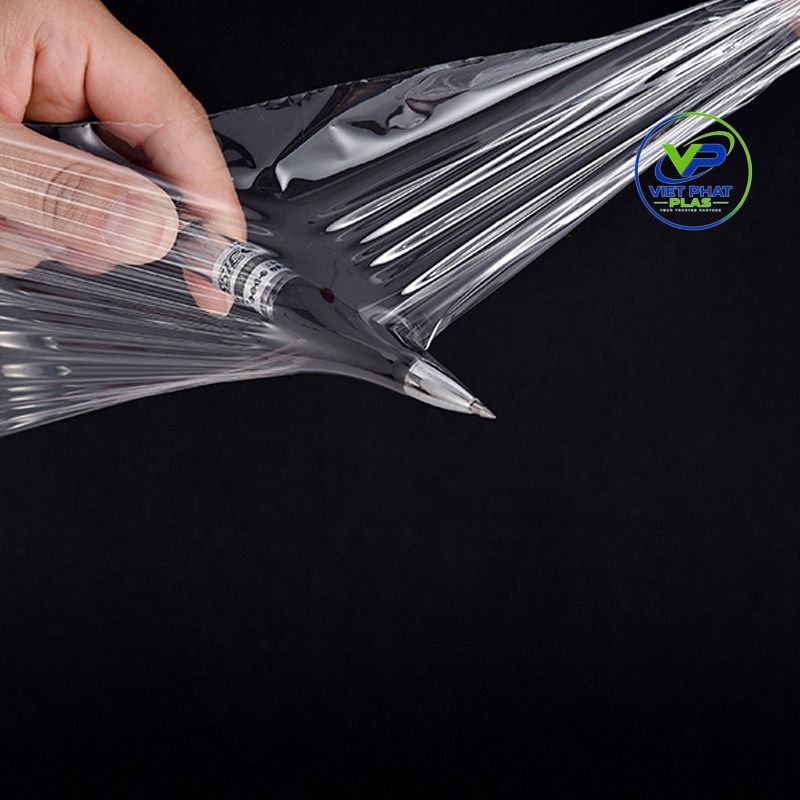
Puncture and tear resistance test on blown stretch film with sharp-edged material
Blown film's multi-directional polymer orientation gives it meaningfully better resistance to puncture and propagating tears — once a small puncture starts, blown film is less likely to let that tear run across the sheet the way cast film can.
This makes blown film the more defensible choice for loads with real puncture risk: metal parts with exposed edges, lumber and building materials with splinters or protruding fasteners, or irregular loads where corners and edges press unevenly against the wrap during transit. Industries that routinely ship this kind of freight — pulp, paper, and timber among them — tend to specify heavier-gauge blown film as a matter of course rather than an exception.
The cost of that extra toughness is exactly what you'd expect: blown film generally costs more to produce than cast film at a comparable gauge, and it's typically hazier, which is why buyers shouldn't default to blown film "to be safe" for loads that don't actually need the extra puncture resistance — that's paying for toughness the load will never test.
Noise and Unwind Behavior
An overlooked factor in the cast vs blown decision is how the film sounds and behaves as it comes off the roll. Cast film unwinds quietly and consistently, which matters more than it sounds like it should in a warehouse running wrapping machines continuously through a shift — quieter operation is a real, if secondary, factor in why cast film remains the default for high-volume automated wrapping lines.
Blown film tends to unwind with a noticeably louder, crinklier sound, and can behave less predictably at high unwind speeds due to the multi-directional orientation that gives it its toughness. This isn't a defect — it's the same structural property that makes blown film tear-resistant showing up as a trade-off in how smoothly it runs through a machine at speed.
For manually wrapped loads or lower-throughput operations, unwind noise and behavior matter less. For a facility running multiple automatic wrappers on a production floor for a full shift, it's a legitimate factor in total cost of operation, not just film cost per roll.
Comparison Table
Technical comparison chart of cast stretch film versus blown stretch film
|
Factor |
Cast Film |
Blown Film |
|
Production method |
Extruded, chilled-roller cooling |
Extruded, air-ring bubble cooling |
|
Clarity |
High — clear, glossy |
Lower — hazier, less uniform |
|
Cling |
Strong, consistent |
Moderate, more variable |
|
Puncture/tear resistance |
Lower |
Higher — multi-directional orientation |
|
Unwind noise |
Quiet |
Louder, crinklier |
|
Typical cost at same gauge |
Lower |
Higher |
|
Best fit |
Standard, non-sharp loads; automated wrapping; scan-through labeling |
Sharp-edged, irregular, or heavy debris-prone loads |
|
Market share (by volume) |
~70–80% |
Remaining share, concentrated in specific verticals |
Actual performance varies by resin blend and manufacturing quality — request a sample against your specific load type before committing to a bulk order.
Which One Fits Your Load Type
The decision comes down to matching production method to what's actually being wrapped, rather than treating one as a universal default.
Standard palletized loads — shrink-wrapped cartons, retail goods, uniform boxes — are well served by cast film. The clarity supports barcode and RFID scanning through the wrap, the consistent cling suits automated wrapping machines, and the lower cost avoids paying for toughness the load doesn't need.
Sharp-edged or irregular loads — metal components, building materials, machinery parts — are where blown film's puncture and tear resistance earns its higher cost. A single puncture that propagates into a tear on cast film can compromise load containment mid-transit; blown film is meaningfully more resistant to that failure mode.
Cold storage and refrigerated loads sit in between and depend more on the specific resin formulation than on cast versus blown alone — request performance data for low-temperature flexibility regardless of production method, since standard film of either type can become brittle in cold conditions.
VietPhatPlas supplies pallet film and broader stretch film product lines, so buyers can source both cast and blown formulations from a single supplier as load requirements vary across a facility. For guidance on matching a film choice to your wrapping setup and order specifics, see the order process page, and for a broader overview of pallet film categories, see pallet film types explained.
FAQ
Is cast or blown film more durable for sharp-edged loads? Blown film generally resists puncture and tearing better than cast film at a comparable gauge, due to its multi-directional polymer orientation from the bubble-forming process — making it the better choice for loads with exposed edges, metal parts, or irregular shapes.
Why does blown film unwind louder than cast film? Blown film's air-ring cooling process gives it a different structural orientation than cast film's chilled-roller process, which affects how it behaves at high unwind speeds — the same property that improves tear resistance also tends to produce a louder, crinklier unwind.
Which one is cheaper at the same thickness? Cast film is generally less expensive to produce at a comparable gauge, since its extrusion process is faster and less resin-intensive than blown film's bubble-forming method.
Which film type is better for cold storage? Neither cast nor blown film is automatically better suited to cold storage — low-temperature flexibility depends more on the specific resin formulation. Request cold-flexibility performance data from your supplier regardless of production method.
Conclusion
Cast and blown pallet film aren't interchangeable commodities distinguished only by price — they're produced through different processes that trade off clarity, cling, and cost against puncture and tear resistance. Buyers who match production method to their actual load type, rather than defaulting to whichever film is cheapest or most familiar, avoid both overpaying for toughness they don't need and underprotecting loads that do need it.
If you're sourcing pallet wrap for a warehouse, distribution center, or manufacturing facility, VietPhatPlas supplies both cast and blown stretch film formulations to match your load type. Contact VietPhatPlas to discuss your application and get a spec-matched quote.
Sources:
-
Stretch Films Market — Future Market Insights