Poly Mailer Bags Wholesale: Material, Sizing & Sourcing Guide for E-Commerce Sellers
Buying poly mailer bags wholesale means committing to a material, a thickness, and a minimum order before you've seen the bag hold a real shipment. This guide walks e-commerce sellers and procurement teams through what actually changes between LLDPE and LDPE film, how to pick a mil thickness that matches what's going inside the bag, how to size a mailer correctly, and what MOQ and lead time to expect from a real manufacturer — so the bulk order matches the product, not just the price per piece.
Poly mailer bags wholesale sourcing usually starts with a size and a price target — and stops there, until the first bulk shipment arrives and half the bags either puncture in transit or feel like overkill for what's inside them. The mailer packaging category isn't standing still either: global mailer packaging demand was valued at roughly US$41.2 billion in 2026 and is projected to reach US$105.0 billion by 2033, growing at a CAGR of 14.3% over that period, according to Persistence Market Research — which means more sellers are making this sourcing decision for the first time, often without knowing which variables actually matter.
This guide is written for e-commerce sellers, 3PLs, and procurement teams placing a wholesale or custom-printed poly mailer order, covering the four decisions that determine whether a bulk order performs well: film material, size, mil thickness, and what to actually ask a manufacturer before committing to a minimum order quantity.
Why Poly Mailer Bags Wholesale Sourcing Trips Up First-Time Buyers
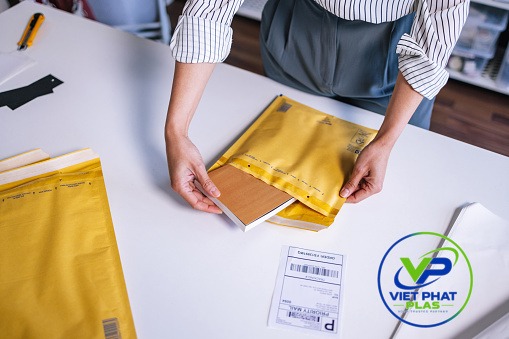
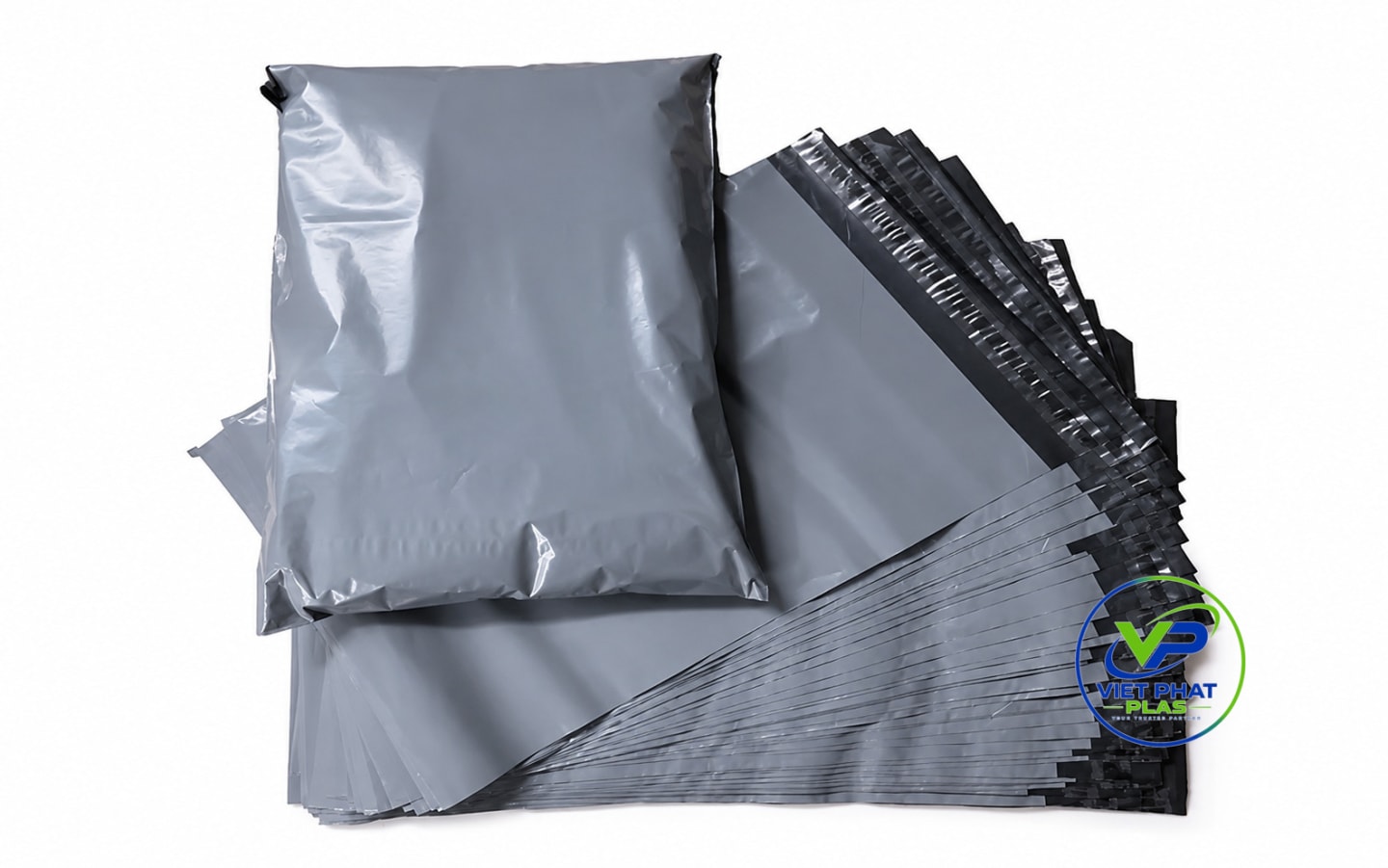
Poly Mailer Bags in E-commerce Order Packaging
A poly mailer looks like a commodity item — a flat, self-sealing plastic bag — which is exactly why buyers underestimate how many specifications sit behind that one product name. Material blend, mil thickness, size, seal type, and print finish all affect price per piece, and a wholesale order locks in whichever combination was chosen for however many months it takes to work through the minimum order quantity. Getting one variable wrong doesn't just mean an imperfect bag; at wholesale volume, it means thousands of pieces sized or gauged for the wrong product.
The two mistakes that show up most often are sizing mailers too close to the product's exact dimensions, leaving no room to seal without stretching the seam, and choosing a mil thickness based on price alone rather than what's actually going inside the bag. Both are fixable before the order is placed — not after 100,000 pieces arrive.
Material: LLDPE vs LDPE Poly Mailers
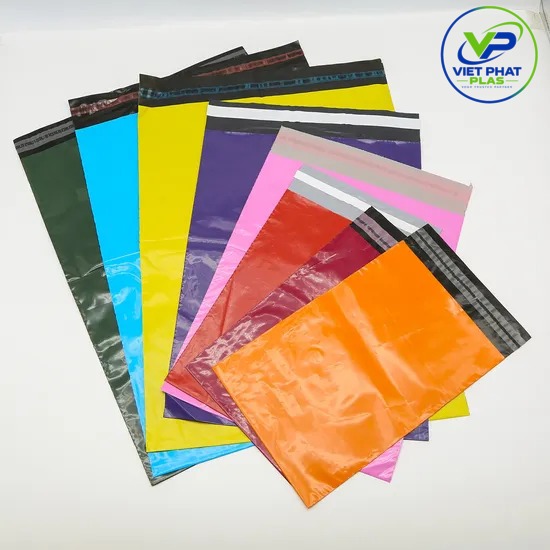
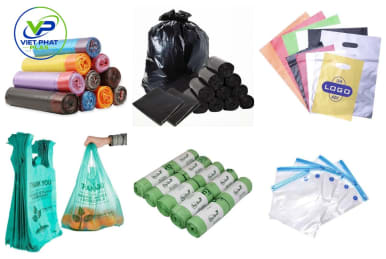
Poly Mailer Bags Available in Various Colors and Materials
Most poly mailers on the market, including VietPhatPlas's mailer bag, are made from an LLDPE/LDPE film blend rather than a single resin. The two materials do different jobs in that blend: LDPE (low-density polyethylene) is the softer, more flexible, lower-cost component, while LLDPE (linear low-density polyethylene) has higher tensile strength and better puncture and tear resistance than standard LDPE at a comparable thickness. Blending the two lets a manufacturer keep the flexibility and clarity buyers expect from a poly mailer while pulling in LLDPE's strength advantage where the bag needs it most — at the seams, corners, and any point where a rigid product edge pushes against the film from inside.
For buyers comparing suppliers, the practical takeaway is that "poly mailer" alone doesn't specify enough — ask what LLDPE-to-LDPE ratio a supplier is running, since a higher LLDPE content generally means better puncture resistance at the same mil thickness, which matters more for irregular or semi-rigid products than for soft, flat goods like folded apparel. For a deeper comparison of how HDPE, LDPE, and LLDPE behave differently as packaging films, see VietPhatPlas's HDPE and LDPE bags guide.
Sizing: Matching the Bag to the Product, Not the Other Way Around
The most common sizing mistake is choosing a mailer that fits the product with almost no slack, which forces the seal to stretch across the full width of the bag and creates the exact stress point where a mailer tears open in transit. A better working rule is to size the bag so the product fills roughly 80% of the mailer's usable width and length, leaving enough film to fold or seal cleanly without straining the seam — particularly at the self-adhesive strip, which needs flat, unstretched film on both sides to bond properly.
Because product mixes rarely stay fixed for long — new SKUs, packaging redesigns, seasonal items — most wholesale buyers standardize on two or three mailer sizes rather than ordering a custom size for every product line. That keeps the wholesale order simple to reorder and gives warehouse staff a predictable set of sizes to work with, rather than sorting through a dozen near-identical dimensions at pack-out.
Mil Thickness Guide: Matching Gauge to What You're Shipping
Mil thickness is the single biggest driver of how well a poly mailer survives transit, and it's also the variable buyers most often get wrong by defaulting to whatever is cheapest. According to a general poly mailer thickness breakdown from Shippo, 1.7-2.0 mil is the lightest practical option, suitable when nothing inside the mailer has a sharp or rigid edge that could poke through — folded apparel and soft goods are the typical fit. 2.5 mil is described as the common default for general apparel and mixed soft goods, offering noticeably better puncture resistance for a small cost increase over the lightest gauge. For shoes, boxed cosmetics, or anything with a hanger or rigid insert, 3.0-3.5 mil is the recommended range, since rigid edges inside a thin mailer are the leading cause of in-transit punctures. Heavier bundles, hardware, and multi-item shipments over roughly 2 pounds call for 4.0 mil or higher.
One clarification worth passing on to a supplier during sourcing: carriers don't set a minimum mil thickness requirement. Thickness selection is entirely about matching the film to what's inside the bag, not about meeting a shipping-carrier rule — so a mailer that arrives damaged is almost always a thickness-to-contents mismatch, not a carrier compliance issue.
Sourcing Wholesale: MOQ, Lead Time, and What to Ask a Supplier
Wholesale poly mailer orders run at manufacturer-level volume, not retail-pack quantities. VietPhatPlas's mailer bag, for example, has a minimum order quantity of 100,000 pieces, with production lead time of 15-20 days for a 20GP container or 20-25 days for a 40GP container, both counted after sample approval — not from the date the order is placed. That sample-approval step is worth budgeting time for separately, since it's the point where mil thickness, size, and seal quality get confirmed before the full run starts.
Beyond MOQ and lead time, the features worth confirming before ordering are the seal type (self-adhesive strip is standard for most poly mailers), tamper-evident construction if the product needs a visible sign of opening in transit, and print capability — VietPhatPlas's mailer bag supports up to 11 colors for custom branding. For sellers weighing a broader category of PE-based custom packaging beyond mailers specifically, VietPhatPlas's sealing bags category covers related shipping bag formats manufactured on the same production lines.
Eco-Friendly and Compostable Poly Mailer Options
Standard LLDPE/LDPE poly mailers are recyclable through store drop-off film recycling programs in most markets, but they are not curbside recyclable or compostable on their own. Buyers looking for a lower-impact option can source poly mailers made to be biodegradable or compostable instead of standard polyethylene film — VietPhatPlas offers both recyclable and biodegradable/compostable poly mailer options within the same product line. One sourcing detail worth checking directly with any supplier: a genuine compostable claim should be backed by testing against a recognized standard such as ASTM D6400, which governs what "compostable" is allowed to mean on a label — a supplier that can't point to third-party testing against a standard like that is making a marketing claim, not a verified one.
Comparison Table: Mil Thickness by Use Case
|
Mil Thickness |
Puncture Resistance |
Best Fit |
Typical Products |
|
1.7-2.0 mil |
Lowest — fine only if nothing inside can poke through |
Lightest, most economical option |
Folded apparel, soft goods with no sharp edges |
|
2.5 mil |
Moderate — common default gauge |
General apparel and mixed soft goods |
T-shirts, accessories, mixed soft-good orders |
|
3.0-3.5 mil |
Higher — resists rigid-edge punctures |
Products with hangers or rigid inserts |
Shoes, boxed cosmetics, hard-sided items |
|
4.0 mil+ |
Highest — heavy-duty gauge |
Heavier or multi-item shipments |
Bundled orders, hardware, items over ~2 lbs |
FAQ
What's a good default mil thickness for poly mailers if I'm not sure what to pick?
2.5 mil is the commonly used default for general apparel and mixed soft-good shipments, offering a meaningful puncture-resistance improvement over the lightest 1.7-2.0 mil gauge for a relatively small cost increase.
Can a wholesale poly mailer order be customized in size, or only ordered in fixed dimensions?
Manufacturers offering custom sizing, like VietPhatPlas, can produce mailers to a buyer's specified dimensions rather than only fixed stock sizes — sizing is typically discussed and confirmed during the sample-approval stage before the full production run.
What's the actual difference between LLDPE and LDPE in a poly mailer?
LLDPE has higher tensile strength and better puncture and tear resistance than standard LDPE at a comparable thickness, while LDPE is softer and more flexible. Most poly mailers blend the two rather than using either resin alone.
Are biodegradable or compostable poly mailers available at wholesale volume?
Yes — some manufacturers, including VietPhatPlas, offer biodegradable/compostable poly mailers alongside standard recyclable film as part of the same product line. Buyers should confirm the compostable claim is backed by testing against a recognized standard such as ASTM D6400.
What MOQ and lead time should I expect for custom-printed poly mailers?
MOQs at the manufacturer level are typically well above retail-pack quantities — VietPhatPlas's mailer bag, for instance, has a 100,000-piece MOQ, with lead times of 15-20 days (20GP container) to 20-25 days (40GP container) after sample approval.
Conclusion
Poly mailer bags wholesale sourcing goes wrong less often because of the supplier and more often because a buyer locks in a size, material, or mil thickness that doesn't match what's actually shipping inside it. Getting the LLDPE/LDPE blend, size, and gauge right before placing a bulk order — and confirming MOQ, lead time, and any eco-friendly claims directly with the manufacturer — is what turns a wholesale mailer order from a guess into a fit.
VietPhatPlas is a Vietnam-based manufacturer producing custom LLDPE/LDPE poly mailers, including recyclable and biodegradable/compostable options, with up to 11-color printing for B2B e-commerce sellers and distributors. Contact VietPhatPlas to request samples in the size and thickness that match your product before your next wholesale order.
Sources